
Table of Contents
ToggleThe liver performs several essential functions every day. It helps process nutrients, metabolize fats and carbohydrates, store certain vitamins and minerals, and break down substances that the body needs to remove. Because of its important role, many people look for a 7-day liver cleanse diet when they want to improve their liver health.
However, it is important to understand what a liver cleanse can and cannot do. Your liver already has its own natural detoxification systems. There is no scientifically proven seven-day diet that can literally “flush” toxins from the liver.If you are concerned about liver health or abnormal liver enzymes, learning about why SGPT increases can help you understand some common causes of elevated liver enzymes.
Instead, a 7-day liver cleanse diet can be used as a short-term healthy eating plan that emphasizes vegetables, fruits, whole grains, oats, legumes, lean protein, healthy fats, and adequate hydration. At the same time, it reduces alcohol, sugary drinks, highly processed foods, and excessive fried foods.
This article provides a practical 7-day liver cleanse diet chart along with foods to include, foods to limit, common mistakes, and answers to frequently asked questions.
What Is a 7-Day Liver Cleanse Diet?
A 7-day liver cleanse diet is best understood as a short-term meal plan focused on improving overall diet quality rather than literally detoxifying the liver.
The plan emphasizes nutrient-dense foods that can fit into a healthy lifestyle. Instead of relying on detox juices, fasting, or supplements, the focus is on everyday foods that provide fiber, protein, vitamins, minerals, and healthy fats.
A balanced 7-day liver cleanse diet may include:
- Oats and other whole grains
- Leafy green vegetables
- Cruciferous vegetables
- Whole fruits
- Lentils and beans
- Fish, eggs, chicken, or plant-based protein
- Nuts and seeds
- Plain yogurt
- Healthy cooking oils in moderate amounts
- Plenty of water
The purpose is not to eat as little as possible. It is to replace less nutritious foods with healthier choices and establish habits that can continue beyond seven days.
7-Day Liver Cleanse Diet Chart
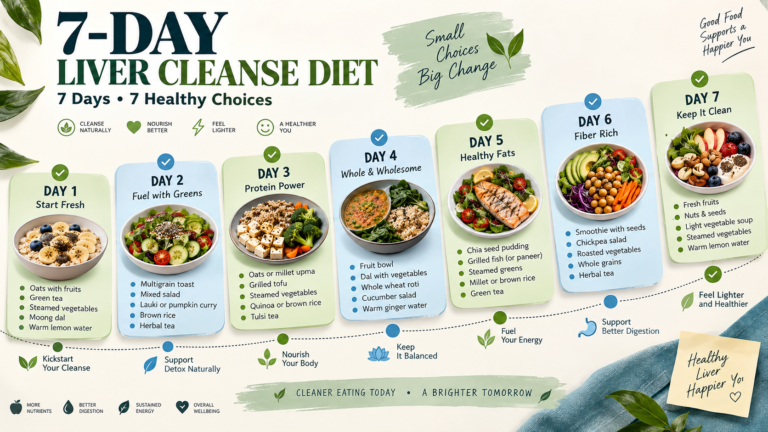
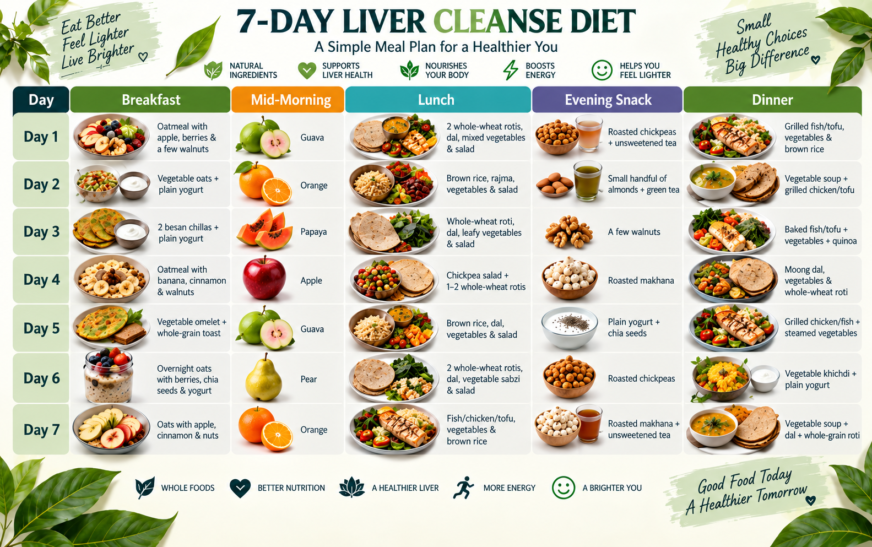
Here is a simple 7-day liver cleanse diet meal plan that can be adapted according to individual dietary preferences.
| Day | Breakfast | Mid-Morning | Lunch | Evening Snack | Dinner |
|---|---|---|---|---|---|
| Day 1 | Oatmeal with apple, berries & a few walnuts | Guava | 2 whole-wheat rotis, dal, mixed vegetables & salad | Roasted chickpeas + unsweetened tea | Grilled fish/tofu, vegetables & brown rice |
| Day 2 | Vegetable oats + plain yogurt | Orange | Brown rice, rajma, vegetables & salad | Small handful of almonds + green tea | Vegetable soup + grilled chicken/tofu |
| Day 3 | 2 besan chillas + plain yogurt | Papaya | Whole-wheat roti, dal, leafy vegetables & salad | A few walnuts | Baked fish/tofu + vegetables + quinoa |
| Day 4 | Oatmeal with banana, cinnamon & walnuts | Apple | Chickpea salad + 1–2 whole-wheat rotis | Roasted makhana | Moong dal, vegetables & whole-wheat roti |
| Day 5 | Vegetable omelet + whole-grain toast | Guava | Brown rice, dal, vegetables & salad | Plain yogurt + chia seeds | Grilled chicken/fish + steamed vegetables |
| Day 6 | Overnight oats with berries, chia seeds & yogurt | Pear | 2 whole-wheat rotis, dal, vegetable sabzi & salad | Roasted chickpeas | Vegetable khichdi + plain yogurt |
| Day 7 | Oats with apple, cinnamon & nuts | Orange | Fish/chicken/tofu, vegetables & brown rice | Roasted makhana + unsweetened tea | Vegetable soup + dal + whole-grain roti |
Note: This chart is an example, not an individualized medical diet. Portion sizes should be adjusted according to your nutritional requirements, activity level, age, and health status.
Why Choose a Liver-Friendly Diet?
The liver is closely connected with metabolism. Diet quality, body weight, blood sugar regulation, and alcohol consumption can all be relevant to liver health.
For people with excess body weight or metabolic dysfunction-associated steatotic liver disease (MASLD), lifestyle changes can play an important role in management.
Blood sugar management is also important for overall metabolic health. Learn more about what diabetes is, its types and symptoms to understand how blood sugar affects your health.
A 7-day liver cleanse diet can help you start making those changes by encouraging:
- Higher fiber intake
- More vegetables
- Whole fruits instead of juices
- Better sources of protein
- Fewer sugary beverages
- Less highly processed food
- More mindful portions
The important point is that the benefits come from the overall eating pattern rather than from a special detox ingredient.
For more information about how diet, portion control, healthy weight, and food choices can affect fatty liver health, see this guide from the National Institute of Diabetes and Digestive and Kidney Diseases (NIDDK)
Best Foods to Include in a 7-Day Liver Cleanse Diet
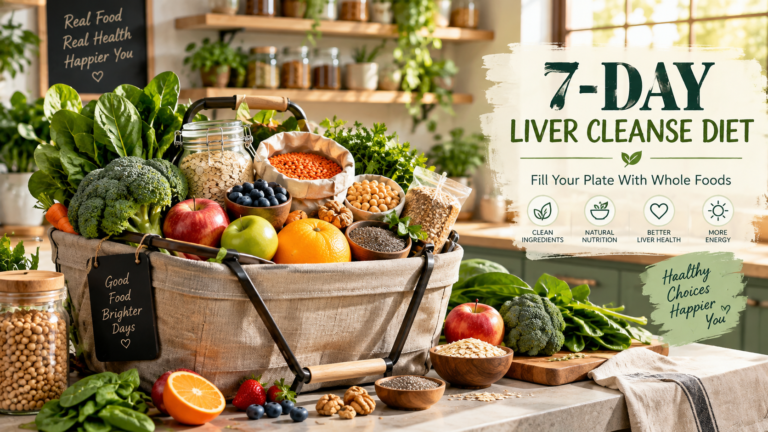
Choosing nutritious foods is the foundation of a 7-day liver cleanse diet. Instead of focusing on one “superfood,” try to include a variety of food groups.
1. Oats
Oats are an easy breakfast option and provide soluble fiber, including beta-glucan.
Oats can also be a useful choice for people looking to support healthy cholesterol levels. You can learn more about good and bad cholesterol and how diet can affect cholesterol.
You can combine oats with:
- Apples
- Berries
- Banana
- Chia seeds
- Walnuts
- Plain yogurt
Avoid turning a healthy bowl of oats into a high-sugar meal by adding excessive sugar, syrup, or sweetened toppings.
2. Leafy Green Vegetables
Spinach, fenugreek leaves, kale, and other leafy greens can provide fiber, vitamins, minerals, and plant compounds.
You can include them in:
- Dal
- Sabzi
- Soups
- Salads
- Omelets
Eating different types of vegetables throughout the week is generally more useful than relying on one specific vegetable.
3. Whole Fruits
Whole fruits can be part of a balanced 7-day liver cleanse diet.
Good options include:
- Apples
- Guava
- Oranges
- Pears
- Papaya
- Berries
Whole fruit is generally a better everyday choice than fruit juice because it contains fiber and is more filling.
4. Lentils and Beans
Dal, chickpeas, kidney beans, black beans, and other legumes can provide protein and dietary fiber.
They are particularly useful for people following vegetarian diets because they can contribute to protein intake without relying on processed foods.
5. Nuts and Seeds
Almonds, walnuts, chia seeds, and flaxseeds provide healthy unsaturated fats and other nutrients.
However, nuts and seeds are calorie-dense, so a small portion is generally sufficient.
6. Fish and Lean Protein
Fish, eggs, chicken, tofu, lentils, and beans can all provide protein.
Fatty fish such as salmon and sardines also provide omega-3 fatty acids.
If you follow a vegetarian diet, tofu, beans, chickpeas, lentils, and other suitable plant proteins can be used instead.
What Not to Eat on a Liver Detox?
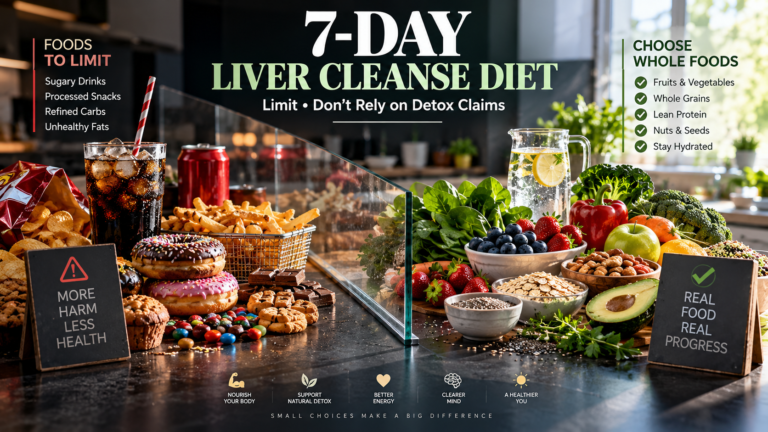
A healthy 7-day liver cleanse diet is not simply about adding healthy foods. It is also about reducing foods that may negatively affect overall diet quality.
Alcohol
Excessive alcohol consumption can contribute to liver injury. If you are concerned about liver health, avoiding alcohol is more appropriate than trying to counteract its effects with detox drinks.
People with certain liver conditions may need to avoid alcohol completely based on medical advice.
Sugary Drinks
Soft drinks, sweetened juices, energy drinks, and other sugar-sweetened beverages can contribute substantial amounts of added sugar.
Choose water or unsweetened beverages more often.
Highly Processed Foods
Try to reduce frequent consumption of:
- Packaged snacks
- Chips
- Processed meats
- Fast food
- Sugary desserts
- Highly refined snack foods
These foods can be high in calories, sodium, added sugar, or saturated fat.
Deep-Fried Foods
Frequent consumption of deep-fried foods can increase calorie and unhealthy fat intake.
Prefer foods that are grilled, baked, steamed, boiled, or lightly cooked.
What Is the Best Breakfast for Fatty Liver?
There is no single breakfast that can cure or reverse fatty liver.
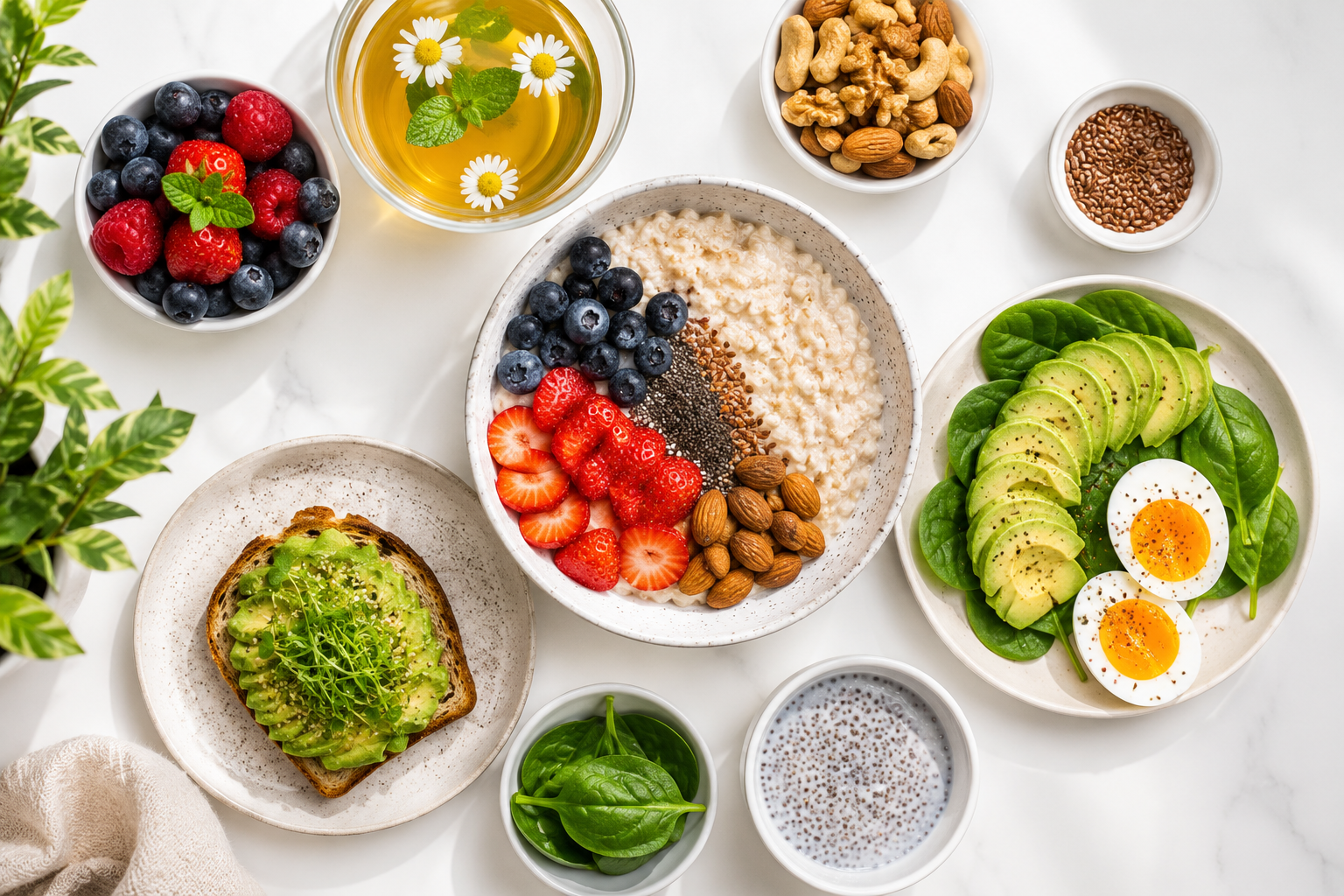
However, a high-fiber and balanced breakfast can fit well into a healthy eating pattern. Oatmeal topped with fruit and a small portion of nuts is one practical option.
Other choices include:
- Vegetable oats
- Besan chilla with plain yogurt
- Vegetable poha
- Eggs with vegetables
- Plain yogurt with oats and fruit
- Whole-grain toast with a protein source
The breakfast should be considered as part of your entire diet rather than as a treatment on its own.
For someone following a 7-day liver cleanse diet, the key is to avoid highly sugary breakfast foods and focus on balanced portions.
Which Fruit Cleans the Liver?
No specific fruit literally cleans or detoxifies the liver.
However, whole fruits can be nutritious additions to a healthy diet. Apples, guava, oranges, berries, pears, and papaya provide different vitamins, minerals, fiber, and plant compounds.
Instead of looking for one fruit that “cleans” the liver, aim for variety.
Whole fruits can also be a better choice than fruit juices because juices can contain a concentrated amount of naturally occurring sugar while providing less fiber.
Therefore, fruit can have a place in a 7-day liver cleanse diet, but no fruit should be promoted as a liver detox treatment.
Can Lemon Water Detox the Liver?
Lemon water is often promoted as a liver detox drink.
While lemon water can be refreshing and can help some people drink more water, there is no strong evidence that lemon water directly removes toxins from the liver.
You can drink lemon water if you enjoy it, but it should not replace nutritious meals.
The same applies to other popular detox drinks. A drink containing lemon, ginger, herbs, or other ingredients does not automatically become a liver-cleaning treatment.
The hydration benefit is more relevant than a supposed detox effect.
Does a 7-Day Liver Cleanse Actually Detox Your Liver?
The term “cleanse” can be misleading.
Your liver already has natural metabolic and detoxification processes that work continuously. There is no established seven-day food plan that can flush toxins from a healthy liver.
The practical benefit of a 7-day liver cleanse diet is that it can encourage healthier lifestyle choices.
For example, during the week you may:
- Drink more water
- Eat more vegetables
- Increase fiber intake
- Reduce sugary drinks
- Eat fewer fried foods
- Reduce processed food
- Avoid excessive alcohol
- Choose whole grains
These changes are more meaningful than taking a commercial detox product.
Can This Diet Help With Weight Loss?
A 7-day liver cleanse diet may result in some short-term weight change if you consume fewer calories than usual.
However, rapid changes on the weighing scale do not necessarily represent fat loss. Some short-term changes may result from differences in water retention and food volume.
If you have excess weight and fatty liver, sustainable weight management may be more useful than repeatedly following short detox diets.
A healthcare professional or registered dietitian can help determine an appropriate approach based on your individual needs.
Is a 7-Day Liver Cleanse Diet Safe for Everyone?
Not necessarily.
A 7-day liver cleanse diet based on ordinary nutritious foods may be reasonable for many healthy adults, but extreme detox diets can be unsafe.
Extra caution is needed if you:
- Have liver disease
- Have kidney disease
- Have diabetes
- Take regular medications
- Are pregnant or breastfeeding
- Have a history of eating disorders
- Have specific nutritional requirements
Avoid making major dietary changes without professional guidance if you have an existing medical condition.
Common Liver Detox Mistakes
Many people make the mistake of assuming that a more restrictive detox will produce better results.
That is not necessarily true.
1. Drinking only juices
Juice-only plans may not provide enough protein, fiber, or other nutrients.
2. Prolonged fasting
You do not need prolonged fasting to detoxify your liver.
3. Using unverified supplements
“Natural” does not automatically mean safe. Some herbal products and supplements can interact with medicines or potentially cause liver injury.
4. Cutting calories too aggressively
Very-low-calorie diets may not provide adequate nutrition and are not suitable for everyone.
5. Eliminating carbohydrates completely
Oats, whole grains, beans, lentils, and other nutritious carbohydrate sources can be part of a balanced diet.
6. Focusing on one detox food
No single food can replace an overall healthy dietary pattern.
How to Maintain Better Liver Health After 7 Days

The most important part of a 7-day liver cleanse diet is what you do after the seven-day period.
Instead of returning to old habits, continue the healthier choices that are realistic for you.
Eat more vegetables
Try to include vegetables in lunch and dinner regularly.
Choose whole fruits
Prefer whole fruits over frequent fruit juices.
Include fiber-rich foods
Oats, beans, lentils, vegetables, whole grains, nuts, and seeds can all contribute fiber.
Choose healthier cooking methods
Use grilling, baking, steaming, boiling, or light sautéing more often than deep-frying.
Reduce sugary beverages
Make water and unsweetened beverages your usual choices.
Stay physically active
Regular physical activity can support overall metabolic health and weight management.
These simple changes are also part of preventive healthcare, which focuses on reducing health risks through healthy lifestyle habits and regular health monitoring.
Avoid excessive alcohol
Alcohol intake is particularly important to discuss with a healthcare professional if you have liver disease.
A 7-day liver cleanse diet should therefore be considered a starting point rather than a quick fix.
When Should You See a Doctor?
A diet plan should not replace medical evaluation if you have symptoms that could indicate a liver problem.
Some unusual symptoms can have several possible causes and should not automatically be attributed to liver problems. For example, learn more about bitter taste in the mouth and its possible causes.
Speak with a healthcare professional if you experience:
- Yellowing of the skin or eyes
- Persistent abdominal swelling
- Severe or persistent abdominal pain
- Unexplained weight loss
- Persistent nausea or vomiting
- Dark urine along with other concerning symptoms
- Unusual bruising or bleeding
- Abnormal liver blood-test results
If you have already been diagnosed with fatty liver, hepatitis, cirrhosis, or another liver condition, ask your healthcare professional about the most appropriate dietary approach.
Frequently Asked Questions (FAQs)
How to detox the liver in 7 days?
There is no scientifically established seven-day detox that physically removes toxins from the liver. Your liver naturally performs detoxification. A 7-day liver cleanse diet can instead focus on nutritious foods, adequate hydration, fiber, and limiting alcohol and highly processed foods.
What's the best breakfast for fatty liver?
There is no single best breakfast for fatty liver. Oatmeal with whole fruit and a small portion of nuts is one nutritious option. Vegetable oats, besan chilla, eggs with vegetables, and plain yogurt with oats are other possibilities.
Which fruit cleans the liver?
No fruit literally cleans the liver. Whole fruits such as apples, guava, oranges, berries, pears, and papaya can be included in a balanced diet because they provide fiber and other nutrients.
What not to eat on a liver detox?
Rather than following an extremely restrictive detox, limit alcohol, sugary beverages, excessive sweets, frequent fried foods, and highly processed foods. These changes can make a 7-day liver cleanse diet more balanced and sustainable.
Can oats help with liver health?
Oats provide soluble fiber and can be part of a healthy eating pattern. They may support healthy cholesterol levels, but oats alone cannot detoxify or treat liver disease.
Conclusion
A 7-day liver cleanse diet should not be viewed as a way to physically flush toxins from the liver. Your liver already performs complex processes that help the body process and eliminate substances.
Instead, a seven-day plan can be a useful opportunity to improve your eating habits. Focus on vegetables, whole fruits, oats, legumes, whole grains, nuts, seeds, and appropriate protein sources. Reduce sugary beverages, highly processed foods, frequent fried foods, and excessive alcohol.
The biggest benefit comes from continuing these habits after the seven days. A short-term plan can be a starting point, but long-term healthy eating and lifestyle habits matter more than any quick liver cleanse.