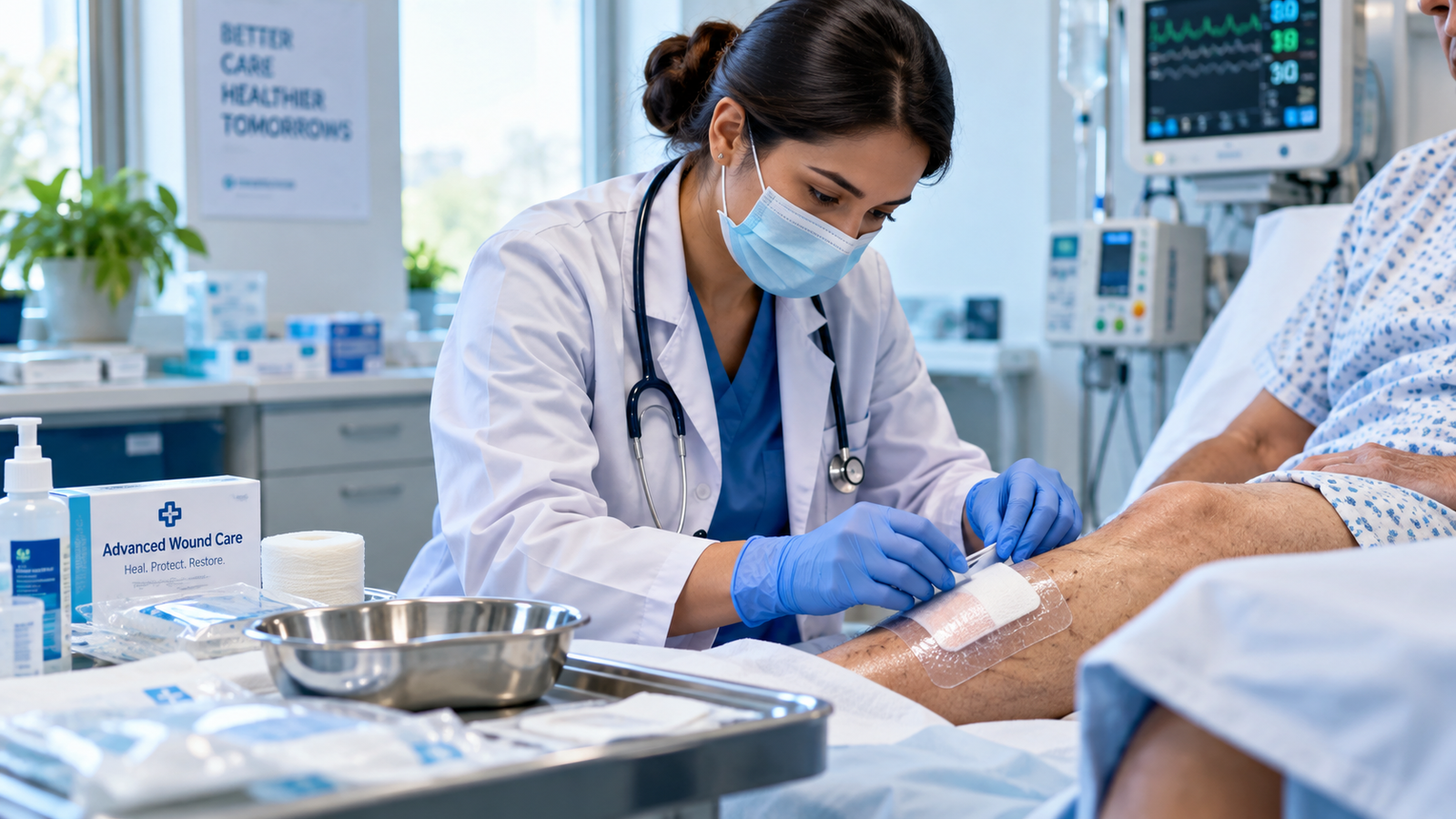

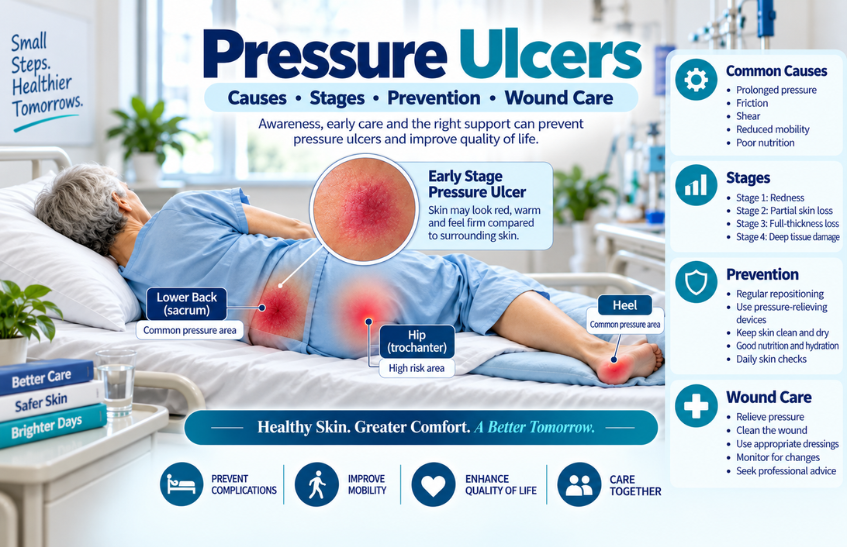
Pressure ulcers are areas of damaged skin and underlying tissue that can develop when prolonged pressure reduces blood flow to a specific part of the body. They are commonly known as bedsores or pressure injuries and are more likely to affect people with limited mobility, particularly those who spend extended periods in bed or use a wheelchair. Early identification and appropriate wound care are important because these injuries can become deeper or infected if pressure continues.
Table of Contents
ToggleCertain health conditions can also increase the risk of delayed wound healing. For example, diabetes can affect nerves and blood circulation, which may make injuries harder to notice and heal. Understanding diabetes and its complications can therefore provide useful background when learning about pressure-related wounds. In this guide, we will discuss the causes, stages, warning signs, prevention, and treatment of pressure ulcers.
What Are Pressure Ulcers?
Pressure ulcers are localized injuries to the skin and underlying tissues caused mainly by prolonged pressure. Continuous pressure can restrict blood circulation, reducing the oxygen and nutrients that tissues need to remain healthy.
These wounds commonly develop over bony areas where there is less protective tissue. Common locations include the tailbone, hips, heels, ankles, elbows, shoulder blades, back of the head, and other areas exposed to sustained pressure.
The term “pressure injury” is increasingly used in clinical practice because tissue damage can sometimes occur even when the skin is not visibly open.
According to the National Pressure Injury Advisory Panel (NPIAP), prevention and treatment should be based on individual risk assessment, skin inspection, pressure redistribution, repositioning, nutrition, and appropriate wound management.
What Causes Pressure Ulcers?
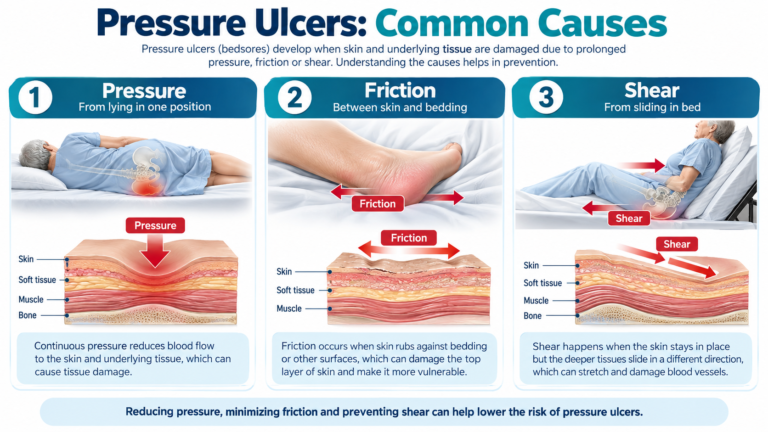
The main cause is prolonged pressure that interferes with blood flow to the skin and underlying tissues. However, several additional factors can increase tissue damage.
1. Prolonged Pressure
When a person remains in the same position for an extended period, pressure can build up over bony areas. Reduced circulation may eventually damage the skin and deeper tissues.
People who are unable to reposition themselves independently are particularly vulnerable.
2. Friction
Friction occurs when the skin repeatedly rubs against bedding, clothing, or another surface. Fragile skin can become irritated and more susceptible to injury.
3. Shear
Shear occurs when the skin stays relatively fixed while deeper tissues move in another direction. For example, a person may slide downward when the head of a bed is elevated.
Pressure, friction, and shear can work together and increase the likelihood of skin and tissue damage.
Who Is at Risk of Pressure Ulcers?
Anyone with reduced mobility can potentially develop pressure ulcers, but certain situations increase the risk.
People at higher risk may include:
- Individuals who are bedridden
- People who use wheelchairs for extended periods
- Older adults with fragile skin
- Individuals with reduced sensation
- People recovering from major surgery or serious illness
- Individuals with poor circulation
- People with nutritional deficiencies or malnutrition
- Individuals who experience frequent moisture or incontinence
- People who cannot reposition themselves independently
People with diabetes may have reduced sensation and circulation problems, which can increase wound-related complications. Understanding diabetic wound care is therefore particularly important for people at risk of skin breakdown.
Conditions that affect circulation or sensation may make it harder to recognize early skin damage.
NPIAP recommends structured risk assessment and regular reassessment, especially when a person’s medical condition changes.
Risk assessment can help identify people who may need additional preventive measures. The AHRQ pressure ulcer risk assessment guidance explains how standardized risk assessment can support individualized prevention planning.
Common Areas Where Pressure Ulcers Develop
The location of a wound often depends on whether a person spends most of their time in bed, sitting, or using medical equipment.
Common sites include:
- Tailbone or sacrum
- Buttocks
- Hips
- Heels
- Ankles
- Elbows
- Shoulder blades
- Back of the head
- Spine
Areas underneath or around medical devices
Regular inspection of these pressure points can help identify changes before significant tissue damage develops.
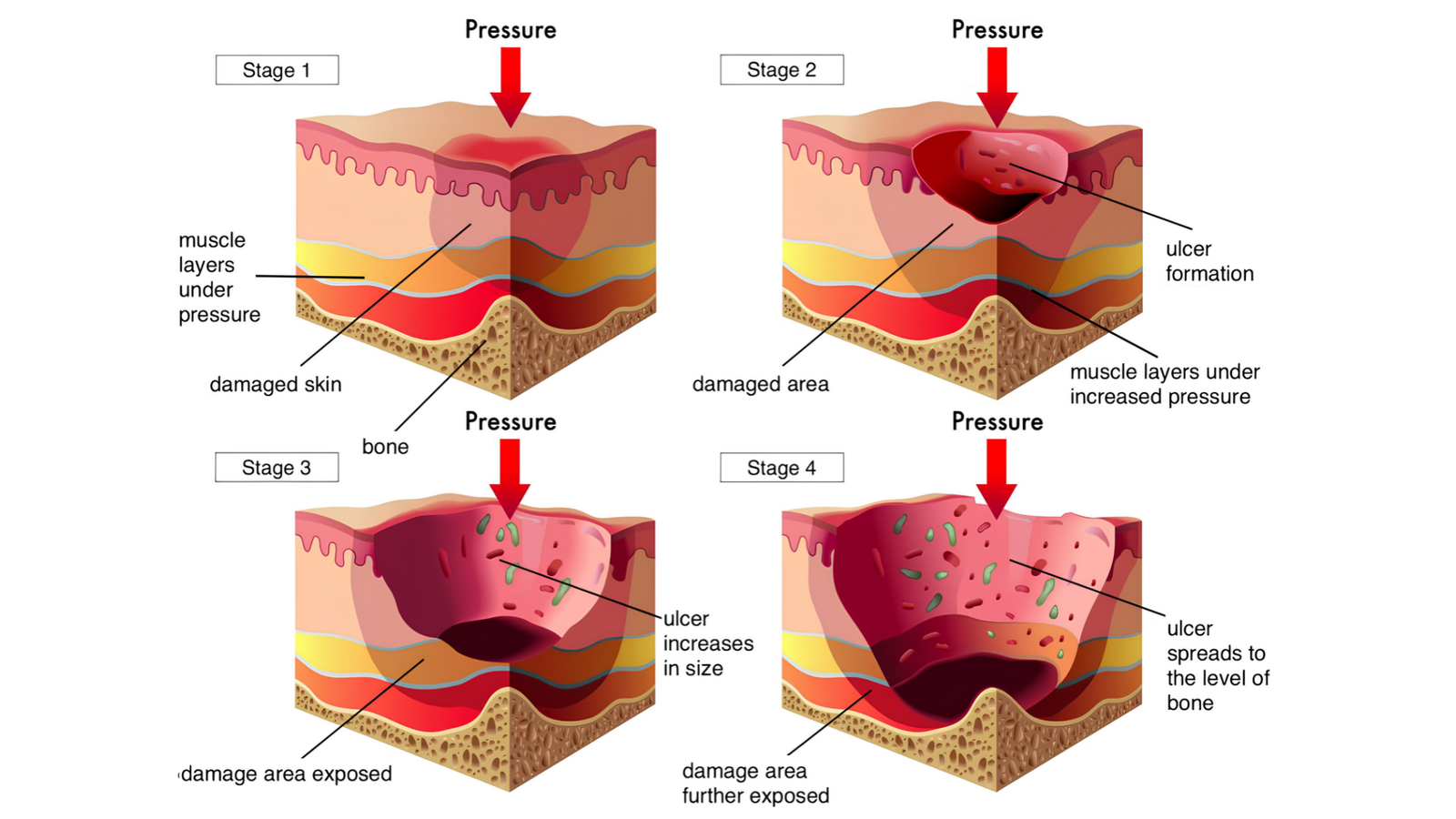
Stages of Pressure Ulcers
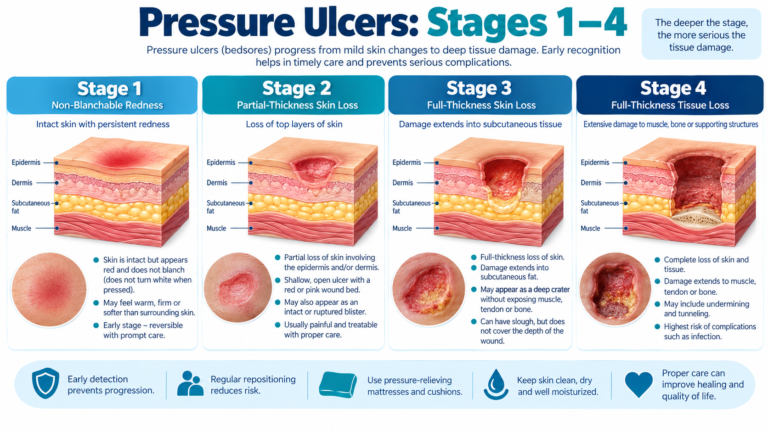
Healthcare professionals classify pressure injuries according to the depth and characteristics of tissue damage. Accurate staging helps determine appropriate management.
Stage 1
Stage 1 involves intact skin with localized changes, often including persistent redness or discoloration that does not blanch normally when pressure is applied.
The affected area may feel warmer or cooler than surrounding skin and may be painful, firm, soft, swollen, or otherwise different in texture.
In people with darker skin tones, color changes may be less obvious. Changes in temperature, tissue consistency, and other differences from surrounding skin may therefore be important during assessment. NPIAP provides specific resources for assessing pressure injuries across different skin tones.
Stage 2
Stage 2 involves partial-thickness loss of skin. The wound may appear as a shallow open area or blister.
It is important not to confuse every skin tear, moisture-related injury, or blister with a Stage 2 pressure injury. Proper clinical assessment is necessary.
Stage 3
Stage 3 involves full-thickness skin loss. Fat may be visible, and the wound can contain granulation tissue, slough, or other tissue changes.
The depth can vary depending on the anatomical location and the amount of tissue covering the area.
Stage 4
Stage 4 is the most extensive of the four numbered stages and involves full-thickness skin and tissue loss with exposed or directly palpable deeper structures such as fascia, muscle, tendon, cartilage, or bone.
These wounds require professional assessment and comprehensive wound management.
Unstageable Pressure Injury
Sometimes the true depth of a wound cannot initially be determined because the wound bed is covered by slough or eschar.
In such cases, the injury may be described as unstageable until enough of the wound bed can be assessed.
Deep Tissue Pressure Injury
Deep tissue pressure injury can appear as persistent discoloration or other changes in tissue characteristics and may indicate damage beneath the skin surface.
Early assessment is important because visible skin changes may not always reflect the full extent of underlying tissue damage.
Signs and Symptoms to Watch For
Early recognition can help prevent a wound from progressing.
- Possible warning signs include:
- Persistent redness or discoloration
- Changes in skin temperature
- Swelling
- Pain or tenderness
- Skin that feels unusually firm or soft
- Blisters
- Open wounds
- Drainage
- Changes in skin texture
- Darkening or discoloration around an affected area
How to Prevent Pressure Ulcers
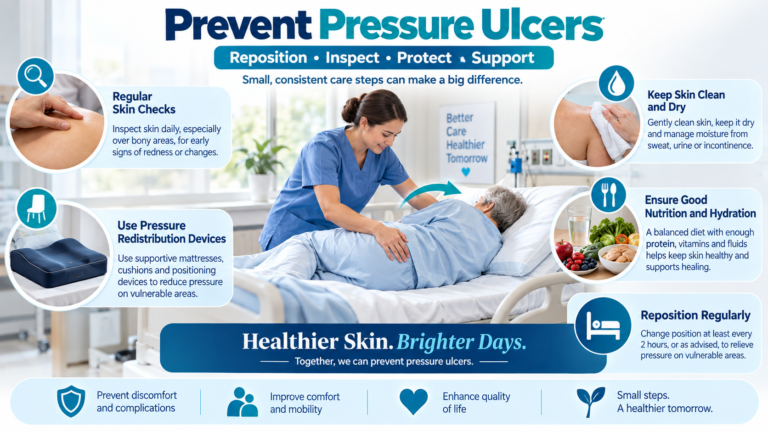
Prevention focuses on reducing prolonged pressure and protecting the skin.
Reposition Regularly
People with limited mobility should be repositioned according to their individual needs, medical condition, tolerance, and support surface.
There is no single repositioning schedule that is appropriate for every person. NPIAP recommends selecting repositioning frequency based on factors such as the support surface, skin tolerance, mobility, and individual circumstances.
Inspect the Skin
Check vulnerable areas regularly, especially:
- Heels
- Tailbone
- Hips
- Buttocks
- Elbows
- Ankles
- Shoulder blades
- Areas beneath medical devices
Daily skin inspection can help identify early changes before they develop into an open wound.
Keep Skin Clean and Dry
Moisture from sweat or incontinence can weaken the skin and increase vulnerability to injury.
Clean the skin gently after episodes of incontinence and use appropriate moisturizers or skin-protective products when needed.
Use Pressure-Redistributing Surfaces
Special mattresses, cushions, heel offloading devices, and other support surfaces may help redistribute pressure.
However, these products do not eliminate the need for repositioning and regular skin assessment.
Maintain Good Nutrition and Hydration
Adequate nutrition supports normal tissue maintenance and wound healing.
People at risk should have their nutritional status assessed, particularly when there is unexplained weight loss, poor appetite, or difficulty meeting nutritional needs.
NPIAP recommends addressing nutritional risk as part of an individualized prevention plan.
Wound Care for Pressure Ulcers
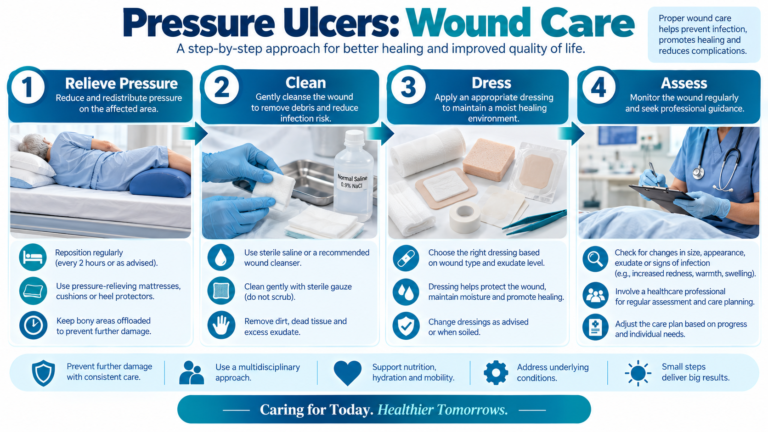
Once pressure ulcers develop, treatment depends on their stage, depth, location, presence of infection, and overall health. In more complex wounds, advanced wound care may be required to support healing.
Relieve Pressure
Reducing pressure on the affected area is an essential part of management.
A healthcare professional may recommend repositioning strategies, specialized mattresses, cushions, heel protection, or other pressure redistribution methods.
Clean the Wound
Open wounds generally require appropriate cleansing during dressing changes. Mayo Clinic notes that open bedsores may be cleaned with water or saline depending on the clinical situation.
Avoid using harsh substances on a wound unless specifically recommended by a healthcare professional.
Dress the Wound
Dressings can protect the wound and support an appropriate healing environment.
The choice of dressing depends on factors such as wound depth, drainage, tissue condition, surrounding skin, and infection risk.
Possible dressing categories include foam, film, gauze, gel, and other specialized wound dressings.
Debridement
Some wounds contain dead, damaged, or infected tissue that interferes with healing.
A trained healthcare professional may recommend debridement, which involves removing nonviable tissue using an appropriate method.
The type of debridement depends on the wound and the individual’s clinical condition.
Manage Infection
Not every pressure wound is infected, but infection can significantly complicate healing.
Signs that may require prompt medical attention include:
- Increasing redness or warmth
- Swelling
- Increasing pain
- Pus-like drainage
- Foul odor
- Fever
- Worsening wound appearance
NPIAP guidance emphasizes reducing contamination and managing bacterial burden when clinically appropriate.
Support Overall Health
Healing may be affected by nutritional status, blood circulation, blood glucose control, smoking, and other health factors.
For this reason, pressure wound management often involves more than simply covering the wound with a dressing.
Can Pressure Ulcers Heal?
Yes, many pressure injuries can improve with appropriate treatment, but healing time varies considerably.
Small and superficial wounds may heal more quickly when pressure is removed and appropriate care begins early. Deeper wounds can take much longer and may require specialized treatment approaches to support wound healing.
Large wounds that do not heal with conservative treatment may sometimes require surgical reconstruction.
When Should You See a Healthcare Professional?
Professional assessment is important whenever you notice a new or worsening wound, particularly in someone with limited mobility.
Seek medical attention promptly if there is:
- An open or deep wound
- Increasing redness or swelling
- Significant or worsening pain
- Pus-like drainage
- Bad odor
- Fever
- Black or severely discolored tissue
- Rapid wound progression
- Exposed deeper tissue
Pressure Ulcers vs Bedsores: Are They the Same?
Yes. “Bedsores” is a common term used for pressure ulcers, particularly wounds associated with prolonged bed rest.
Other terms include pressure injuries and decubitus ulcers.
However, pressure injuries are not limited to people who stay in bed. They can also occur in people who spend significant periods sitting in wheelchairs or who have restricted mobility.
How Caregivers Can Help Prevent Pressure Ulcers
Caregivers play an important role in prevention, especially when a person cannot move independently.
A practical routine can include:
- Check vulnerable areas every day.
- Follow the individual’s repositioning plan.
- Keep the skin clean and appropriately moisturized.
- Manage moisture and incontinence promptly.
- Use recommended cushions or support surfaces.
- Keep heels appropriately offloaded when advised.
- Encourage adequate food and fluid intake when medically appropriate.
- Report new skin changes quickly.
- Follow the wound-care plan provided by the healthcare team.
- Watch for signs of infection or deterioration.
Prevention should be individualized rather than relying on a single routine for every patient.
Frequently Asked Questions (FAQs)
What are pressure ulcers?
Pressure ulcers are areas of skin and tissue damage caused primarily by prolonged pressure, usually over a bony part of the body. They are also commonly known as bedsores or pressure injuries.
What is the first sign of a pressure ulcer?
An early sign can be persistent redness or discoloration of the skin along with changes in temperature, texture, firmness, or tenderness. Early signs can appear differently depending on skin tone.
How can pressure ulcers be prevented?
Prevention includes regular skin checks, individualized repositioning, pressure redistribution, good skin care, moisture management, adequate nutrition, and appropriate support surfaces.
Are pressure ulcers painful?
They can be painful, although pain perception varies between individuals. People with reduced sensation may not feel an injury even when significant tissue damage is present.
Can pressure ulcers become infected?
Yes. An open wound can become infected. Increasing redness, warmth, swelling, drainage, foul odor, worsening pain, or fever should receive prompt medical assessment.
Conclusion
Pressure ulcers can develop when prolonged pressure, reduced mobility, friction, shear, moisture, poor nutrition, or other risk factors compromise the skin and underlying tissues. Early identification is important because treatment becomes more complicated as tissue damage progresses.
Regular skin inspection, individualized repositioning, pressure redistribution, appropriate nutrition, moisture management, and professional wound care can all contribute to prevention and healing.
If you notice a new wound, persistent discoloration, drainage, increasing pain, or signs of infection, seek medical advice rather than attempting to manage a significant wound without professional assessment.
For evidence-based prevention and treatment recommendations, healthcare professionals can refer to the International Guideline developed through the NPIAP, EPUAP, and PPPIA collaboration. The current living guideline began launching online in 2025 and is being updated as new chapters are completed.