

Kidney stones are hard deposits that develop when certain minerals and salts become concentrated in the urine. They can be very small and pass naturally, or they can grow large enough to block urine flow and cause severe pain. When a stone does not pass on its own or creates complications, kidney stone surgery may be recommended by a urologist.
The need for kidney stone surgery does not depend on size alone. Doctors also consider the stone’s location, composition, symptoms, blockage, infection, kidney function, and the patient’s overall health. You can also learn more about how doctors assess kidney function through creatinine testing and what normal creatinine levels mean.
Table of Contents
ToggleIf you have been diagnosed with a kidney stone and are wondering whether you need kidney stone surgery, understanding the available treatment options can help you have a more informed discussion with your urologist.
What Is Kidney Stone Surgery?
Kidney stone surgery refers to procedures used to remove a kidney stone or break it into smaller pieces so that the fragments can leave the body. Modern stone treatment is often minimally invasive rather than traditional open surgery.
Depending on the size and location of the stone, a doctor may recommend:
- Shock wave lithotripsy (SWL)
- Ureteroscopy (URS)
- Laser lithotripsy
- Percutaneous nephrolithotomy (PCNL)
- Retrograde intrarenal surgery (RIRS)
Traditional open surgery is now rarely required because less invasive procedures are available for most patients.
When Is Kidney Stone Surgery Needed?
Not every kidney stone requires kidney stone surgery. Small stones may pass naturally through the urinary tract, particularly when they are in a favorable location and are not causing complications.
A urologist may recommend active treatment when a stone:
- Causes repeated or severe pain
- Blocks the flow of urine
- Causes blood in the urine
- Leads to a urinary tract infection
- Continues to grow
- Does not pass naturally
- Affects kidney function
- Is likely to cause future complications
- Is large enough that spontaneous passage is unlikely
Current European Association of Urology guidance lists stone growth, obstruction, infection, symptoms, patient preference, and certain medical or social circumstances among reasons to consider active stone removal.
Therefore, the decision about kidney stone surgery should be individualized rather than based only on one measurement.
What Size Kidney Stone Requires Surgery?
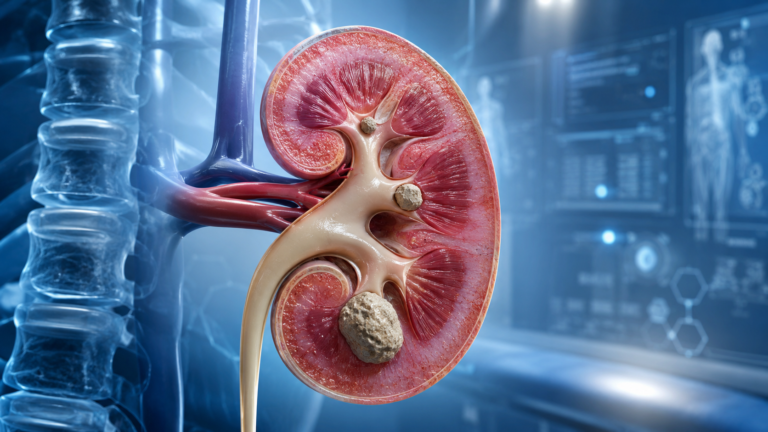
There is no single size at which every patient automatically needs kidney stone surgery. However, stone size is an important factor in deciding whether observation, medication, shock wave treatment, ureteroscopy, or another procedure is appropriate.
Generally:
Stones Smaller Than 5 mm
Very small stones may pass naturally without kidney stone surgery, especially if they are located in the ureter and are not causing obstruction or infection. Your doctor may recommend observation, adequate fluid intake when appropriate, pain management, and follow-up imaging.
Stones Between 5 and 10 mm
A stone in this range has a lower chance of passing naturally than a very small stone. Depending on its location and symptoms, your doctor may recommend observation or active treatment such as ureteroscopy or shock wave lithotripsy.
Stones Between 10 and 20 mm
As stone size increases, spontaneous passage becomes less likely. Active treatment is more commonly considered. Options may include kidney stone surgery, ureteroscopy, RIRS, SWL, or PCNL depending on the stone’s location and characteristics.
Stones Larger Than 20 mm
For kidney stones larger than 20 mm, PCNL is generally the preferred first-line procedure in current EAU guidance because larger stones are less likely to be completely treated with shock waves or a single endoscopic procedure.
These are general ranges, not strict rules. A 7 mm stone causing significant obstruction may require treatment, while a larger stone in a carefully selected patient may sometimes be monitored. Your imaging results and clinical condition are important.
Can Kidney Stones Be Removed Without Surgery?
Yes, some kidney stones can be managed without kidney stone surgery.
Small stones may pass naturally through the urinary tract. A healthcare professional may recommend pain medication and, in selected cases, medication that helps relax the ureter and support stone passage.
Treatment without surgery depends on factors such as stone size, location, symptoms, and whether there is obstruction or infection.
However, drinking excessive amounts of water does not guarantee that a large stone will pass. Patients with significant obstruction, infection, persistent severe pain, or impaired kidney function should not delay medical evaluation in an attempt to avoid kidney stone surgery.
How Can I Remove Kidney Stone Without Surgery?
If you are asking “How can I remove kidney stone without surgery?”, the answer depends mainly on the stone’s size and location.
For a small stone, your doctor may recommend:
1. Drinking Appropriate Amounts of Water
Adequate fluid intake helps maintain urine flow and may support the passage of small stones. However, people with certain medical conditions may have fluid restrictions, so follow your healthcare professional’s advice.
2. Pain Management
Passing a kidney stone can be painful. A doctor may recommend appropriate pain-relieving medication depending on your health and other medicines.
3. Medical Expulsive Therapy
In selected patients with ureteral stones, a doctor may prescribe an alpha-blocker to help facilitate stone passage. The suitability of this treatment depends on the individual patient and stone characteristics.
4. Observation and Follow-Up
Some small stones can be monitored with follow-up imaging to confirm whether they are moving or have passed.
If the stone does not pass, becomes larger, causes obstruction, or produces ongoing symptoms, kidney stone surgery may become necessary.
How Can Kidney Stone Be Removed Without Surgery?
Another common search question is, “How can kidney stone be removed without surgery?”
The important point is that not all kidney stones can be dissolved or removed naturally. Most calcium-based stones cannot simply be dissolved with home remedies. Certain uric acid stones may respond to medical treatment that changes urine chemistry, but this should be done under medical supervision.
Home remedies should not be considered a substitute for medical evaluation, particularly if you have severe pain, vomiting, fever, chills, difficulty passing urine, or a known urinary blockage.
How Does Kidney Stone Surgery Work?
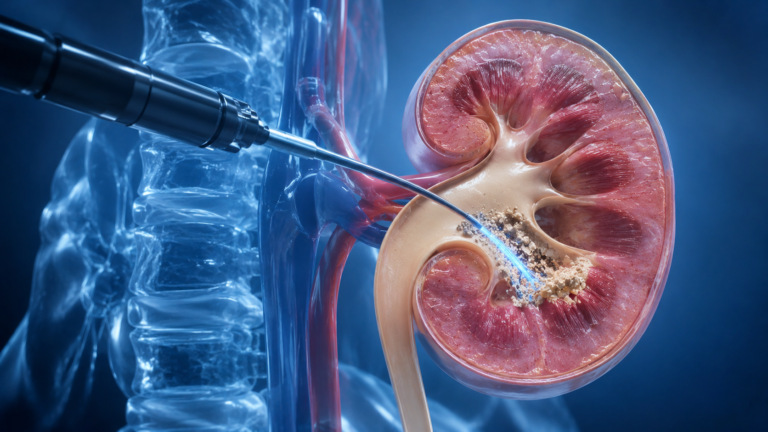
Modern kidney stone surgery is usually performed through natural urinary passages or a small access point rather than a large abdominal incision.
The procedure selected depends on the stone’s size, location, hardness, number of stones, anatomy, and previous treatments.
Shock Wave Lithotripsy
Shock wave lithotripsy, commonly called SWL or ESWL, uses focused shock waves from outside the body to break a kidney stone into smaller fragments.
The fragments can then pass through the urinary tract. SWL is less invasive than procedures that require instruments to enter the urinary tract, but its effectiveness can vary depending on stone size, location, composition, and patient anatomy.
Multiple sessions may sometimes be needed.
Ureteroscopy
Ureteroscopy is one of the most commonly used forms of kidney stone surgery.
During the procedure, a thin scope is passed through the urinary tract into the ureter or kidney. The urologist can locate the stone and either remove it with a small basket or break it into smaller pieces using laser energy.
Ureteroscopy can treat stones in different parts of the urinary tract and is particularly useful when direct access to the stone is needed.
A temporary ureteral stent may sometimes be placed after the procedure to help urine drain while swelling settles.
Laser Lithotripsy
Laser lithotripsy is usually performed during ureteroscopy. A laser is used to break the stone into smaller fragments or dust-like particles.
The fragments may then be removed or allowed to pass naturally, depending on their size and the urologist’s approach.
Percutaneous Nephrolithotomy
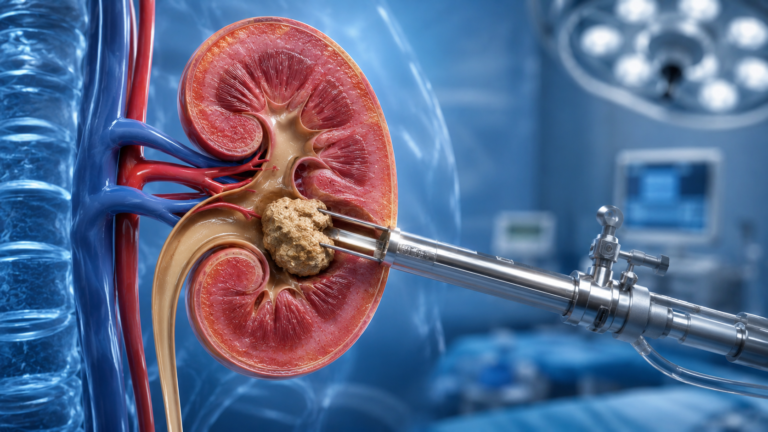
Percutaneous nephrolithotomy, or PCNL, is a procedure generally used for larger or complex kidney stones.
A small opening is made through the back directly into the kidney. A nephroscope is inserted to locate and remove or break the stone.
PCNL is considered the standard procedure for large renal calculi, particularly stones larger than 20 mm.
Which Size Kidney Stone Needs Surgery?
The question “Which size kidney stone need surgery?” is common, but size alone cannot determine treatment.
As a general guide:
| Stone Size | Possible Approach |
|---|---|
| Less than 5 mm | Often observation if appropriate |
| 5–10 mm | Observation or active treatment depending on location and symptoms |
| 10–20 mm | Active treatment is often considered |
| More than 20 mm | PCNL is commonly preferred for kidney stones |
These ranges are only a guide. The location of the stone can be just as important as its size. Lower-pole kidney stones, for example, may be more difficult to clear with SWL because stone fragments have to move upward against gravity to leave the kidney.
Treatment decisions should be individualized according to stone size, location, symptoms, and other clinical factors. For detailed kidney stone treatment guidelines, healthcare professionals can refer to the European Association of Urology recommendations.
What Tests Are Done Before Kidney Stone Surgery?
Before kidney stone surgery, your doctor may recommend blood and urine tests to check your overall health and kidney function. A creatinine blood test can help doctors understand how well your kidneys are filtering waste before treatment.
Common evaluations include:
- Ultrasound
- X-ray in selected cases
- Non-contrast CT scan
- Blood tests
- Urine testing
- Urine culture when infection is suspected
- Kidney function assessment
Imaging helps determine the stone’s size and location, while laboratory tests can identify infection or other factors that influence treatment.
A CT scan can also provide information about stone density, which may help doctors determine whether SWL is likely to work.
Is Kidney Stone Surgery Painful?
Most kidney stone surgery procedures are performed with anesthesia or appropriate sedation, so patients generally do not feel the procedure itself in the usual way.
Some discomfort can occur afterward. The amount depends on the procedure, the stone, and the individual.
After ureteroscopy, a temporary stent can cause urinary frequency, urgency, bladder discomfort, or pain in the kidney or bladder area. These symptoms usually improve after the stent is removed.
Your urologist will provide instructions about pain control, activity, fluids, medications, and follow-up.
What Are the Risks of Kidney Stone Surgery?
Like any medical procedure, kidney stone surgery can have risks.
Possible complications vary depending on the procedure and may include:
- Bleeding
- Infection
- Pain
- Injury to the urinary tract
- Difficulty urinating
- Residual stone fragments
- Need for another procedure
- Anesthesia-related complications
Ureteroscopy, for example, can rarely cause injury to the urinary tract, bleeding, infection, or other complications.
Your urologist should explain the expected benefits and risks of the specific procedure recommended for you.
What Happens After Kidney Stone Surgery?
Recovery depends on the type of kidney stone surgery performed.
After ureteroscopy or SWL, many patients can return home the same day or after a short period of observation, depending on the circumstances.
After PCNL, recovery may take longer because the procedure involves access through the skin into the kidney.
Your doctor may recommend follow-up imaging to check whether any stone fragments remain. In some cases, additional treatment may be required.
If a stone is removed, it may be sent to a laboratory for analysis. Knowing the stone type can help doctors recommend strategies to reduce the risk of future stones.
When Should You Seek Urgent Medical Care?
Kidney stones can sometimes cause serious complications. Seek urgent medical evaluation if you experience:
- Fever or chills with suspected kidney stone
- Severe or worsening pain
- Persistent vomiting
- Difficulty passing urine
- Blood in the urine with severe symptoms
- Symptoms suggesting a urinary infection
- Known urinary blockage with worsening symptoms
An infected, obstructed urinary system can require urgent drainage and medical treatment rather than simply waiting for the stone to pass.
How Can You Prevent Another Kidney Stone?

Having kidney stone surgery removes or breaks the current stone, but it does not necessarily prevent another stone from developing.
Prevention depends on the type of stone and why it formed.
Helpful strategies may include:
- Drinking enough fluid as advised by your doctor
- Reducing excessive sodium intake
- Following a balanced diet
- Maintaining a healthy body weight
- Taking prescribed preventive medicines when needed
- Completing metabolic evaluation if recommended
- Having recurrent stones analyzed when possible
The exact diet should depend on the stone type. For example, dietary recommendations for calcium oxalate stones may differ from recommendations for uric acid stones.
Preventing another stone is important even after successful kidney stone surgery. Following an appropriate kidney stone diet, staying adequately hydrated, limiting excessive sodium, and making dietary changes based on your stone type may help reduce the risk of developing kidney stones again.
Frequently Asked Questions (FAQs)
What size of kidney stone requires surgery?
There is no universal size that automatically means surgery. Stones larger than 10 mm are less likely to pass naturally, while stones larger than 20 mm in the kidney are commonly treated with PCNL. The final decision depends on size, location, symptoms, obstruction, infection, and other patient factors.
Can kidney stones be removed without surgery?
Yes. Some small stones can pass naturally with observation, appropriate fluid intake, pain management, and, in selected cases, medication. Larger or complicated stones may require a procedure.
How can I remove kidney stone without surgery?
Small stones may pass naturally. Your doctor may recommend observation, pain management, fluids, and selected medications. Do not rely on home remedies if you have severe symptoms or urinary obstruction.
How can kidney stone be removed without surgery?
Some stones can pass naturally, but not every stone can be removed without a procedure. Treatment depends on the stone’s size, location, composition, and symptoms.
How to cure kidney stone without surgery?
Small kidney stones may pass without surgery, but there is no single home treatment that can safely cure every type of kidney stone. Medical evaluation is important to determine whether observation is appropriate.
Which size kidney stone need surgery?
A stone’s size is only one factor. Stones larger than 10 mm are more likely to require active treatment, while kidney stones larger than 20 mm are commonly treated with PCNL. However, even smaller stones may require treatment if they cause obstruction, infection, persistent pain, or other complications.
Conclusion
Kidney stone surgery is not necessary for every person with a kidney stone. Small stones may pass naturally, while larger, obstructing, infected, growing, or persistently painful stones may need active treatment.
Modern kidney stone surgery includes minimally invasive options such as ureteroscopy, laser lithotripsy, shock wave lithotripsy, RIRS, and PCNL. The most appropriate treatment depends on the stone’s size, location, composition, symptoms, anatomy, and overall health.
If you have been diagnosed with a kidney stone, do not decide whether you need surgery based on size alone. A urologist can review your imaging and symptoms and recommend the safest treatment option for your situation.