
Table of Contents
ToggleModern healthcare depends on advanced medical equipment that helps healthcare professionals deliver treatments safely and efficiently. One important device used in hospitals, intensive care units, emergency departments, and home healthcare settings is an infusion pump. Understanding infusion pump uses is essential for patients, caregivers, nursing students, and healthcare professionals who want to learn about modern medication delivery systems.
An infusion pump is a medical device designed to deliver fluids, medications, nutrients, and other prescribed solutions into a patient’s body at a controlled rate. It helps regulate the amount of fluid administered over a specific period, making it useful for treatments that require controlled and continuous delivery.
The importance of infusion pump uses has increased because many modern medical treatments require carefully regulated medication administration. These devices are commonly used for intravenous fluids, antibiotics, chemotherapy, pain management, insulin delivery, and nutritional support.
Different types of infusion pumps are available depending on the patient’s medical condition and treatment requirements. Some devices are designed to deliver larger volumes of fluids, while others administer small quantities of medication with controlled precision.
Modern healthcare also focuses on selecting appropriate treatment approaches according to individual patient needs. Personalized medicine helps explain how medical decisions can be adapted according to a patient’s health condition, medical history, and specific treatment requirements.
This guide explains the major applications, working principles, different types, benefits, limitations, and safety precautions associated with infusion pumps.
What Is an Infusion Pump?
An infusion pump is an electronic or mechanical medical device that delivers fluids or medications into a patient’s body in controlled amounts over a specific period.
It generally works with an administration set, tubing, syringe, or specialised delivery system, depending on the device and treatment requirements.
Unlike a traditional gravity-based IV drip, an electronic pump uses a programmed mechanism to regulate fluid delivery. Healthcare professionals can enter settings such as infusion rate, total volume, and treatment duration.
For example, when a patient requires a prescribed medication administered slowly over several hours, the device helps maintain the programmed delivery rate.
The main functions include:
- Delivering intravenous fluids.
- Administering prescribed medications.
- Supporting continuous medication delivery.
- Providing controlled nutritional support.
- Delivering small medication volumes.
- Supporting specialised medical treatments.
The FDA recognises infusion pumps as important medical devices used in hospitals, nursing homes, and home healthcare environments.
Major Infusion Pump Uses in Healthcare
There are several important clinical applications of these devices. The selection depends on the patient’s condition, prescribed medication, and required administration rate.
The following applications explain why infusion pump uses are important in different healthcare environments.
1. Intravenous Fluid Administration
One of the most common infusion pump uses is administering intravenous (IV) fluids.
Some patients cannot maintain adequate fluid intake through drinking or may require fluid replacement under medical supervision. In these situations, IV fluids are administered directly into the bloodstream through an appropriate vascular access device.
The pump helps healthcare professionals control the amount of fluid delivered over a specified period.
Common IV solutions include:
- Normal saline.
- Dextrose solutions.
- Prescribed electrolyte-containing fluids.
- Other clinically indicated IV solutions.
IV fluid therapy may be required in selected patients with dehydration, surgical conditions, and illnesses affecting fluid balance.
2. Antibiotic Administration
Another important application is the administration of certain antibiotics through an intravenous line.
Some antibiotics require controlled delivery over a particular period. In these situations, the pump helps healthcare professionals maintain the prescribed infusion rate.
This application may be useful for patients receiving treatment for:
- Severe bacterial infections.
- Bloodstream infections.
- Complicated urinary tract infections.
- Certain respiratory infections.
- Post-surgical infections.
The appropriate administration method depends on the medication, patient’s condition, and clinical instructions. Understanding different common medicines and their uses can also help readers learn about the medications used to manage infections, pain, and other medical conditions.
3. Chemotherapy Administration
Cancer treatment may involve administering chemotherapy medications through an intravenous line.
Certain chemotherapy medicines require controlled infusion rates and specific administration periods. A pump helps healthcare professionals deliver the prescribed medication according to the oncology treatment protocol.
These devices may be used in oncology departments, cancer treatment centres, hospital chemotherapy units, and selected outpatient treatment facilities.
Chemotherapy medications require special handling, preparation, and monitoring because incorrect administration can cause serious complications.
4. Pain Management
Pain management is another important application of infusion technology.
Patients recovering from surgery or experiencing certain severe pain conditions may require medication administered through an infusion system.
Patient-controlled analgesia (PCA) pumps are specifically designed for this purpose.
They allow appropriately trained patients to request a programmed dose of pain medication using a control button. The device includes safety limits, such as lockout intervals, to prevent medication from being delivered too frequently.
These devices may be used for:
- Post-operative pain management.
- Certain cancer-related pain conditions.
- Selected cases of severe acute pain.
- Other prescribed pain management therapies.
5. Insulin Administration
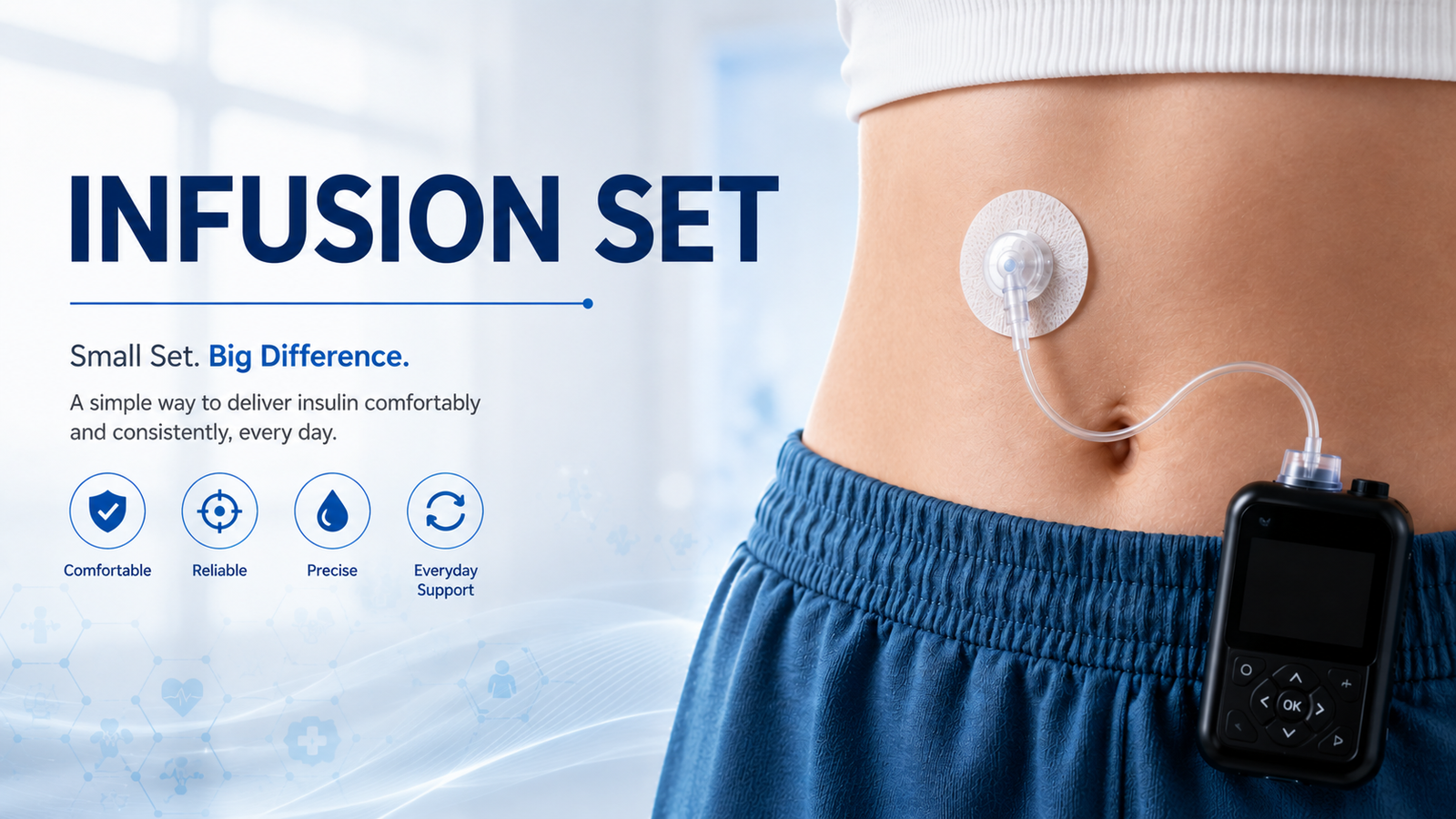
Insulin pumps are specialised devices used by some individuals with diabetes.
Unlike conventional IV infusion pumps, these devices generally deliver insulin into the subcutaneous tissue through a small infusion set or another approved delivery system.
They provide programmed background insulin delivery and may also support additional doses around meals.
Common features include basal insulin delivery, meal-related bolus delivery, insulin history, alerts, and integration with glucose monitoring systems in selected models.
Insulin therapy is commonly associated with diabetes management. Understanding what is diabetes can help readers learn how this condition affects blood glucose levels, why some patients require insulin, and how different treatment approaches support blood sugar management.
6. Nutritional Support
Patients who cannot consume sufficient food orally may require specialised nutritional support.
There are two major approaches:
Enteral nutrition: Liquid nutrition is delivered into the digestive system through a feeding tube. An enteral feeding pump can regulate the delivery rate.
Parenteral nutrition: Nutrients are delivered directly into the bloodstream through an appropriate vascular access device. An intravenous pump may be used for this treatment.
These methods may be required in patients with swallowing difficulties, certain digestive conditions, or other medical problems affecting normal nutritional intake.
7. Intensive Care and Emergency Treatment
Critically ill patients may require medications and fluids administered at carefully controlled rates.
Infusion systems are commonly used in intensive care units and emergency departments to administer selected vasopressors, sedatives, cardiovascular medications, electrolyte solutions, and other prescribed critical-care medicines.
In these situations, healthcare professionals continuously monitor the patient’s response and adjust treatment according to clinical requirements.
8. Anaesthesia and Surgical Procedures
Specialised infusion devices may also support medication administration during surgical procedures.
Anaesthesiologists use these systems to deliver certain anaesthetic and supportive medications according to the patient’s requirements.
They help maintain controlled medication delivery during surgery and selected post-operative treatment.
9. Home Healthcare
Portable and ambulatory devices can support selected infusion therapies outside hospitals when clinically appropriate.
Examples include:
- Certain antibiotic treatments.
- Long-term medication administration.
- Selected pain management therapies.
- Nutritional support.
- Other prescribed infusion treatments.
Patients and caregivers must receive proper training before operating these devices at home.
Types of Infusion Pumps and Their Applications
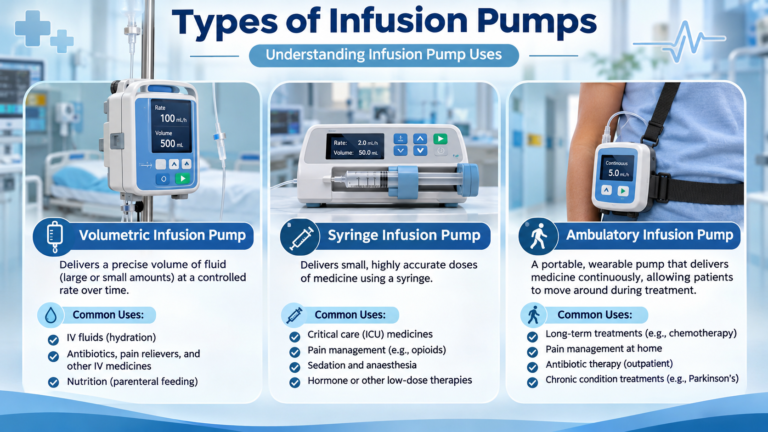
Different treatments require different infusion systems. The selection depends on fluid volume, medication type, required delivery rate, and treatment duration.
Understanding the different types also helps explain how infusion pump uses vary across medical departments.
| Type of pump | Main application | Common setting |
|---|---|---|
| Volumetric pump | Larger volumes of IV fluids and medications | Hospital wards |
| Syringe pump | Small volumes of medication | ICU and neonatal units |
| PCA pump | Patient-controlled pain medication | Post-operative care |
| Insulin pump | Subcutaneous insulin delivery | Diabetes management |
| Enteral feeding pump | Liquid nutrition through feeding tubes | Hospital and home care |
| Elastomeric pump | Controlled medication delivery | Selected outpatient treatments |
| Ambulatory pump | Portable infusion therapy | Home healthcare |
1. Volumetric Infusion Pump
A volumetric pump delivers a programmed volume of fluid over a specified period.
It is commonly used for IV fluid administration, medication delivery, and other prescribed infusion therapies.
2. Syringe Infusion Pump
A syringe pump uses a motor-driven mechanism to push the syringe plunger forward.
It is generally used when small amounts of medication need to be delivered at a controlled rate.
3. Patient-Controlled Analgesia Pump
A PCA pump allows patients to request prescribed doses of pain medication through a control button. It includes programmed safety limits to help prevent excessive medication delivery.
4. Insulin Infusion Pump
An insulin pump is a specialised device that provides continuous subcutaneous insulin delivery. It supports diabetes management through programmed insulin administration.
5. Enteral Feeding Pump
An enteral feeding pump delivers liquid nutrition through a feeding tube into the digestive system.
6. Ambulatory Infusion Pump
An ambulatory pump is portable and supports selected infusion treatments outside traditional hospital environments.
How Does an Infusion Pump Work?
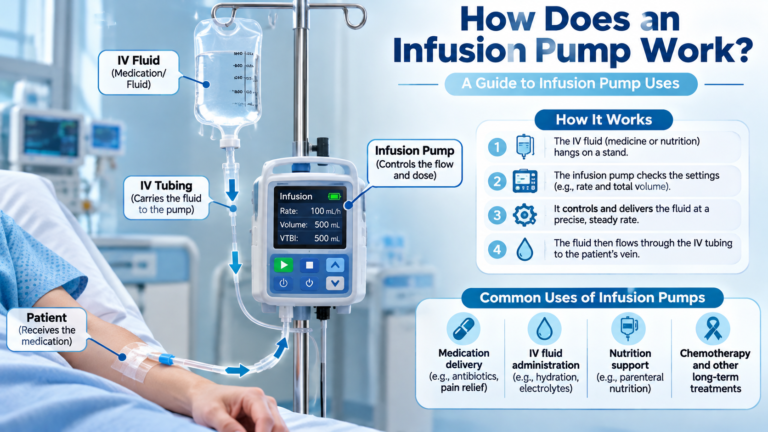
The working principle involves a mechanical or electronic pumping mechanism that moves fluid from a container or syringe through tubing into the patient’s body.
The general working process involves the following steps:
Step 1: Preparing the Equipment
The healthcare professional selects the appropriate device, medication, fluid container, syringe, and administration set according to the prescribed treatment.
Step 2: Connecting the Administration Set
Compatible tubing is connected to the fluid container and pump. The other end is connected to the patient’s prescribed access device.
Step 3: Programming the Settings
The healthcare professional enters the required parameters, which may include infusion rate, total volume, infusion duration, and medication concentration where applicable.
Step 4: Starting Fluid Delivery
After checking the settings and connections, the healthcare professional starts the device. Its internal mechanism controls fluid movement through the administration tubing.
Step 5: Monitoring the Treatment
The device may display the infusion rate, volume delivered, remaining volume, and treatment progress. Depending on the model, it may also generate alerts for air in the tubing, occlusion, low battery, or infusion completion.
Step 6: Completing the Infusion
When the programmed infusion is completed, the device may generate an alert. Healthcare professionals then follow the appropriate clinical procedure.
Benefits of Infusion Pumps in Patient Care
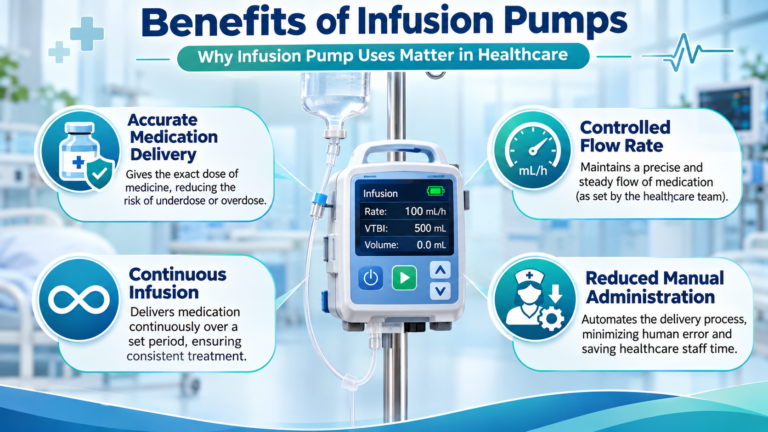
The different infusion pump uses provide several advantages in modern healthcare, particularly when treatments require controlled and consistent fluid or medication delivery.
1. Controlled Fluid Delivery
The device helps healthcare professionals maintain a prescribed fluid delivery rate and regulate the amount administered over a specific period.
2. Improved Administration Accuracy
These devices can deliver small volumes of medication and fluids at programmed rates, which is particularly useful when treatment requires careful administration.
3. Continuous Medication Delivery
Some treatments require medication to be administered continuously rather than through occasional doses. Electronic pumps support this requirement through programmed delivery.
4. Reduced Manual Adjustment
Traditional gravity-based IV systems require manual adjustment of the flow regulator. Electronic pumps can control programmed delivery rates, reducing the need for repeated manual adjustments.
5. Alarm and Safety Features
Many modern devices include alarms and alerts to notify healthcare professionals about potential problems.
Common alerts include:
- Air-in-line detection.
- Occlusion warnings.
- Low battery alerts.
- Infusion completion notifications.
- Door-open warnings.
- Programming limit alerts.
6. Support for Home Healthcare
Portable infusion devices allow selected patients to receive prescribed treatments outside hospitals. This can improve convenience and support long-term treatment plans.
Common Risks and Complications of Infusion Pumps
Although these devices support modern treatment, incorrect operation, programming errors, and equipment malfunction may create patient safety risks.
Healthcare professionals should understand these risks while evaluating infusion pump uses in different clinical situations.
1. Over-Infusion
Over-infusion occurs when a device delivers more fluid or medication than intended. It may happen because of incorrect programming, mechanical problems, or other system failures.
2. Under-Infusion
Under-infusion occurs when the device delivers less fluid or medication than prescribed. Possible causes include blocked tubing, incorrect settings, battery problems, or equipment malfunction.
3. Air in the Infusion Line
Air entering an intravenous administration line can create serious risks. Many modern pumps include air-in-line detection systems that alert healthcare professionals when air is detected.
4. Occlusion or Blockage
An occlusion occurs when fluid flow becomes blocked or restricted.
Possible causes include:
- Kinked tubing.
- Closed clamps.
- Blocked catheters.
- Improper connections.
- Other mechanical obstructions.
5. Incorrect Programming
Entering an incorrect infusion rate, volume, or medication concentration can result in inappropriate medication delivery. This is particularly concerning when high-alert medications are involved.
6. Equipment Malfunction
Technical problems may include software errors, damaged components, battery failure, and alarm malfunctions.
The FDA provides information about infusion pump problems and strategies for reducing associated risks.
Safety Precautions While Using an Infusion Pump
Safe operation requires appropriate training, equipment maintenance, and patient monitoring.
Healthcare professionals and trained home users should follow these precautions:
- Verify the prescription: Check the medication, concentration, rate, and volume before starting treatment.
- Inspect the equipment: Check the device, tubing, and connections for visible damage.
- Use compatible accessories: Ensure the administration set is suitable for the selected pump.
- Check the programming: Verify all required parameters before starting the infusion.
- Monitor alarms: Never ignore an alarm without identifying its cause.
- Maintain battery power: Ensure sufficient battery power or an appropriate electrical connection.
- Follow infection prevention practices: Maintain hand hygiene and appropriate aseptic techniques.
- Schedule maintenance: Follow the manufacturer’s inspection and maintenance recommendations.
- Provide user training: Ensure staff and caregivers understand operating instructions.
- Report equipment problems: Contact the healthcare team if a malfunction is suspected.
For more information, read the FDA resource: Infusion Pumps: Tips for Using Your Pump at Home.
Difference Between an Infusion Pump and a Traditional IV Drip
Both systems can deliver fluids into a patient’s body, but they use different methods to control fluid flow.
| Feature | Infusion pump | Traditional IV drip |
|---|---|---|
| Flow control | Mechanically or electronically controlled | Primarily gravity-based |
| Rate adjustment | Programmed settings | Manual roller clamp |
| Delivery control | Controlled programmed delivery | Flow may vary |
| Alarms | Available in many models | Usually no electronic pump alarms |
| Applications | Fluids, medications, specialised therapies | Common IV fluids and medications |
| Monitoring | Device display and clinical monitoring | Primarily visual and clinical monitoring |
An electronic pump may be preferred when treatment requires a specific delivery rate or controlled administration. However, traditional IV systems remain appropriate for many clinical situations.
Where Are Infusion Pumps Commonly Used?
Different infusion pump uses are found across several healthcare environments:
- Hospitals: IV fluids, antibiotics, and prescribed medications.
- Intensive Care Units: Selected critical-care medications and fluids.
- Operation Theatres: Certain anaesthetic and supportive medications.
- Neonatal Units: Controlled administration of small medication volumes.
- Oncology Centres: Selected chemotherapy treatments.
- Emergency Departments: Prescribed fluids and medication delivery.
- Home Healthcare: Selected long-term infusion therapies.
Frequently Asked Questions
How to Use an Infusion Pump Step by Step?
An infusion pump is used by trained healthcare professionals to deliver fluids or medications at a controlled rate. The general process involves:
- Check the prescribed medication, fluid, and infusion settings.
- Inspect the pump, tubing, and compatible accessories.
- Prepare and connect the administration set according to the manufacturer’s instructions.
- Enter the prescribed infusion rate and volume.
- Verify the settings and connections before starting.
- Start the infusion and monitor the patient and device.
- Respond to alarms and follow the appropriate clinical protocol.
Patients and caregivers should only operate an infusion pump after receiving proper training.
What Is the Function of an Infusion?
The function of an infusion is to deliver fluids, medications, nutrients, or other prescribed solutions into the body through a specific route over a controlled period.
Infusion therapy may be used to:
- Replace fluids and electrolytes.
- Administer prescribed medications.
- Provide nutritional support.
- Deliver chemotherapy.
- Support pain management.
- Maintain medication delivery when continuous administration is required.
How Does an Infusion Pump Work?
An infusion pump works through a mechanical or electronic pumping mechanism that moves fluid from a container or syringe through tubing into the patient’s body. Healthcare professionals program the required infusion rate, volume, and duration. The device regulates fluid delivery and may provide alarms for problems such as air in the line, occlusion, or low battery.
What Are the Different Types of Infusion Pumps?
The different types of infusion pumps are designed for specific medical applications. Common types include:
- Volumetric infusion pump: Delivers controlled volumes of IV fluids and medications.
- Syringe infusion pump: Administers small volumes of medication.
- Patient-controlled analgesia (PCA) pump: Allows patients to request programmed pain medication doses.
- Insulin pump: Delivers insulin into subcutaneous tissue.
- Enteral feeding pump: Delivers liquid nutrition through a feeding tube.
- Ambulatory infusion pump: Supports portable infusion treatments.
- Elastomeric pump: Uses an elastic reservoir to deliver medication at a controlled rate.
What Are the Three Types of Infusions?
Three commonly discussed types of infusion therapy based on the administration route are:
- Intravenous (IV) infusion: Delivers fluids or medications directly into a vein.
- Subcutaneous infusion: Delivers fluids or medications into the tissue beneath the skin.
- Epidural infusion: Delivers medication into the epidural space around the spinal cord, commonly for selected pain management procedures.
The appropriate infusion route depends on the medication, patient’s condition, and prescribed treatment.
Conclusion
Understanding infusion pump uses is important for learning how modern medical devices support patient treatment. From IV fluid administration and antibiotic delivery to chemotherapy, pain management, and nutritional support, these devices have several important applications in healthcare.
Different types of pumps serve different clinical purposes, and selecting the appropriate device depends on the patient’s condition and prescribed therapy.
Although these devices offer several advantages, proper programming, regular maintenance, user training, and patient monitoring remain essential for safe operation.
At MedExplainHub, we aim to make medical knowledge easier to understand by providing educational information about medical devices, healthcare technologies, and patient-related topics.