
Table of Contents
ToggleChoosing the right dressing is an important part of wound management. A suitable dressing helps protect the wound, manage fluid, maintain an appropriate healing environment and reduce the risk of further injury. However, not every wound needs the same material. The best option depends on the wound’s depth, amount of drainage, condition of surrounding skin and whether infection is suspected.
Understanding different types of wounds can help patients and caregivers know why a healthcare professional may recommend one product over another. Some dressings absorb excess wound fluid, while others add moisture, protect fragile tissue or help prevent the dressing from sticking to the wound. This guide explains common dressing materials, their uses, benefits and limitations.
What Is a Wound Dressing?
A wound dressing is a sterile or clean material placed over an injury to protect it and support the healing process. Depending on its design, it may absorb drainage, maintain moisture, act as a barrier against external contamination or protect newly formed tissue during dressing changes.
The choice among available wound dressing types is based on an assessment of the wound rather than its appearance alone. A clinician may consider the cause of the wound, its size and depth, the amount of exudate, the condition of the wound bed and the patient’s overall health.
Why Are Different Wound Dressing Types Used?
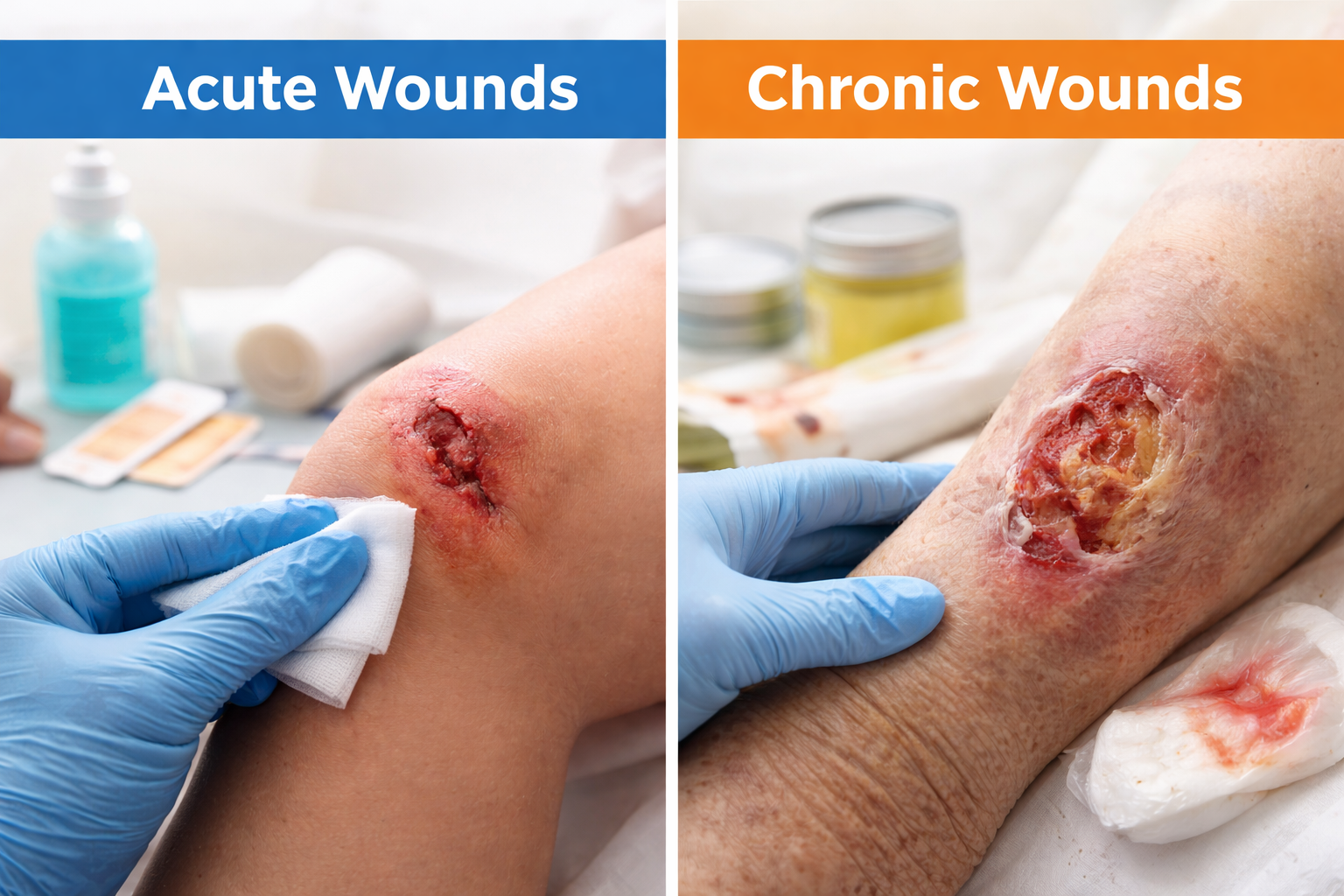
Wounds vary considerably. A shallow cut with minimal drainage has different needs from a deep wound producing heavy exudate. Using a dressing that is too dry may cause the material to stick to the wound, while a dressing that cannot manage excess fluid may leave the surrounding skin wet and irritated.
Modern advanced wound management focuses on maintaining an appropriate healing environment, controlling wound drainage and protecting damaged tissue. Different dressing materials are selected according to the wound’s individual requirements.
The main purposes of selecting appropriate wound dressing types include:
- Protecting the wound from friction and external contamination.
- Absorbing excess exudate when drainage is present.
- Maintaining a balanced, moist environment that supports healing.
- Preventing avoidable trauma during dressing removal.
- Protecting the surrounding skin from moisture-related damage.
- Supporting comfort and making wound monitoring easier.
No single dressing is suitable for every wound. The material should match the wound’s current condition and be reviewed as healing progresses.
10 Common Wound Dressing Types and Their Uses
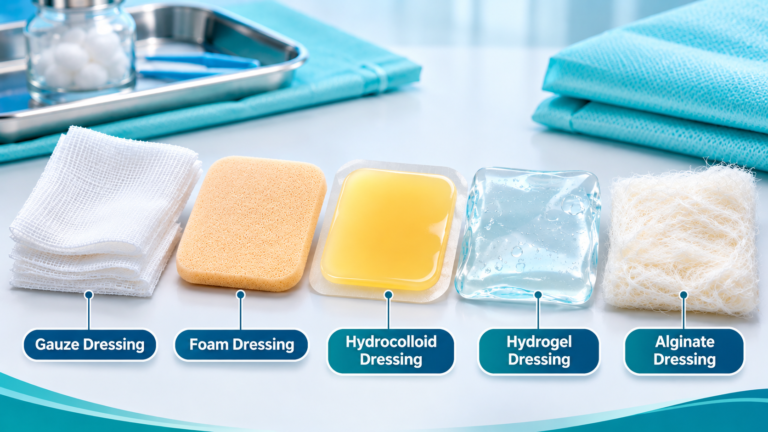
The following wound dressing types are commonly used in wound care. Their suitability depends on clinical assessment, product instructions and the condition being treated.
1. Gauze Dressings
Gauze is a traditional dressing material available as woven or non-woven pads, rolls and swabs. It is commonly used to cover wounds, absorb light to moderate drainage or secure another dressing in place.
Uses: Minor cuts, superficial wounds and as a secondary dressing over other wound products.
Benefits:
- Widely available and easy to use.
- Available in different sizes and formats.
- Can absorb wound fluid.
- Useful for cleaning and protecting certain wounds when used appropriately.
Limitations: Dry gauze may stick to the wound bed and cause discomfort or tissue damage during removal. It may need frequent replacement when drainage is heavy.
2. Foam Dressings
Foam dressings are generally made from soft, absorbent materials designed to manage moderate to heavy wound exudate. Some products include a silicone contact layer to reduce sticking and make removal gentler.
Uses: Pressure injuries, leg ulcers, surgical wounds and other wounds with noticeable drainage.
Benefits:
- Absorb excess wound fluid.
- Provide cushioning and protection.
- Help reduce the risk of leakage when correctly selected.
- Some versions are designed for easier removal.
Limitations: Foam dressings may not be suitable for very dry wounds unless used with an appropriate treatment plan. The dressing must be changed when saturated or as directed.
3. Hydrocolloid Dressings
Hydrocolloid dressings contain gel-forming materials that interact with wound fluid to create a moist environment. They are often available as sheets, pads or shaped dressings.
Uses: Selected shallow wounds, minor pressure injuries and wounds with low to moderate exudate.
Benefits:
- Support a moist wound environment.
- Provide a protective barrier.
- Can remain in place for several days when appropriate.
- May support autolytic debridement in selected wounds.
Limitations: They are not generally the first choice for heavily draining or clinically infected wounds. The wound should be assessed before use, especially if infection is suspected.
4. Hydrogel Dressings
Hydrogel products contain a high proportion of water and are designed to donate moisture to a dry wound. They are available as gels, sheets and impregnated dressings.
Uses: Dry or minimally exuding wounds, selected wounds with slough and some painful wounds where moisture support is required.
Benefits:
- Add moisture to a dry wound bed.
- May help soften dry tissue and support autolytic debridement.
- Can provide a cooling sensation in some applications.
Limitations: Hydrogel is not designed to absorb large amounts of fluid. A secondary dressing may be needed, and the surrounding skin should be monitored for excess moisture.
5. Calcium Alginate Dressings
Calcium alginate dressings are made from fibres derived from seaweed. When they come into contact with wound fluid, the fibres form a gel-like material that helps absorb exudate.
Uses: Moderately to heavily exuding wounds, including selected cavity wounds when used by trained professionals.
Benefits:
- Absorb substantial amounts of wound fluid.
- Help maintain a moist wound environment.
- Can conform to irregular wound surfaces.
- May support gentle removal when used according to instructions.
Limitations: Alginate dressings are generally unsuitable for dry wounds because they need moisture to form a gel. They may require a secondary dressing and should not be tightly packed into a wound.
6. Silver Alginate Dressings
Silver alginate dressings combine an absorbent alginate base with silver. Silver-containing dressings may be considered for selected wounds where local antimicrobial activity is needed, following professional assessment.
Uses: Certain wounds with signs of local infection or an increased infection risk, when a clinician considers a silver dressing appropriate.
Benefits:
- Manage wound exudate through the alginate component.
- Provide silver in the wound-contact material.
- May be used as part of a broader wound infection management plan.
Limitations: Silver dressings are not required for every wound and should not be used routinely without a clear clinical reason. They do not replace wound assessment, cleaning, treatment of the underlying cause or systemic treatment when required.
7. Carboxymethylcellulose (CMC) Dressings
CMC dressings use carboxymethylcellulose fibres or other CMC-based materials to absorb wound fluid and form a soft gel. Some products are designed for wounds with moderate to heavy exudate.
Uses: Selected chronic wounds, pressure injuries and other wounds where fluid management is required.
Benefits:
- Absorb wound exudate.
- Help maintain a moist wound environment.
- May conform to the wound bed.
- Some designs support less traumatic dressing removal.
Limitations: Product performance varies, so the instructions for the specific dressing should be followed. CMC dressings may need a secondary cover and are not intended for every wound.
Specialised wound care products are designed to address different wound management requirements, including moisture balance, exudate absorption and wound protection.
Explore Anziam Bio wound care products to learn more about its wound care product range, including CA+, CA+Extra, CA+Ag and CMC.
8. Transparent Film Dressings
Transparent film dressings are thin, flexible sheets that allow the wound area to remain visible. They provide a barrier against external contaminants while allowing water vapour to pass through.
Uses: Superficial wounds with little or no drainage, protection of intact skin and securing certain medical devices.
Benefits:
- Allow visual inspection without removing the dressing.
- Provide a flexible protective cover.
- Can reduce friction over suitable areas.
- Are useful for selected low-exudate wounds.
Limitations: Transparent films have limited absorption and are not suitable for wounds producing significant drainage. They should not be applied over wounds that require a more absorbent dressing.
9. Non-Adherent Dressings
Non-adherent dressings have a wound-contact surface designed to minimise sticking. They may be made from silicone, coated materials or other specialised layers.
Uses: Fragile skin, superficial wounds, skin tears, burns after clinical assessment and wounds with delicate new tissue.
Benefits:
- Help reduce trauma during dressing changes.
- Can improve comfort during removal.
- May be used with a separate absorbent secondary dressing.
- Protect delicate wound surfaces.
Limitations: Many non-adherent products do not absorb much fluid on their own. A suitable secondary layer may be required to manage drainage.
10. Collagen Dressings
Collagen dressings contain collagen or collagen-based materials intended to support the wound environment. They may be considered for selected chronic or slow-healing wounds as part of a comprehensive care plan.
Uses: Certain chronic wounds and wounds that are not progressing as expected, when recommended by a wound care professional.
Benefits:
- Provide a specialised wound-contact material.
- May support the wound healing environment in selected cases.
- Are available in different formats for different wound needs.
Limitations: Collagen products are not suitable for every wound and do not replace treatment of infection, poor circulation, pressure or other underlying causes.
Comparison of Common Wound Dressing Types
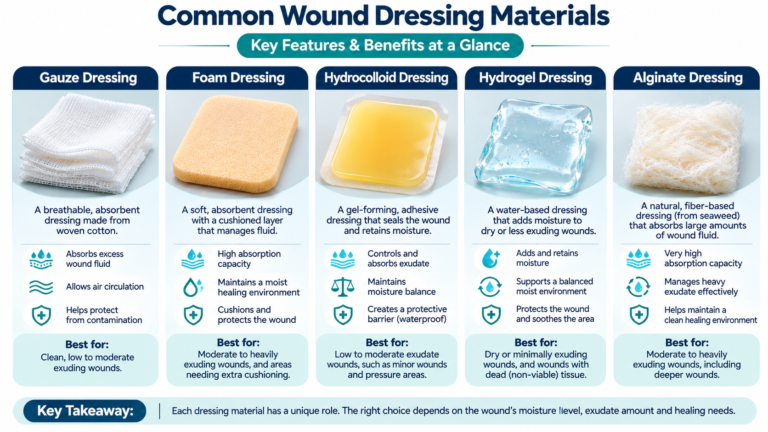
| Dressing | Main purpose | Typical wound drainage |
|---|---|---|
| Gauze | Covering and basic absorption | Light to moderate |
| Foam | Absorbing and cushioning | Moderate to heavy |
| Hydrocolloid | Maintaining moisture | Low to moderate |
| Hydrogel | Donating moisture | Dry to minimal |
| Calcium alginate | Absorbing exudate | Moderate to heavy |
| Silver alginate | Exudate management with silver | Moderate to heavy, selected cases |
| CMC | Absorbing and forming a gel | Moderate to heavy, product dependent |
| Transparent film | Protective covering | None to minimal |
| Non-adherent | Protecting delicate tissue | Depends on secondary dressing |
| Collagen | Specialised wound support | Depends on product and wound |
This comparison is a general guide, not a substitute for professional assessment. Different brands and product designs may have different indications.
These wound dressing types are selected according to the wound’s changing needs, not simply according to the product category.
How to Choose the Right Wound Dressing
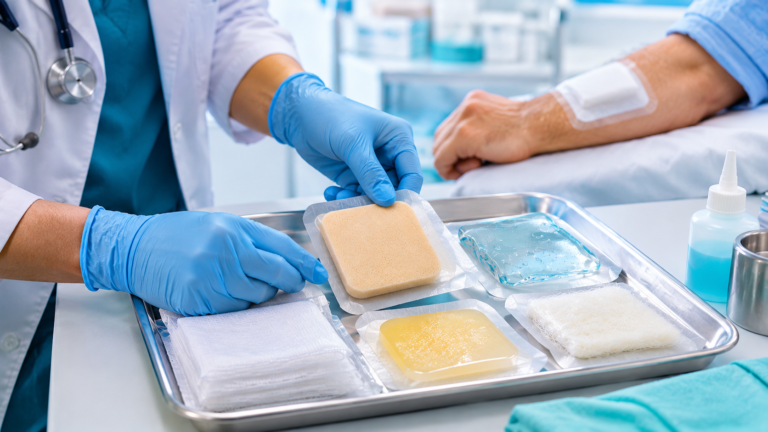
People living with diabetes may require specialised diabetic wound care because reduced sensation and circulation problems can affect wound healing. Regular wound assessment and appropriate dressing selection are important.
Selecting from different wound dressing types requires attention to several factors. The right choice can change as the wound improves or develops new symptoms.
1. Assess the Amount of Exudate
Exudate is fluid released from a wound. A dressing should manage the amount of fluid without drying the wound or allowing moisture to collect on nearby skin. Foam, alginate and some CMC products may be considered for wounds with more drainage, while hydrogel may be appropriate for selected dry wounds.
2. Check the Wound Depth and Condition
A superficial wound may need a simple protective dressing. A deeper wound may require a specialised product and careful assessment of the wound bed. Cavity wounds should only be packed when indicated, using the correct material and technique.
3. Consider the Surrounding Skin
The skin around a wound can become fragile, irritated or macerated when exposed to excess moisture. The dressing and any skin barrier product should be selected to protect this area.
4. Consider Pain and Dressing Removal
For painful wounds or fragile skin, a non-adherent or soft silicone contact layer may help reduce trauma during removal. The dressing should never be pulled away forcefully if it has adhered to the wound.
5. Review Infection Risk
Increasing pain, spreading redness, warmth, swelling, pus, an unpleasant smell or fever can indicate infection. A dressing alone cannot treat every wound infection. Seek medical advice promptly if these symptoms occur.
The selection of suitable wound dressing types also depends on the wound’s condition and infection risk. Some dressings are designed to absorb excess fluid, while others help maintain moisture or protect delicate tissue. Healthcare professionals may combine a primary dressing with a secondary dressing to provide additional absorption and protection. The dressing should be reviewed regularly and changed according to the wound’s healing progress, product instructions and clinical advice.
Choosing suitable dressing materials is an important part of effective wound management. For additional information about wound assessment, dressing selection and wound care practices, explore this wound care guidance resource.
Dressing Selection for Different Wound Conditions
Different wound conditions may require different wound dressing types, and treatment should address the cause of the wound as well as its surface.
Diabetic Foot Wounds
Diabetic foot wounds need careful assessment because reduced sensation and circulation problems can delay healing and increase the risk of complications. Pressure relief, blood glucose management, circulation assessment and infection monitoring are important. Do not self-treat a diabetic foot wound without professional guidance.
Pressure Injuries
Pressure injuries develop when prolonged pressure damages the skin and underlying tissue. Care may include pressure redistribution, repositioning, skin protection and a dressing selected according to wound depth and drainage. Foam products are used in some cases, but the choice depends on the individual wound.
Surgical Wounds
Surgical wounds may need a sterile post-operative dressing to protect the incision and absorb early drainage. Follow the surgeon’s instructions about when to change or remove it. Increasing redness, wound separation, pus or fever should be reported to a healthcare professional.
Burn Wounds
Burn treatment depends on the burn’s depth, size and location. Minor burns may need a suitable non-adherent covering after appropriate first aid, while deeper, larger or chemical and electrical burns require urgent medical care. Do not apply a dressing that sticks to the burn or delay assessment of a serious injury.
Common Mistakes to Avoid During Wound Dressing
Even appropriate wound dressing types may not work as intended if they are used incorrectly. Avoid these common mistakes:
- Choosing a dressing only because it is popular or easily available.
- Using an absorbent dressing on a very dry wound without considering moisture needs.
- Leaving a saturated or leaking dressing in place.
- Removing an adherent dressing forcefully.
- Applying products without checking their instructions or expiry date.
- Ignoring changes in pain, drainage, smell or surrounding skin.
- Reusing single-use dressings or touching the wound-contact surface unnecessarily.
Always clean the wound as advised by a healthcare professional, use clean or sterile supplies as appropriate, and follow the recommended dressing-change schedule.
Correct use of wound dressing types also depends on hygiene, application technique and regular reassessment.
How Often Should a Wound Dressing Be Changed?
There is no single schedule for all wounds. The frequency depends on the product, the amount of drainage, the wound condition and the clinician’s instructions. Some advanced dressings can remain in place for several days, while gauze or highly absorbent dressings may need more frequent changes.
Change or seek advice about a dressing if it becomes soaked, loose, dirty, leaks or causes increasing discomfort. Do not leave a dressing in place longer than the product instructions or care plan allow.
When Should You Consult a Wound Care Professional?
Seek medical advice if a wound is deep, large, caused by a bite or serious injury, or does not show signs of healing. Prompt assessment is particularly important for people with diabetes, poor circulation or reduced immunity.
Get urgent medical attention if there is uncontrolled bleeding, rapidly spreading redness, severe pain, fever, red streaks, significant swelling or a wound that appears infected. Severe burns, deep puncture wounds and wounds with exposed underlying structures also need urgent assessment.
A wound care professional can assess the wound, identify factors delaying healing and recommend suitable wound dressing types as part of an overall treatment plan.
Frequently Asked Questions (FAQs)
What are the most common wound dressing types?
Common options include gauze, foam, hydrocolloid, hydrogel, calcium alginate, silver alginate, CMC, transparent film, non-adherent and collagen dressings. The appropriate option depends on the wound.
Which dressing is best for a wound with heavy drainage?
Foam, calcium alginate and some CMC dressings may be used for wounds with moderate to heavy drainage. The choice depends on wound depth, the amount of exudate and the product instructions.
Which dressing is suitable for a dry wound?
Hydrogel may be considered for selected dry wounds because it donates moisture. A healthcare professional should assess the wound before a product is selected.
What is the difference between gauze and foam dressing?
Gauze is a traditional material used for covering and basic absorption. Foam is designed to absorb more wound fluid and provide cushioning. Their uses depend on the wound’s drainage and condition.
Are silver dressings suitable for every wound?
No. Silver-containing dressings are generally considered only for selected wounds when there is a clinical reason to use them. They should not replace professional assessment or other infection treatment.
Conclusion
Understanding wound dressing types makes it easier to recognise how different materials support wound management. Gauze may provide basic coverage, foam and alginate can help manage drainage, hydrogel can add moisture, and non-adherent materials can protect delicate tissue. Other options, such as hydrocolloid, CMC, silver alginate and collagen, have more specific uses.
The right dressing is the one that matches the wound’s condition and the patient’s needs. Reviewing wound dressing types with a qualified professional can help ensure the selected product remains appropriate as the wound changes. Because wounds can change during healing, regular assessment and correct dressing technique are essential. If a wound is not healing, becomes painful or shows signs of infection, consult a qualified healthcare professional rather than changing products without guidance.