
An Infusion Set is an important component of insulin pump therapy. While the insulin pump controls how much insulin is delivered, this small device creates the pathway that carries insulin from the pump into the tissue beneath the skin. For people using an insulin pump, understanding how this device works can make daily diabetes management easier and safer.
Many people search for information about Infusion Set parts, types, uses, placement, replacement, and price before choosing or changing their pump supplies. However, different designs are made for different needs. The choice can depend on body type, skin sensitivity, lifestyle, comfort, insulin pump compatibility, and healthcare professional recommendations.
It is also important to understand that an insulin-pump delivery system is different from an IV set used in hospitals. Although both products are sometimes described using the word “infusion,” they have different purposes and deliver substances through different routes.
This guide explains the Infusion Set in simple language, including its main parts, types, common placement sites, benefits, possible problems, replacement schedule, price in India, and important factors to consider before choosing one.
What Is an Infusion Set?
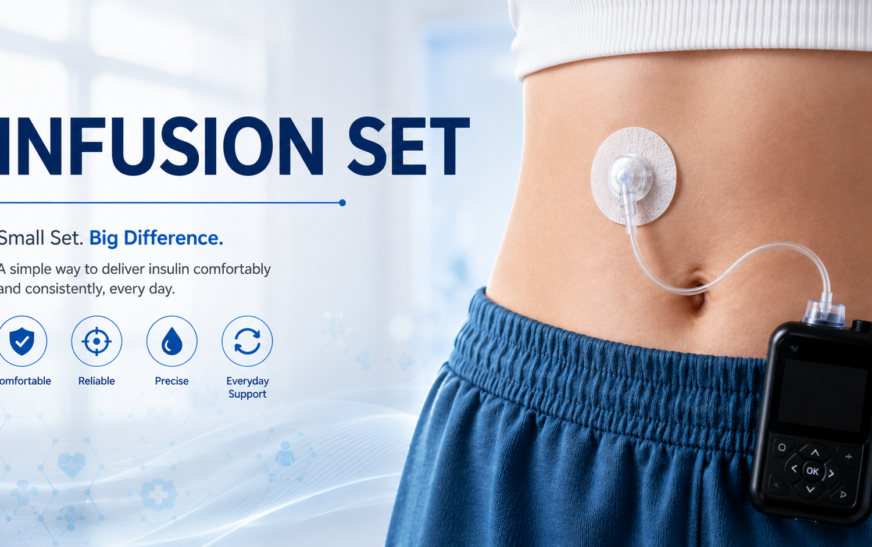
An Infusion Set is a small medical device used with an insulin pump to deliver insulin into the subcutaneous tissue, which is the fatty layer located underneath the skin.
The system generally includes tubing, a connector, an adhesive patch, an insertion needle or device, and either a soft cannula or a steel needle. One end connects to the insulin pump, while the other end is inserted into an appropriate area of the body.
Once it is correctly placed, insulin travels from the pump through the tubing and enters the tissue through the cannula or needle. The insulin can then be absorbed by the body.
The device is designed for continuous insulin delivery rather than requiring a new needle for every individual dose. However, it does not mean the user can ignore glucose monitoring or other aspects of diabetes care.
Different products have different designs, wear periods, cannula lengths, tubing lengths, and insertion methods. Therefore, choosing a suitable option should be based on individual needs and the instructions provided for the specific pump and product.
An insulin pump is one of several approaches used to manage diabetes, alongside other prescribed diabetes treatments.
What Is an Infusion Set Used For?
The primary purpose of an Infusion Set is to deliver insulin from an insulin pump into the subcutaneous tissue.
An insulin pump can provide basal insulin throughout the day and bolus doses when required. The delivery system connects the pump to the body so that the programmed insulin can reach the intended tissue.
For many insulin pump users, this approach can reduce the need for repeated injections throughout the day. It can also provide flexibility when managing meals, exercise, work, travel, and other daily activities.
However, the device is only one part of insulin pump therapy. Correct pump settings, prescribed insulin doses, glucose monitoring, nutrition, physical activity, and regular communication with a healthcare professional remain important.
If the device becomes disconnected, blocked, kinked, or accidentally removed, insulin delivery can be interrupted. This can result in rising blood glucose, so users should understand how to identify and manage delivery problems according to their diabetes care plan.
Parts of an Infusion Set
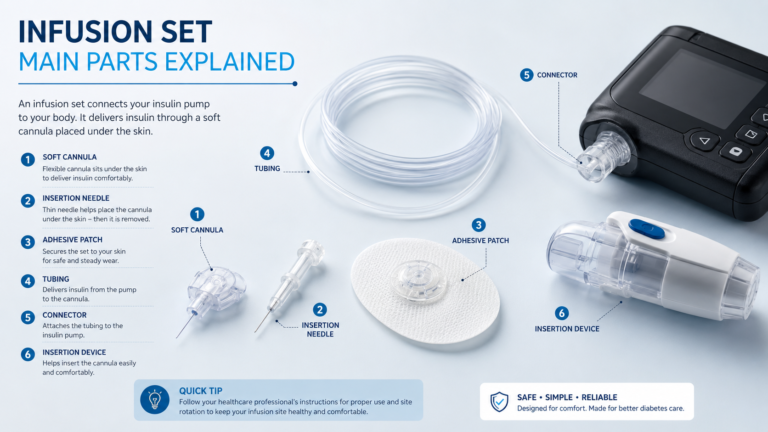
Knowing the main components can help users understand how insulin moves from the pump into the body and recognize potential problems.
1. Cannula
The cannula is a small, flexible tube that sits underneath the skin in a soft-cannula system. It provides a pathway through which insulin enters the subcutaneous tissue.
Cannulas are available in different lengths. The appropriate length can depend on the amount of subcutaneous tissue, body type, age, and individual requirements.
A soft cannula can sometimes bend or kink during insertion or movement. If this happens, insulin may not be delivered as intended.
2. Insertion Needle
The insertion needle is used to guide a soft cannula beneath the skin.
After insertion, the needle is removed while the flexible cannula remains in position. Some devices use a separate insertion mechanism to make this process easier.
The insertion needle should not be confused with the cannula itself because they have different functions.
3. Steel Needle
Some delivery systems use a thin steel needle instead of a flexible plastic cannula. In this type of design, the steel needle remains beneath the skin during use.
Steel options may be considered by people who have experienced repeated problems with soft cannulas. However, suitability depends on individual circumstances and the specific pump system.
4. Tubing
Tubing connects the insulin pump to the insertion site.
Insulin travels through the tubing before reaching the cannula or needle. Different tubing lengths are available, allowing users to choose an option that works with how they wear their pump.
Tubing should be checked regularly for damage, disconnection, air bubbles, or other problems that could interfere with insulin delivery.
5. Connector
The connector joins the tubing with the insertion component.
Depending on the product, the connection may allow temporary disconnection from the pump. This can be useful during certain activities, but users should follow the instructions supplied with their particular pump and delivery system.
6. Adhesive Patch
The adhesive patch holds the device securely against the skin.
A reliable adhesive is particularly important during exercise, sweating, sleeping, or normal daily movement. Some people can develop skin irritation or sensitivity from medical adhesives, so any persistent reaction should be discussed with a healthcare professional.
Types of Infusion Sets
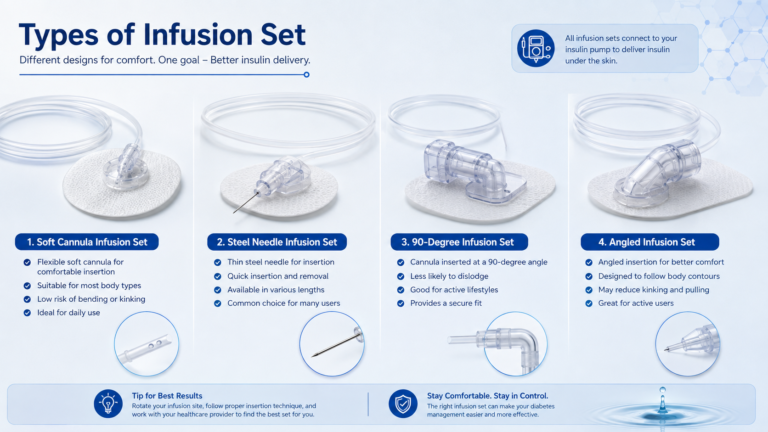
There are several types available for insulin pump users. They can differ according to cannula material, insertion angle, insertion method, tubing length, and design.
There is no universal option that is suitable for everyone. A device that works well for one person may be uncomfortable or unreliable for another.
Soft Cannula Type
A soft-cannula design uses a flexible plastic tube that remains under the skin after the insertion needle is removed.
This option is commonly used because the flexible material can move with the body during normal activities.
Potential advantages include:
- Flexible design
- Different cannula lengths
- Options for straight or angled insertion
- Comfortable for many users
- Available for different insulin pump systems
However, soft cannulas can sometimes bend or kink, which may affect insulin delivery.
Steel Needle Type
A steel-needle design uses a fine metal needle that remains in place during the wear period.
Some people prefer this option because the rigid needle does not bend in the same way as a soft cannula. It may also be considered for users who have experienced repeated cannula kinking.
The choice between a soft cannula and steel needle should be based on comfort, previous experience, body type, and professional advice.
90-Degree Type
A 90-degree design enters the skin straight down.
These products can be relatively straightforward to insert and are available in different cannula lengths. They may be suitable for many children and adults, depending on individual body composition and the manufacturer’s recommendations.
Angled Type
An angled design enters the skin at an angle rather than straight down.
This can provide an alternative for people who have less subcutaneous tissue or who find angled insertion more comfortable. The exact angle varies between products.
Manual Insertion
With manual insertion, the user places the device by hand.
This method can provide direct control over positioning, but proper technique is important. New users may need instruction and practice from their diabetes care team.
Automatic Insertion
Automatic insertion systems use a dedicated device to help place the cannula or needle.
They may be helpful for children, beginners, or people who find manual insertion difficult. The insertion device can also make the process more consistent for some users.
Common Infusion Set Placement Sites
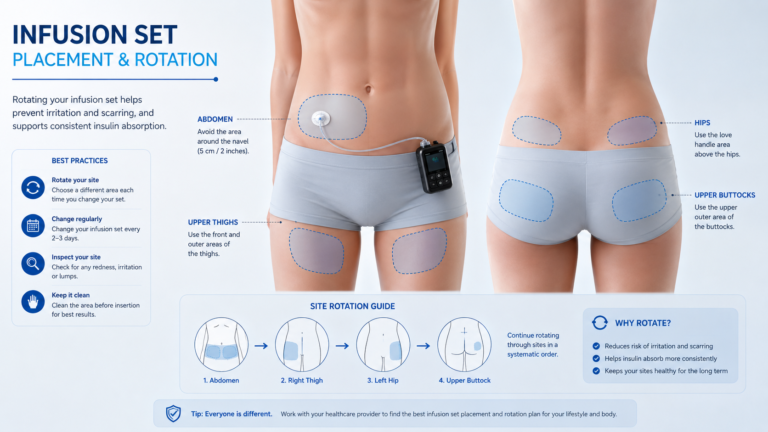
The device is generally placed in an area containing enough subcutaneous tissue for insulin delivery.
Common areas may include:
- Abdomen
- Upper buttocks
- Hips
- Upper thighs
- Upper arms, when appropriate for the specific product
The exact recommended locations can vary depending on the product and individual needs.
Why Is Site Rotation Important?
Using the same location repeatedly can cause skin irritation, lumps, scar tissue, or changes in insulin absorption.
Regularly rotating insertion locations allows previously used areas time to recover. It can also help reduce repeated trauma to the same area of skin.
Users should avoid inserting into areas that are painful, irritated, infected, scarred, or otherwise unsuitable. A healthcare professional can explain which areas are appropriate and how to rotate them.
How Often Should an Infusion Set Be Changed?
Most standard insulin pump delivery systems are commonly replaced every 2 to 3 days, although the exact schedule depends on the specific product and healthcare professional’s instructions.
Some specially designed products may have longer approved wear periods. Users should not assume that a standard product can safely be worn longer simply because it still appears attached to the skin.
A replacement may also be necessary sooner if there is:
- Redness around the site
- Swelling
- Increasing pain
- Skin irritation
- Insulin leakage
- Loose adhesive
- A kinked cannula
- Suspected blockage
- Repeated pump alerts
- Unexpected high blood glucose
Following the manufacturer’s instructions and the replacement plan provided by the diabetes care team is important for reliable insulin delivery.
Benefits of Using an Infusion Set
For people using insulin pumps, an Infusion Set can provide several practical advantages.
Continuous insulin delivery
It provides the pathway needed for the pump to deliver insulin continuously according to its programmed settings.
Fewer daily injections
Pump therapy can reduce the need for separate injections for every insulin dose.
Convenience
Once properly inserted, the system can remain in place for the recommended wear period, making routine insulin delivery more convenient.
Lifestyle flexibility
Many pump users appreciate the flexibility of managing insulin delivery around meals, exercise, work, travel, and other activities.
Different design options
Users can choose from different cannula materials, insertion angles, lengths, and insertion methods based on their requirements and pump compatibility.
Managing diabetes effectively also involves understanding preventive care, regular monitoring, and healthy daily habits
Common Problems and Complications
Like other medical devices, an Infusion Set can sometimes cause problems.
Cannula Kinking
A soft cannula can bend during insertion or movement. A kink may prevent insulin from reaching the body properly.
Blockage or Occlusion
A blockage can interfere with the movement of insulin through the delivery pathway. Some pumps can provide an alert when an occlusion is detected.
Adhesive Problems
Sweat, water, physical activity, or skin oils can cause the adhesive to loosen.
Skin Irritation
Some users may develop redness, itching, irritation, or inflammation around the insertion site.
Accidental Dislodgement
The device can become partially or completely detached during exercise, dressing, sleeping, or everyday activities.
Leakage
Insulin may leak if the connection is loose or if there is a problem at the insertion site.
Infection
Any device that breaks the skin can carry a risk of infection. Increasing redness, warmth, swelling, pain, or discharge should be evaluated by a healthcare professional.
If blood glucose remains unexpectedly high or the user suspects insulin delivery has stopped, they should follow the backup and troubleshooting instructions provided by their diabetes care team.
Insulin pump safety is also important when using an infusion set. The U.S. Food and Drug Administration (FDA) recommends that insulin pump users understand their device, follow the manufacturer’s instructions, and know how to respond if the pump or its delivery system does not work as expected. Regularly checking the infusion site and being prepared with a backup insulin plan can help users respond quickly to delivery problems.
How to Reduce Infusion Set Problems
Good insertion and site-care habits can help reduce common problems.
Clean the insertion area
Follow the cleaning and preparation instructions supplied with the specific product.
Rotate insertion locations
Avoid repeatedly using exactly the same area.
Check the adhesive
Make sure the adhesive remains securely attached, particularly during exercise or activities involving water.
Monitor glucose levels
Unexpected or unexplained glucose changes can sometimes indicate a delivery problem.
Replace the device on schedule
Follow the recommended wear period rather than extending use without professional advice.
Keep backup supplies
People using insulin pumps should have an appropriate backup plan in case pump delivery is interrupted. This may include backup insulin and another prescribed method of insulin administration.
Infusion Set Price in India
The Infusion Set price can vary depending on the brand, pump compatibility, cannula material, tubing length, pack size, and product design.
For insulin pump users, the cost may be considerably higher than basic IV infusion products because these are different medical devices designed for different purposes.
As an approximate guide, insulin pump delivery sets in India may cost around ₹800 to ₹1,800 or more per set, depending on the brand and model. A box containing multiple sets can cost several thousand rupees.
These figures are only approximate. The actual price can change based on:
- Brand
- Insulin pump model
- Soft or steel design
- Cannula length
- Tubing length
- Pack size
- Standard or extended-wear design
- Supplier
- Availability
Before purchasing, users should confirm compatibility with their insulin pump and buy from a reliable medical supplier.
It is also important not to compare the price of an insulin pump product with an ordinary hospital IV set simply because both may be called infusion products.
How to Choose the Right Infusion Set
Selecting the right product depends on individual needs rather than price alone.
Consider Your Body Type
The amount of subcutaneous tissue can influence the choice of cannula length and insertion angle.
Consider Skin Sensitivity
If you frequently experience irritation from adhesives, discuss the issue with your healthcare professional.
Consider Your Lifestyle
People who exercise frequently or participate in sports may need a design that provides secure attachment during movement.
Consider Cannula Preference
Some users prefer flexible plastic cannulas, while others may prefer steel needles.
Check Pump Compatibility
Not every product works with every insulin pump. Always verify compatibility before purchasing.
Ask Your Healthcare Professional
A diabetes care professional can help determine which design, length, insertion angle, and placement site may be appropriate.
Infusion Set vs IV Set: What Is the Difference?
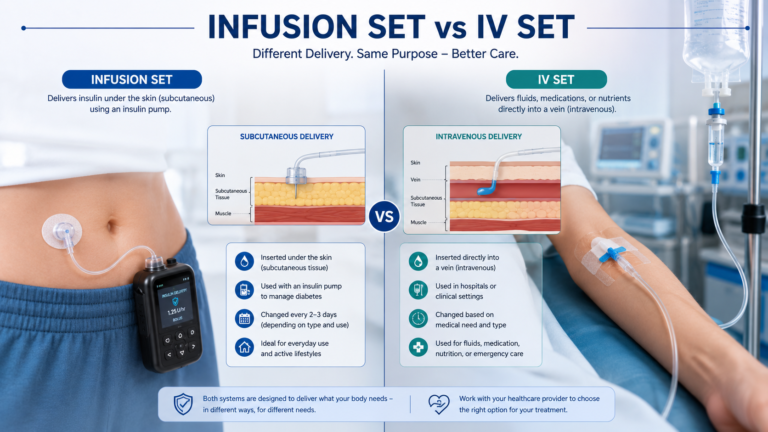
An insulin-pump Infusion Set and an IV set are different medical devices even though their names sound similar.
An insulin-pump delivery system is designed to deliver insulin into the tissue beneath the skin.
An IV set is designed for intravenous therapy. It is used with venous access to administer fluids, medicines, or other prescribed solutions directly into a vein.
| Feature | Insulin Pump Delivery Set | IV Set |
|---|---|---|
| Main purpose | Insulin delivery | IV fluids or medicines |
| Delivery route | Subcutaneous tissue | Vein |
| Common setting | Daily diabetes management | Hospitals and clinical settings |
| Main use | Insulin pump therapy | Intravenous treatment |
| Connection | Insulin pump | IV access device |
These products should not be substituted for one another. An insulin-pump delivery system is specifically designed for its intended route and purpose.
Infusion Set vs Insulin Syringe and Pen
An Infusion Set is part of insulin pump therapy, while insulin syringes and pens deliver insulin through individual injections.
Insulin Pump Delivery
- Uses a pump and delivery set
- Can provide continuous basal insulin
- Allows programmed bolus delivery
- Requires regular site changes
Insulin Pen
- Delivers individual insulin injections
- Portable and convenient
- Does not require an insulin pump
Insulin Syringe
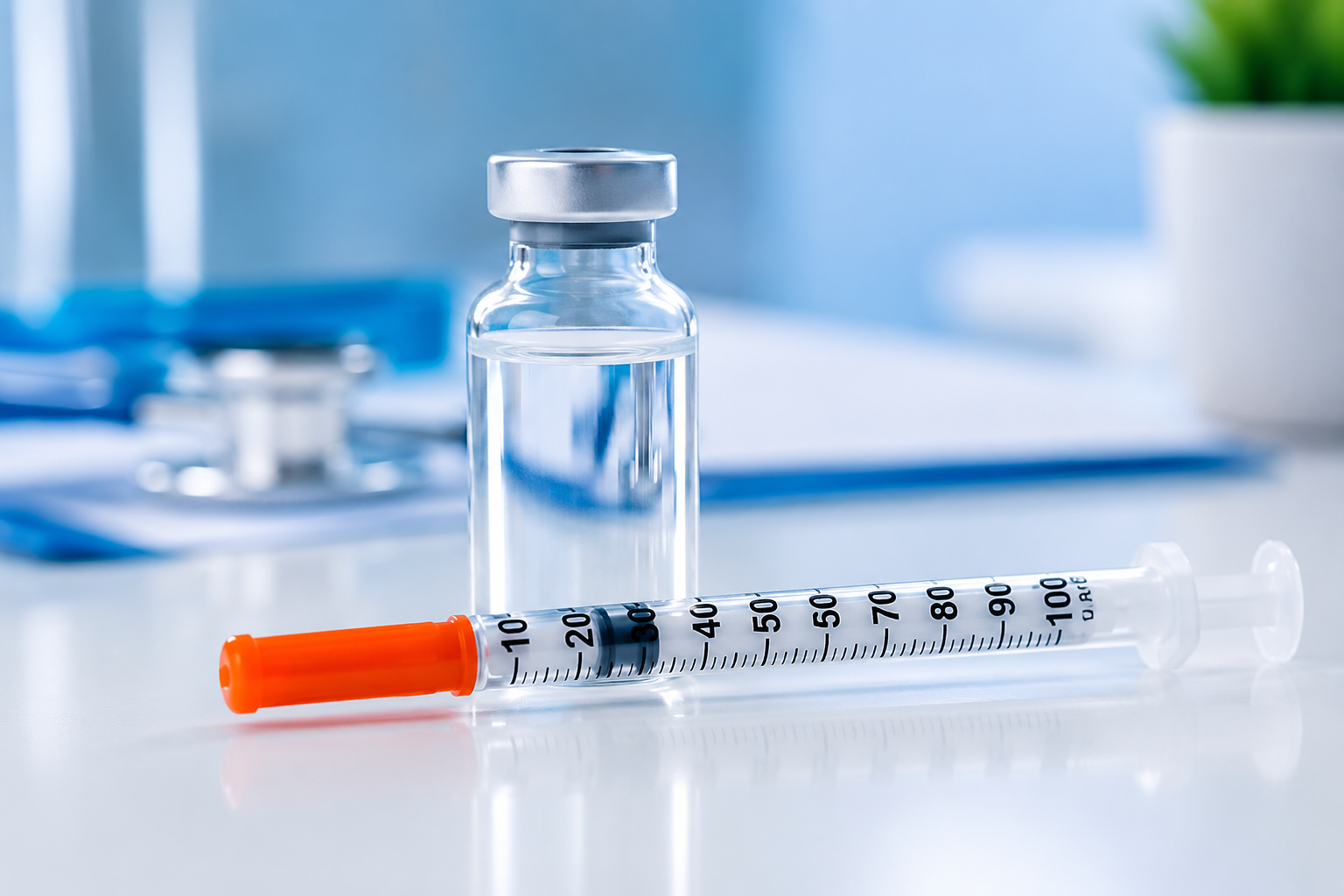
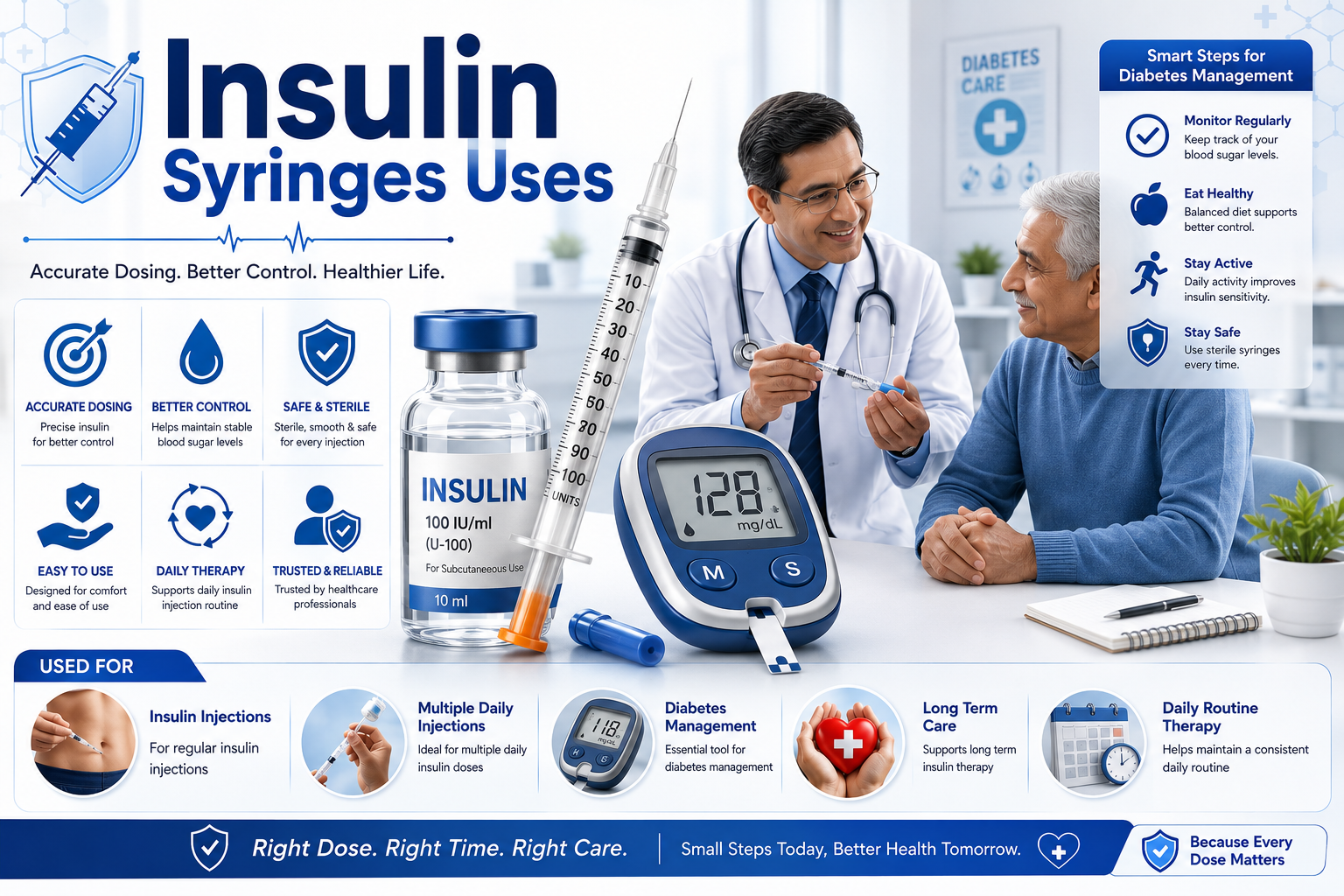
- Uses a insulin syringe and needle to administer prescribed insulin
- Can be used as part of an injection-based treatment plan
The most appropriate insulin delivery method depends on the person’s diabetes treatment plan, lifestyle, preferences, and healthcare professional’s recommendation.
When Should You Contact a Healthcare Professional?
You should seek medical advice if you experience persistent problems with the device or insertion site.
Contact your healthcare professional if you notice:
- Persistent redness
- Swelling
- Increasing pain
- Signs of infection
- Repeated insulin leakage
- Frequent cannula failures
- Repeated pump alarms
- Unexplained high blood glucose
- Difficulty keeping the adhesive attached
If insulin delivery is interrupted, follow your personalised backup plan rather than simply waiting for the problem to resolve.
Frequently Asked Questions (FAQs)
What is an infusion set used for?
An Infusion Set is used with an insulin pump to deliver insulin into the subcutaneous tissue beneath the skin. It connects the pump to the body and provides the pathway through which insulin reaches the insertion site.
What are the key differences between an infusion set and an IV set?
An insulin pump delivery set delivers insulin into tissue beneath the skin, whereas an IV set is designed to deliver fluids or medicines into a vein. They have different purposes, designs, and routes of administration and should not be used interchangeably.
Which infusion set is best?
There is no single best option for everyone. Soft cannulas, steel needles, straight designs, and angled designs can suit different users. Body type, skin sensitivity, activity level, comfort, and pump compatibility should all be considered when choosing a product.
What are the different types of infusion sets?
The main types include soft-cannula and steel-needle designs. They can also be classified according to insertion angle, such as 90-degree or angled designs, and according to insertion method, such as manual or automatic insertion.
How often should an infusion set be changed?
Most standard insulin pump sets are changed every 2 to 3 days, although the exact replacement schedule depends on the specific product and healthcare professional’s instructions. Some specially designed products may have a longer approved wear period.
Conclusion
An Infusion Set is a small but essential part of insulin pump therapy. It connects the pump to the body and provides a pathway for insulin to enter the subcutaneous tissue.
There are several options available, including soft cannula, steel needle, straight, angled, manual, and automatic insertion designs. The appropriate choice depends on factors such as body type, skin sensitivity, activity level, comfort, pump compatibility, and professional advice.
Most standard sets require replacement every two to three days, although some products are specifically designed for longer wear. Regular site rotation and proper care can help reduce irritation and other common problems.
It is also important to understand the difference between an insulin pump delivery system and an IV set. They are designed for different purposes and different routes of administration.
If you are unsure which product is appropriate for your insulin pump, speak with your diabetes healthcare professional before making a change.