
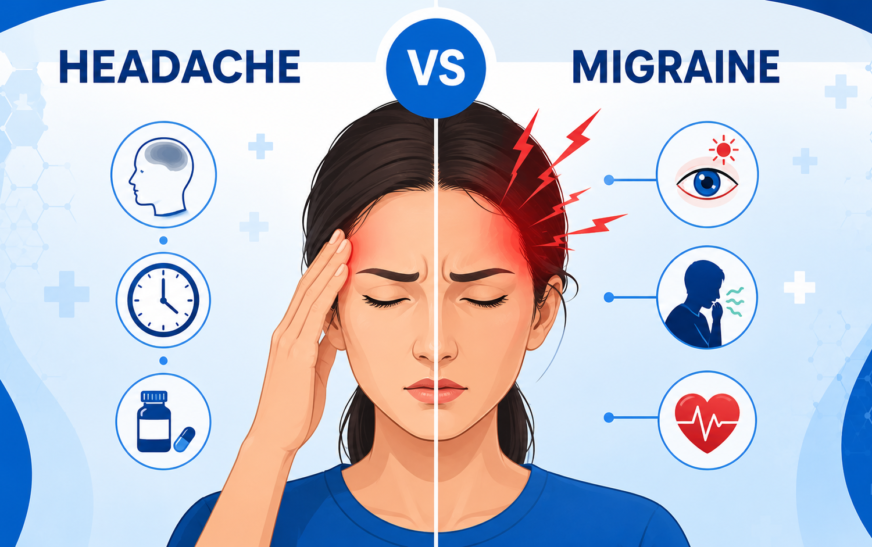
Head pain is one of the most common health complaints worldwide, but not every headache is the same. Many people use the terms migraine and headache interchangeably, even though they are different medical conditions. Frequent headaches can sometimes be associated with underlying health conditions, including Anaemia: Causes, Symptoms, Diagnosis & Effective Treatment, making it important to identify the actual cause rather than simply treating the pain. Understanding the difference between Migraine vs Headache is essential because each condition has different causes, symptoms, triggers, and treatment options.
A headache usually causes pain or pressure in the head, scalp, or neck and may result from stress, dehydration, lack of sleep, sinus problems, or other underlying conditions. A migraine, on the other hand, is a neurological disorder that often causes intense, throbbing pain along with symptoms such as nausea, vomiting, and sensitivity to light and sound.
Knowing the differences in Migraine vs Headache can help you recognize your symptoms early and choose the right treatment. While many headaches improve with rest or over-the-counter pain relievers, migraines often require specific medications and lifestyle changes for effective relief.
In this guide, you’ll learn everything about Migraine vs Headache, including their symptoms, causes, diagnosis, treatment options, and when it’s time to seek medical care.
Table of Contents
ToggleWhat Is a Headache?
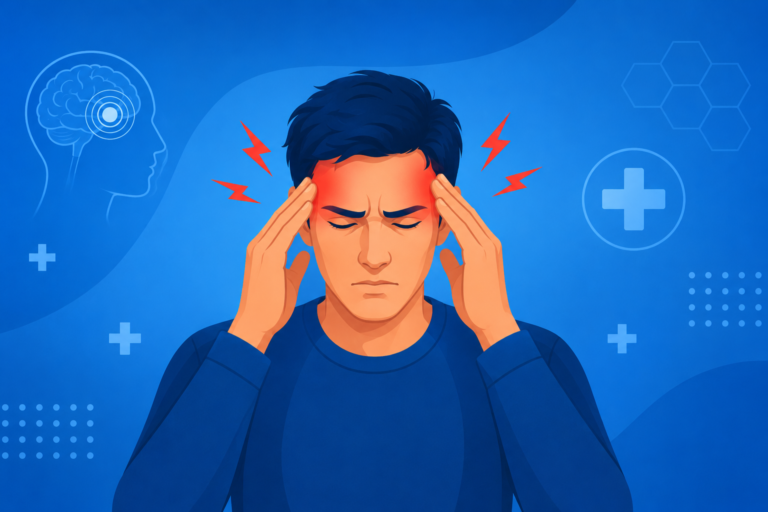
A headache is pain or discomfort felt anywhere in the head, face, scalp, or neck. It can range from mild to severe and may last from a few minutes to several days. Most headaches are not dangerous and often improve with rest, hydration, or simple pain-relieving medicines.
There are more than 150 different types of headaches, but the most common include:
- Tension headaches
- Sinus headaches
- Cluster headaches
- Cervicogenic headaches
- Medication-overuse headaches
When comparing Migraine vs Headache, it’s important to remember that a headache is usually a symptom, whereas a migraine is a neurological condition with multiple associated symptoms.
Common Symptoms of a Headache
Headache symptoms vary depending on the type but may include:
- Dull, aching pain
- Pressure or tightness around the forehead
- Pain on one or both sides of the head
- Neck stiffness
- Mild sensitivity to light or noise
- Difficulty concentrating
Most headaches do not cause nausea or severe sensitivity to light and sound, which are more commonly associated with migraines.
What Is a Migraine?
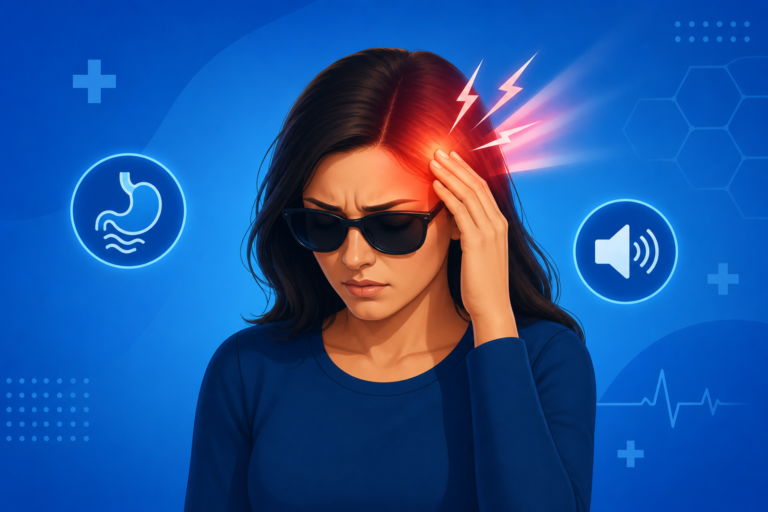
A migraine is a neurological disorder that causes recurring attacks of moderate to severe headache pain. Unlike a regular headache, migraines often affect one side of the head and are accompanied by additional symptoms that can interfere with daily life.
The pain is commonly described as throbbing or pulsating and may last anywhere from 4 to 72 hours if left untreated. Physical activity often makes migraine pain worse.
When discussing Migraine vs Headache, migraines are generally more severe and disabling because they involve changes in brain activity and nerve signaling rather than simple head pain.
Common Symptoms of a Migraine
People experiencing migraines may notice:
- Severe throbbing head pain
- Pain on one side of the head (sometimes both)
- Nausea or vomiting
- Sensitivity to light (photophobia)
- Sensitivity to sound (phonophobia)
- Sensitivity to smells
- Blurred vision
- Dizziness
- Fatigue
- Difficulty speaking or concentrating
Some individuals also experience an aura before a migraine begins. Aura symptoms may include:
- Flashing lights
- Blind spots
- Tingling in the face or hands
- Temporary vision changes
- Difficulty speaking
These symptoms usually appear 20–60 minutes before the headache starts.
Migraine vs Headache: Quick Comparison Table
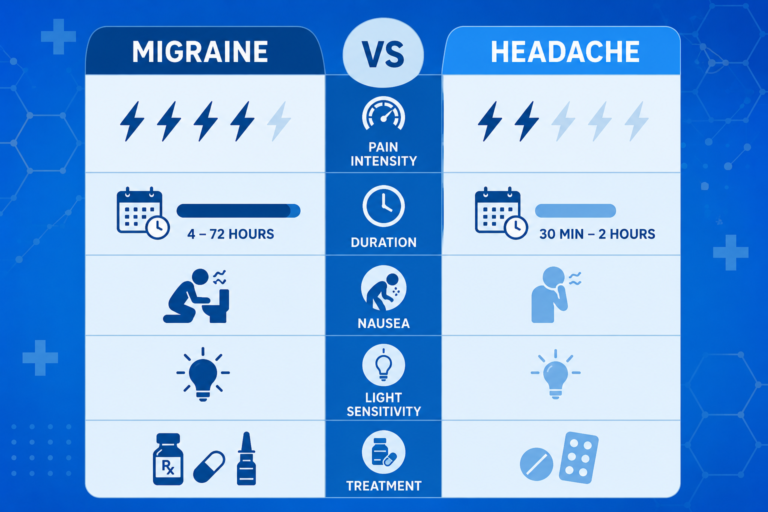
| Feature | Migraine | Headache |
|---|---|---|
| Pain Type | Throbbing or pulsating | Dull, pressing, or aching |
| Pain Severity | Moderate to severe | Mild to moderate |
| Pain Location | Usually one side of the head | Both sides or entire head |
| Duration | 4–72 hours | 30 minutes to several hours |
| Nausea | Common | Rare |
| Vomiting | May occur | Uncommon |
| Light Sensitivity | Common | Usually mild or absent |
| Sound Sensitivity | Common | Rare |
| Physical Activity | Makes pain worse | Usually no major effect |
| Treatment | Migraine-specific medicines and lifestyle changes | Pain relievers, hydration, rest |
This comparison highlights the major differences in Migraine vs Headache and explains why proper diagnosis is essential for choosing the right treatment.
Difference Between Migraine vs Headache
Although both conditions involve head pain, there are several important differences between Migraine vs Headache.
1. Cause
A headache is often triggered by factors such as stress, dehydration, poor posture, eye strain, sinus infections, or lack of sleep.
Migraines are believed to result from abnormal brain activity involving nerves, blood vessels, and brain chemicals. Genetics also play a significant role.
2. Pain Pattern
Headaches usually produce a steady, pressure-like pain.
Migraines typically cause intense throbbing pain that may worsen with movement.
3. Associated Symptoms
One of the biggest differences in Migraine vs Headache is the presence of additional symptoms.
Migraines frequently include:
- Nausea
- Vomiting
- Visual disturbances
- Light sensitivity
- Sound sensitivity
Most ordinary headaches do not produce these symptoms.
4. Daily Activities
People with regular headaches can often continue working or performing routine tasks.
Migraine sufferers may need to lie down in a dark, quiet room because even normal activities can worsen their symptoms.
5. Duration
Most headaches resolve within a few hours.
Migraines can continue for up to three days if not treated appropriately.
Migraine vs Headache Symptoms
Although migraines and headaches both involve pain in the head, their symptoms can be very different. Recognizing these differences is essential for getting the right diagnosis and treatment. When comparing Migraine vs Headache, migraines usually involve additional neurological symptoms, while most headaches cause only head pain or pressure.
Symptoms of a Migraine
Migraine symptoms can vary from person to person, but common signs include:
- Severe throbbing or pulsating pain
- Pain on one side of the head (sometimes both sides)
- Nausea and vomiting
- Sensitivity to light (photophobia)
- Sensitivity to sound (phonophobia)
- Sensitivity to strong smells
- Blurred vision
- Dizziness or vertigo
- Fatigue and weakness
- Difficulty concentrating
Some people experience an aura before the migraine begins. Aura symptoms may include:
- Flashing lights or zigzag lines
- Temporary blind spots
- Tingling or numbness in the face or hands
- Difficulty speaking
- Temporary vision changes
Symptoms of a Headache
Common headache symptoms include:
- Dull or aching pain
- Pressure or tightness around the forehead
- Pain on both sides of the head
- Mild discomfort in the scalp or neck
- Tenderness around the head muscles
Unlike migraines, most headaches do not cause nausea, vomiting, or severe sensitivity to light and sound.
Causes of Migraine vs Headache
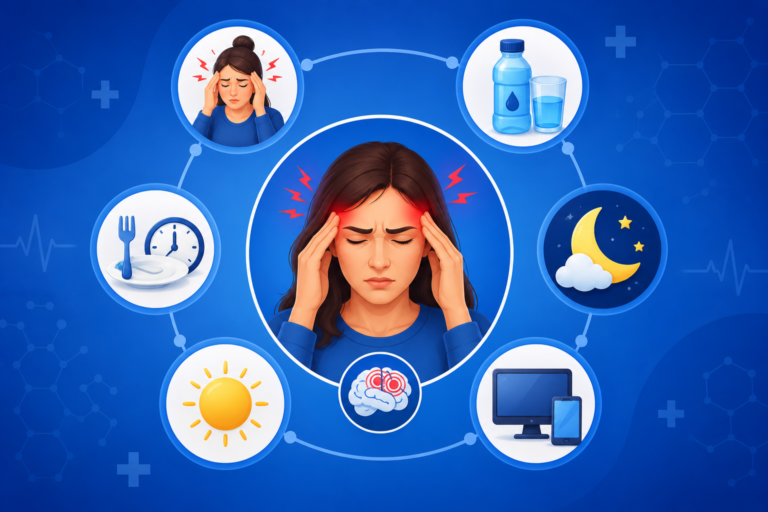
Understanding the causes of Migraine vs Headache can help reduce the frequency of attacks and improve symptom management.
Common Causes of Migraine
The exact cause of migraines is not fully understood, but researchers believe they are linked to abnormal brain activity and changes in nerve signals. Several triggers can increase the risk of migraine attacks.
Common migraine triggers include:
- Family history of migraines
- Hormonal changes (especially during menstruation)
- Stress and anxiety
- Lack of sleep
- Bright lights or loud noises
- Strong smells
- Skipping meals
- Dehydration
- Weather changes
- Certain foods such as chocolate, aged cheese, and processed meats
- Alcohol, especially red wine
- Excessive caffeine or caffeine withdrawal
Common Causes of Headaches
Headaches are often caused by everyday lifestyle factors or underlying medical conditions.
Common headache triggers include:
- Stress
- Fatigue
- Dehydration
- Poor posture
- Eye strain
- Lack of sleep
- Sinus infections
- Fever
- Hunger
- High blood pressure
- Excessive screen time
- Medication overuse
One of the biggest differences in Migraine vs Headache is that migraines are usually triggered by neurological changes, while headaches are more commonly related to physical or environmental factors.
Types of Headaches
There are many different types of headaches, and each has unique symptoms and causes.
Tension Headache
This is the most common type of headache. It causes mild to moderate pain that feels like a tight band around the head.
Sinus Headache
Sinus headaches occur due to inflammation or infection of the sinuses and are often accompanied by facial pressure, nasal congestion, and fever.
Cluster Headache
Cluster headaches are extremely painful headaches that occur in cycles. The pain is usually around one eye and may be accompanied by tearing, redness, or nasal congestion.
Cervicogenic Headache
This headache begins in the neck and spreads to the head due to problems involving the cervical spine or neck muscles.
Medication-Overuse Headache
Frequent use of pain-relieving medications can actually lead to recurring headaches over time.
Knowing the different headache types makes it easier to understand Migraine vs Headache and identify the condition causing your symptoms.
How Doctors Diagnose Migraine vs Headache
Diagnosing Migraine vs Headache begins with a detailed medical history and physical examination. Your doctor will ask about:
- Location of the pain
- Type of pain (throbbing, dull, or sharp)
- Duration of symptoms
- Frequency of attacks
- Associated symptoms
- Family history
- Possible triggers
A neurological examination may also be performed to check balance, coordination, reflexes, muscle strength, and vision.
Diagnostic Tests
In some cases, additional tests may be recommended to rule out serious conditions such as stroke, brain tumors, or infections.
These tests may include:
- MRI scan
- CT scan
- Blood tests
- Eye examination
- Lumbar puncture (in specific situations)
Most migraines are diagnosed based on symptoms rather than imaging tests.
You can also explore educational resources from the National Institute of Neurological Disorders and Stroke (NINDS) to better understand migraine symptoms, diagnosis, and treatment.
Migraine vs Headache Treatment
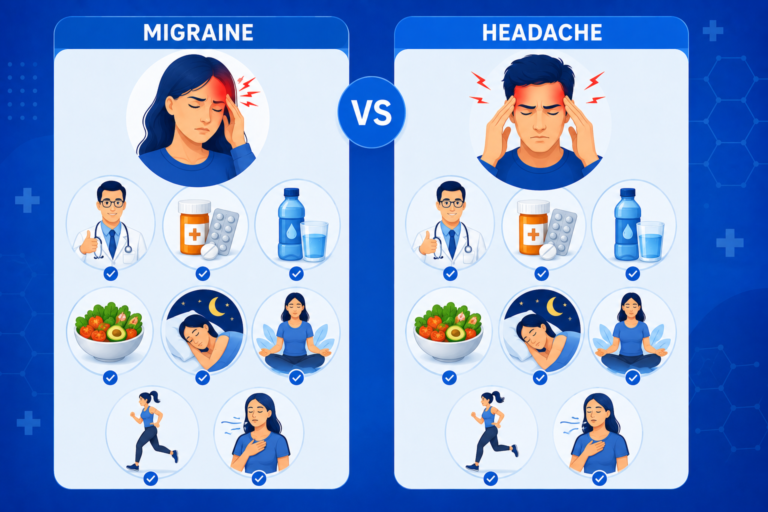
Treatment for Migraine vs Headache depends on the cause, severity, and frequency of symptoms.
Migraine Treatment
Migraine treatment focuses on relieving symptoms during an attack and preventing future episodes.
For additional patient education and evidence-based resources, visit the American Migraine Foundation.
Medications
Doctors may recommend:
- Acetaminophen (Paracetamol)
- Ibuprofen
- Naproxen
- Triptans
- Anti-nausea medications
- Preventive medications such as beta-blockers, anticonvulsants, or CGRP inhibitors for frequent migraines
Lifestyle Changes
Many people can reduce migraine attacks by:
- Maintaining regular sleep schedules
- Drinking enough water
- Eating meals on time
- Managing stress
- Exercising regularly
- Avoiding known migraine triggers
Headache Treatment
Most common headaches improve with simple measures such as:
- Resting in a quiet room
- Drinking plenty of water
- Applying a cold or warm compress
- Gentle neck stretches
- Taking over-the-counter pain relievers when needed
- Limiting screen time
- Practicing relaxation techniques
People who experience frequent headaches should consult a healthcare professional to identify the underlying cause rather than relying on pain medications alone.
Home Remedies for Migraine and Headache Relief
While medications can help manage symptoms, many people also find relief through simple lifestyle changes and home remedies. These methods are not a replacement for medical
treatment but can help reduce the frequency and severity of both migraines and headaches. When managing Migraine vs Headache, identifying and avoiding personal triggers is often one of
the most effective strategies.
1. Stay Hydrated
Dehydration is a common trigger for headaches and can also worsen migraine attacks. Drink enough water throughout the day, especially during hot weather or after physical activity.
2. Get Enough Sleep
Poor sleep or irregular sleep schedules can trigger both migraines and headaches. Aim for 7–9 hours of quality sleep each night and try to go to bed and wake up at the same time every day.
3. Manage Stress
Stress is one of the leading triggers for both conditions. Relaxation techniques can help reduce tension and lower the risk of attacks.
Helpful stress-management techniques include:
- Deep breathing exercises
- Meditation
- Yoga
- Progressive muscle relaxation
- Listening to calming music
4. Eat Regular Meals
Skipping meals may trigger migraines in some people. Eating balanced meals at regular intervals helps maintain stable blood sugar levels and may prevent headache episodes.
If you’re following Intermittent Fasting, make sure your eating schedule and hydration are well balanced, as prolonged fasting may trigger migraines in some individuals.
5. Limit Screen Time
Long hours in front of computers, tablets, or smartphones can cause eye strain and tension headaches. Follow the 20-20-20 rule:
- Every 20 minutes,
- Look at something 20 feet away,
- For at least 20 seconds.
6. Identify Personal Triggers
Keeping a headache diary can help you recognize patterns and avoid common triggers such as:
- Certain foods
- Alcohol
- Bright lights
- Strong smells
- Weather changes
- Stress
- Lack of sleep
Understanding your triggers is an important step in managing Migraine vs Headache effectively.
When Should You See a Doctor?
Most headaches are not serious and improve with rest or medication. However, some symptoms require immediate medical attention.
Consult a healthcare provider if you experience:
- Frequent or worsening headaches
- Severe migraine attacks that interfere with daily life
- Headaches lasting longer than 72 hours
- Headaches that do not improve with medication
- Sudden, severe “thunderclap” headache
- Vision loss or double vision
- Weakness, numbness, or difficulty speaking
- Fever with a stiff neck
- Confusion or loss of consciousness
- Headache after a head injury
Prompt medical evaluation can help identify serious underlying conditions and ensure appropriate treatment.
In some cases, persistent headaches may also be linked to underlying kidney problems. Learn more about Normal Creatinine Levels by Age to understand when abnormal kidney function may require medical evaluation.
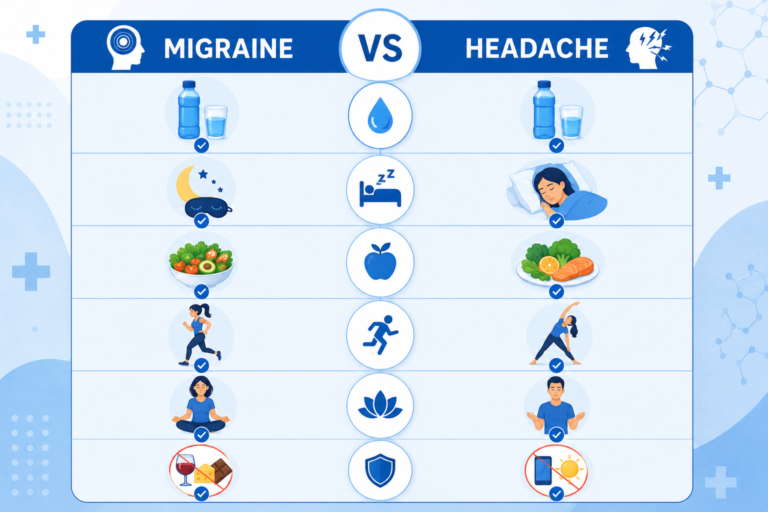
Prevention Tips for Migraine and Headache
Although not every episode can be prevented, healthy lifestyle habits can significantly reduce the frequency of attacks.
Follow these preventive measures:
- Drink plenty of water every day.
- Maintain a consistent sleep schedule.
- Eat a balanced diet without skipping meals.
- Exercise regularly.
- Manage stress through relaxation techniques.
- Limit alcohol and excessive caffeine.
- Avoid smoking and exposure to secondhand smoke.
- Reduce prolonged screen time.
- Keep a diary to identify migraine or headache triggers.
- Follow your doctor’s treatment plan if you have chronic migraines.
These habits can improve overall well-being and make managing Migraine vs Headache easier over time.
A heart-healthy diet also supports overall brain health. Learn more in our guide on What Is Cholesterol? Good or Bad Cholesterol.
Frequently Asked Questions (FAQs)
What is the main difference between migraine and headache?
The main difference in Migraine vs Headache is that a migraine is a neurological disorder that causes severe throbbing pain along with symptoms such as nausea, vomiting, and sensitivity to light or sound. A headache is a general term for pain in the head and is often less severe.
Can a migraine occur without a headache?
Yes. Some people experience a silent migraine, where they develop aura symptoms such as visual disturbances or tingling without significant head pain.
How long does a migraine usually last?
A migraine attack typically lasts between 4 and 72 hours if left untreated, while many common headaches resolve within a few hours.
What triggers migraines?
Common migraine triggers include:
- Stress
- Hormonal changes
- Lack of sleep
- Dehydration
- Bright lights
- Loud noises
- Certain foods
- Skipping meals
Are migraines hereditary?
Yes. Genetics play an important role, and people with a family history of migraines have a higher risk of developing the condition.
Can dehydration cause headaches?
Yes. Dehydration is one of the most common causes of headaches and may also trigger migraine attacks in some individuals.
When should I worry about a headache?
Seek immediate medical attention if you experience a sudden, severe headache, headache after a head injury, vision changes, confusion, weakness, fever with a stiff neck, or difficulty speaking.
Conclusion
Understanding Migraine vs Headache is essential because the two conditions differ in their causes, symptoms, severity, and treatment approaches. While a headache is often a symptom caused by factors such as stress, dehydration, or lack of sleep, a migraine is a neurological disorder that can significantly affect daily life with symptoms like throbbing pain, nausea, and sensitivity to light and sound.
Recognizing the warning signs early can help you choose the right treatment and reduce the frequency of future attacks. Lifestyle changes such as staying hydrated, getting adequate sleep, managing stress, eating regular meals, and avoiding personal triggers can make a meaningful difference in preventing both migraines and headaches.
If you experience frequent, severe, or unusual headaches, consult a qualified healthcare professional for an accurate diagnosis and personalized treatment plan. Early medical care can improve symptom control, enhance quality of life, and help prevent complications associated with Migraine vs Headache.