

Table of Contents
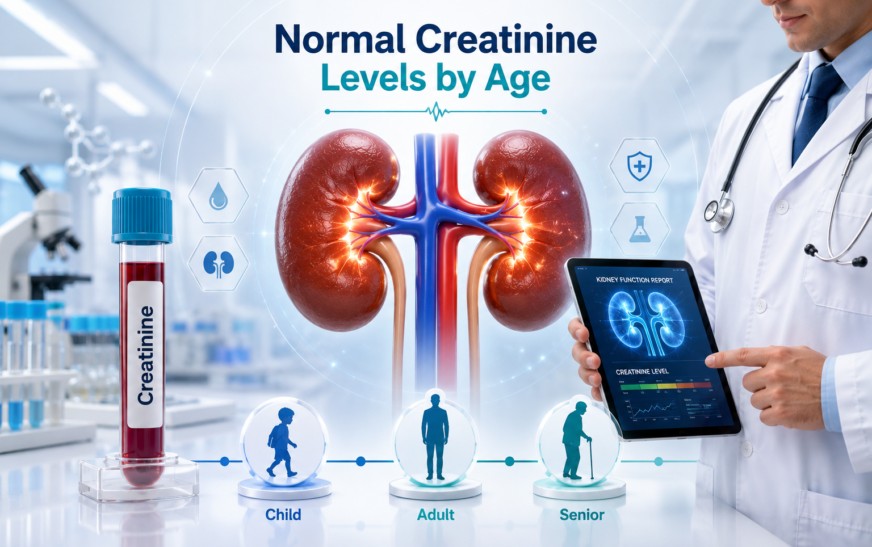
ToggleOne of the most common questions people ask after receiving their blood test results is, “What is a normal creatinine level for my age?” The answer depends on several factors, including age, sex, muscle mass, and the laboratory’s reference range. While age plays an important role, doctors also evaluate your overall health and estimated glomerular filtration rate (eGFR) before determining whether your kidney function is normal.
Creatinine is commonly measured during routine blood investigations. Learning how to read your CBC report can help you better understand your health screening results.
The table below provides the normal creatinine levels by age commonly used as a reference. Keep in mind that these values may vary slightly between laboratories.
| Age Group | Normal Creatinine Level (mg/dL) |
|---|---|
| Newborns (0–28 days) | 0.3–1.0 |
| Infants (1–12 months) | 0.2–0.4 |
| Children (1–12 years) | 0.3–0.7 |
| Teenagers (13–17 years) | 0.5–1.0 |
| Adult Women (18–60 years) | 0.5–1.1 |
| Adult Men (18–60 years) | 0.7–1.3 |
| Older Adults (60+ years) | Approximately 0.6–1.2* |
Note: Normal reference ranges may vary slightly between laboratories. Doctors interpret creatinine results together with eGFR, medical history, and symptoms rather than relying on creatinine alone.
Knowing the normal creatinine levels by age helps doctors compare your results with the expected range for your age group.
Normal Creatinine Levels by Age and Gender

Although age significantly affects creatinine levels, gender also plays an important role. Since men generally have more muscle mass than women, they naturally produce more creatinine. This is why normal reference ranges differ between males and females.
Normal Creatinine Levels in Men
Healthy adult men usually have a serum creatinine normal range of 0.7–1.3 mg/dL. Athletes or individuals with higher muscle mass may have slightly higher values without having kidney disease.
Normal Creatinine Levels in Women
Healthy adult women typically have normal creatinine levels between 0.5 and 1.1 mg/dL. Lower muscle mass is the primary reason for these slightly lower values.
Why Age and Gender Matter
When evaluating normal creatinine levels by age, doctors consider several factors, including:
- Age
- Sex
- Muscle mass
- Body size
- Hydration status
- Medical history
- eGFR results
Because of these differences, two people with the same creatinine level may have different kidney function depending on their age and overall health.
Quick Summary
| Category | Typical Normal Range (mg/dL) |
|---|---|
| Adult Men | 0.7–1.3 |
| Adult Women | 0.5–1.1 |
| Children | 0.3–0.7 |
| Older Adults | Usually 0.6–1.2 (interpret with eGFR) |
What Happens If Creatinine Is High?
High creatinine levels usually indicate that your kidneys are not filtering waste from the blood as efficiently as they should. However, an elevated creatinine level does not always mean kidney disease. Temporary factors such as dehydration, strenuous exercise, a high-protein diet, or certain medications can also cause creatinine to rise.
Doctors typically interpret a high creatinine result along with eGFR, urine tests, imaging studies, and your medical history before making a diagnosis.
If your creatinine level remains elevated on repeat testing, your healthcare provider may recommend further evaluation to determine the underlying cause.
Common Symptoms of High Creatinine Levels
Some people experience no symptoms in the early stages. As kidney function declines, symptoms may include:
- Persistent fatigue or weakness
- Swelling in the feet, ankles, or hands
- Reduced urine output
- Foamy or bloody urine
- Nausea and vomiting
- Loss of appetite
- Muscle cramps
- Shortness of breath
- Difficulty concentrating
- High blood pressure
Important: High creatinine alone is not a disease. It is a laboratory finding that may indicate reduced kidney function or another underlying medical condition.
Common Causes of High Creatinine Levels
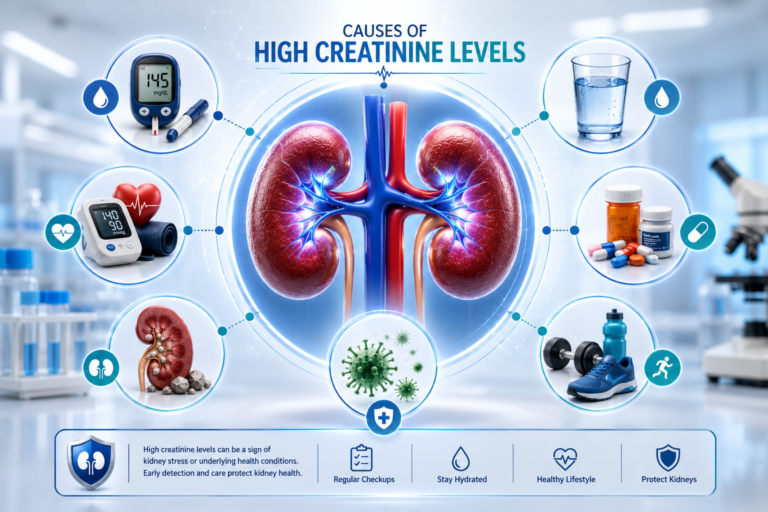
Many health conditions and lifestyle factors can increase creatinine levels. Some causes are temporary and reversible, while others require long-term medical treatment.
| Cause | How It Affects Creatinine |
|---|---|
| Chronic kidney disease (CKD) | Damaged kidneys cannot filter creatinine efficiently. |
| Acute kidney injury (AKI) | Sudden kidney damage causes creatinine to rise quickly. |
| Dehydration | Reduced blood flow to the kidneys temporarily increases creatinine. |
| Diabetes | Long-term high blood sugar can damage kidney filters. |
| High blood pressure | Uncontrolled hypertension may gradually reduce kidney function. |
| Urinary tract blockage | Kidney stones or an enlarged prostate can obstruct urine flow. |
| Certain medications | NSAIDs, some antibiotics, and chemotherapy drugs may affect kidney function. |
| Intense exercise | Heavy workouts can temporarily increase creatinine due to muscle breakdown. |
| High-protein diet | Large amounts of meat or protein supplements may slightly raise creatinine levels. |
| Severe infections | Infections affecting the kidneys can impair filtration. |
Long-term high blood pressure can gradually damage the kidneys and reduce their ability to filter waste effectively.
Who Is More Likely to Have High Creatinine?
Certain individuals have a higher risk of developing elevated creatinine levels, including those who:
- Have diabetes.
- Have high blood pressure.
- Are over 60 years of age.
- Have a family history of kidney disease.
- Frequently use pain-relieving medications without medical advice.
- Have recurrent kidney stones or urinary tract problems.
- Smoke or have obesity.
Early detection through routine blood tests can help identify kidney problems before noticeable symptoms develop.
Can Creatinine Levels Be Too Low?
Although high creatinine levels receive more attention, low creatinine levels can also occur. In most cases, low creatinine is not a serious health concern and is often related to reduced muscle mass rather than poor kidney function.
Common causes of low creatinine include:
- Low muscle mass due to aging
- Pregnancy
- Malnutrition
- Long-term illness
- Liver disease
- Muscle-wasting disorders
Your doctor will consider your overall health, body composition, and other laboratory tests before deciding whether a low creatinine level requires further investigation.
When Should You Worry About High Creatinine?
A single abnormal creatinine result does not necessarily mean you have kidney disease. However, you should consult a healthcare professional if:
- Your creatinine level continues to increase on repeat testing.
- Your eGFR is lower than normal.
- You notice swelling in your legs, feet, or face.
- Your urine becomes foamy, bloody, or significantly decreases.
- You experience persistent fatigue, nausea, or unexplained weakness.
- You have diabetes or high blood pressure along with abnormal kidney test results.
Prompt medical evaluation can help identify the cause early and prevent further kidney damage.
How Is Creatinine Tested?

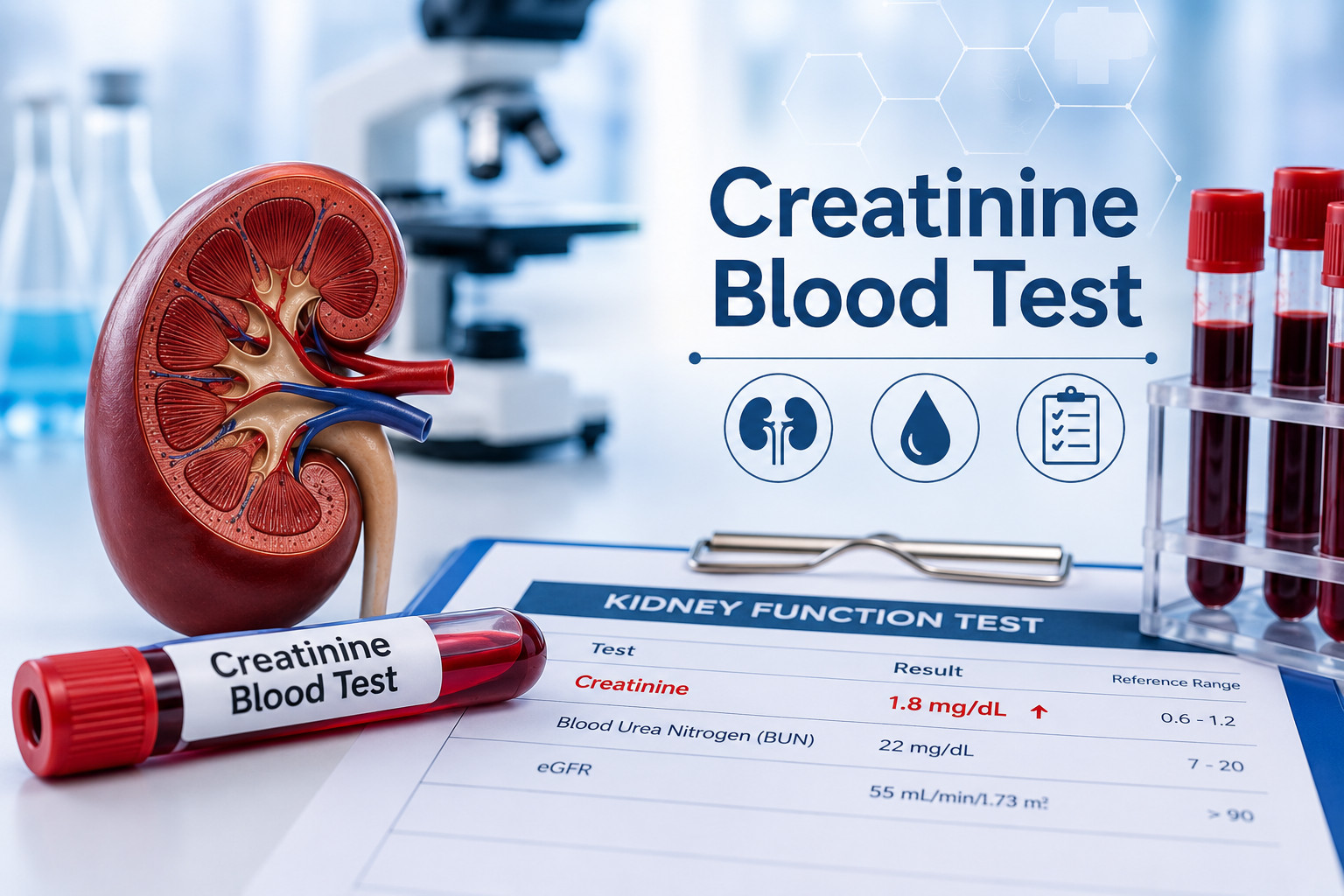
A creatinine test is a simple and commonly performed laboratory test that helps assess how well your kidneys are filtering waste from the blood. Doctors often recommend this test during routine health checkups or when symptoms suggest possible kidney problems.
The test itself is quick, requires little preparation, and is usually combined with other kidney function tests for a more complete evaluation.
A creatinine blood test helps determine whether your normal creatinine levels by age fall within the expected range for healthy kidney function.
Depending on your overall health, your doctor may also recommend a lipid profile test as part of a comprehensive health assessment.
1. Serum Creatinine Blood Test
The serum creatinine blood test measures the amount of creatinine in your bloodstream. It is the most common test used to evaluate kidney function.
Your healthcare provider may recommend this test if you:
- Have diabetes or high blood pressure
- Experience swelling or reduced urine output
- Have a family history of kidney disease
- Need routine kidney health monitoring
- Are taking medications that may affect the kidneys
2. Estimated Glomerular Filtration Rate (eGFR)
The estimated glomerular filtration rate (eGFR) is calculated using your serum creatinine level, age, sex, and sometimes race. It estimates how efficiently your kidneys filter blood.
Generally:
- 90 mL/min/1.73 m² or above: Normal kidney function
- 60–89: Mild decrease in kidney function
- Below 60: May indicate chronic kidney disease if persistent for three months or longer
Doctors rely on both serum creatinine and eGFR rather than interpreting creatinine alone.
The National Institute of Diabetes and Digestive and Kidney Diseases (NIDDK) recommends interpreting serum creatinine together with eGFR for a more accurate assessment of kidney function.
3. Creatinine Clearance Test
In some situations, your doctor may recommend a creatinine clearance test, which compares creatinine levels in blood and urine over 24 hours. This test provides a more detailed assessment of kidney filtration, especially when blood test results are unclear.
4. Urine Creatinine Test
A urine creatinine test may be performed to evaluate kidney function, monitor kidney disease, or measure protein loss in the urine. It is often ordered together with urine albumin or protein tests.
How to Maintain Healthy Creatinine Levels Naturally

While creatinine itself is a normal waste product, maintaining healthy kidneys can help keep creatinine within the normal range. Healthy lifestyle habits also reduce the risk of chronic kidney disease.
Stay Well Hydrated
Drinking enough water supports kidney filtration and helps remove waste products from the body. Dehydration can temporarily increase creatinine levels, so maintaining adequate fluid intake is important unless your doctor advises otherwise.
Control Blood Pressure
High blood pressure is one of the leading causes of kidney damage. Following your prescribed treatment plan and limiting salt intake can help protect kidney function.
Manage Diabetes Effectively
Keeping blood sugar within your target range reduces the risk of diabetic kidney disease and helps preserve healthy kidney function.
Eat a Balanced Diet
A diet rich in fruits, vegetables, whole grains, and healthy fats supports overall kidney health. People with kidney disease should follow dietary recommendations provided by their healthcare provider or dietitian.
Exercise Regularly
Moderate physical activity supports overall health. However, extremely intense exercise may temporarily increase creatinine due to muscle breakdown.
Avoid Smoking
Smoking reduces blood flow to the kidneys and increases the risk of chronic kidney disease. Quitting smoking benefits both kidney and heart health.
Use Medications Responsibly
Avoid taking pain relievers such as NSAIDs for long periods without medical advice, as they may affect kidney function in some individuals.
Schedule Regular Health Checkups
Routine blood and urine tests help detect kidney problems early, especially if you have diabetes, hypertension, or a family history of kidney disease.
Foods That Support Kidney Health

Maintaining healthy kidneys through a balanced diet can help support normal creatinine levels by age over time.
Although diet cannot directly lower creatinine in everyone, eating nutrient-rich foods may help support healthy kidneys and overall well-being.
Following a balanced kidney-friendly diet may help support healthy kidney function alongside proper hydration and regular medical care.
| Foods to Include | Foods to Limit |
|---|---|
| Apples | Processed foods |
| Blueberries | Excess salt |
| Cauliflower | Sugary beverages |
| Cabbage | Processed meats |
| Bell peppers | Excessive red meat |
| Garlic | Fast food |
| Olive oil | High-sodium snacks |
| Fish (in moderation) | Alcohol (excessive intake) |
Tip: If you have chronic kidney disease, always follow a personalized meal plan recommended by your nephrologist or registered dietitian, as dietary needs vary depending on the stage of kidney disease.
When Should You See a Doctor?
Consult a healthcare professional if you notice symptoms of kidney problems or receive abnormal creatinine test results.
Seek medical advice if you:
- Have persistently high creatinine levels.
- Experience swelling in your legs, ankles, or face.
- Notice blood or foam in your urine.
- Produce significantly less urine than usual.
- Have ongoing fatigue, nausea, or unexplained weakness.
- Have diabetes or high blood pressure with abnormal kidney test results.
- Develop severe lower back pain accompanied by urinary symptoms.
Early diagnosis and treatment can help slow the progression of kidney disease and reduce the risk of complications.
Frequently Asked Questions (FAQs)
What is a normal creatinine level by age?
Normal creatinine levels vary with age, muscle mass, and sex. Children usually have lower levels than adults, while older adults may have slightly lower values because of age-related muscle loss. Doctors also consider eGFR when evaluating kidney function.
Does creatinine increase with age?
Not always. Although kidney function may decline with age, older adults often have lower muscle mass, which can result in lower creatinine production. This is why eGFR is important for assessing kidney health in older individuals.
Is 1.2 creatinine normal?
A creatinine level of 1.2 mg/dL can be normal for many healthy adult men but may be slightly above the normal range for some women. Your doctor will interpret the result based on your age, sex, muscle mass, and eGFR.
Is creatinine different in men and women?
Yes. Men generally have slightly higher creatinine levels because they usually have more muscle mass than women.
What is a dangerous creatinine level?
There is no single dangerous creatinine value for everyone. Persistently elevated levels, especially when accompanied by a low eGFR or symptoms of kidney disease, require prompt medical evaluation.
Can dehydration increase creatinine?
Yes. Dehydration can temporarily increase creatinine levels by reducing blood flow to the kidneys. Drinking enough fluids often helps restore normal levels if dehydration is the cause.
How can I lower creatinine naturally?
Maintaining good hydration, controlling blood pressure and diabetes, eating a balanced diet, avoiding unnecessary NSAIDs, exercising moderately, and following your doctor’s advice can help support healthy kidney function.
Which foods reduce creatinine?
There is no single food that directly lowers creatinine. However, a kidney-friendly diet that includes fruits, vegetables, whole grains, and healthy fats while limiting excess sodium and processed foods supports overall kidney health.
What is a safe creatinine level?
A safe creatinine level varies depending on age, sex, and muscle mass. For most adults, it falls within the normal laboratory reference range, but doctors interpret the result alongside eGFR and your overall health.
What is a normal creatinine for a 70-year-old?
Many healthy adults aged 70 years and older have creatinine levels similar to younger adults, although slightly lower values may occur because of reduced muscle mass. Kidney function should always be assessed together with eGFR.
Is 146 creatinine high?
If the result is 146 µmol/L, it is generally higher than the normal range and may indicate reduced kidney function or another underlying condition. If the result is reported in mg/dL, it requires immediate medical attention because it is extremely high. Always confirm the unit of measurement and consult your healthcare provider.
The Mayo Clinic advises seeking medical evaluation if your creatinine level remains high or you develop symptoms such as swelling, reduced urine output, or persistent fatigue.

Conclusion
Understanding the normal creatinine levels by age can help you interpret your blood test results more confidently, but creatinine is only one part of the overall picture. Age, sex, muscle mass, hydration, and underlying medical conditions all influence creatinine levels, so a single test result should never be interpreted in isolation.
Doctors usually evaluate serum creatinine together with eGFR, urine tests, symptoms, and medical history to determine how well your kidneys are functioning. If your creatinine level is outside the normal range, early medical evaluation can help identify the cause and prevent further kidney damage.
Maintaining a healthy lifestyle, staying hydrated, managing diabetes and blood pressure, eating a balanced diet, and scheduling regular health checkups are simple yet effective ways to support long-term kidney health. If you have concerns about your creatinine level, consult a qualified healthcare professional for personalized advice and appropriate testing.






1 Comment
This page truly has all the information and facts I wanted concerning this subject and didn’t know who to ask.