
Table of Contents
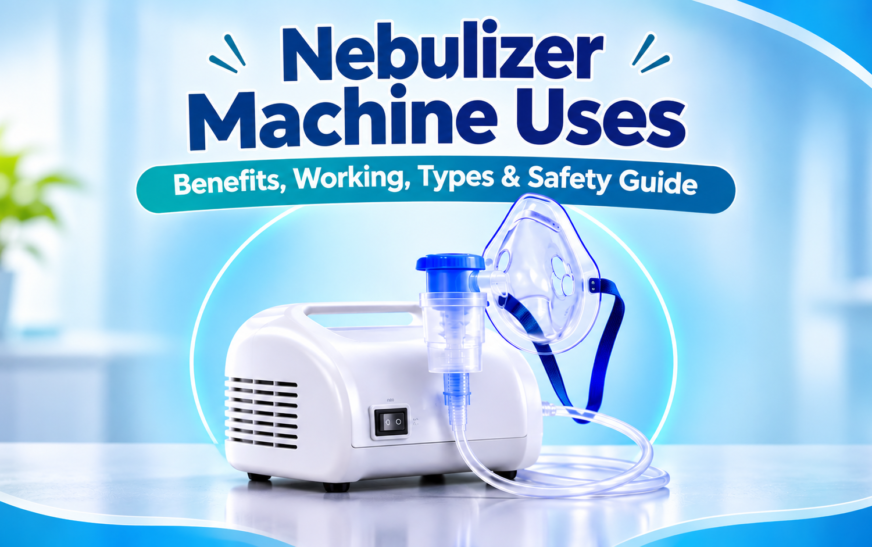
ToggleRespiratory problems such as asthma, chronic obstructive pulmonary disease (COPD), wheezing and breathing difficulties can affect a person’s daily life. For patients who require inhaled medication, a nebulizer machine can be an important part of respiratory treatment.
Understanding nebulizer machine uses helps patients and caregivers learn how this medical device works, which respiratory conditions may require it and how to use it safely. A nebulizer converts liquid medication into a fine mist that can be inhaled through a mouthpiece or face mask.
Understanding respiratory conditions, recognising early symptoms and following appropriate medical advice are important aspects of preventive healthcare. Being aware of available medical devices, such as nebulizers, can also help patients make informed decisions about their respiratory health.
One of the most common nebulizer machine uses is delivering prescribed medication directly into the respiratory tract. Healthcare professionals may recommend this device for patients who have difficulty using certain inhalers or require specific nebulized treatments.
However, a nebulizer is not necessary for every cough, cold or breathing problem. Its effectiveness depends on the medication, the patient’s condition and the treatment prescribed by a healthcare professional.
In this guide, we will explore the different applications, benefits, types, working principles and safety precautions associated with nebulizers.
What Is a Nebulizer Machine?
A nebulizer is a medical device that converts liquid medication into a fine aerosol mist. Patients inhale this mist through a mouthpiece or face mask, allowing the medication to enter the respiratory tract.
Unlike some inhalers that require coordination between pressing the device and breathing in, a nebulizer allows patients to inhale medication through normal, steady breathing during treatment.
Understanding nebulizer machine uses begins with knowing that the device itself does not cure respiratory diseases. Instead, it helps deliver prescribed medications that may relax airway muscles, reduce inflammation or help manage thick mucus.
Nebulizers are available in different designs, including jet, ultrasonic and mesh models. Each type uses a different mechanism to generate the medication mist.
How Does a Nebulizer Machine Work?
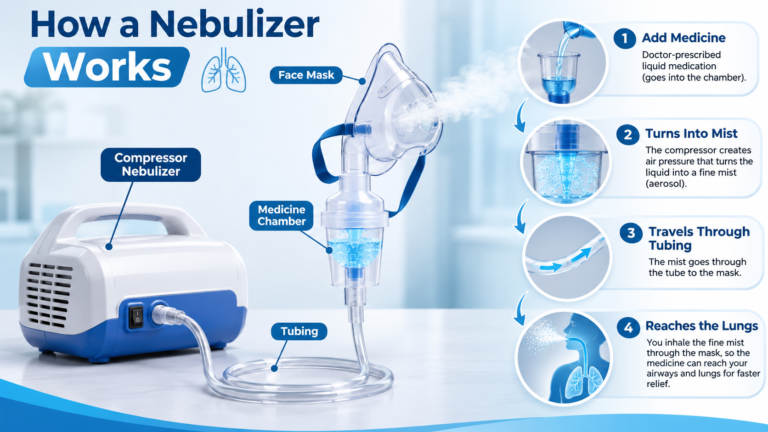
A nebulizer works by converting liquid medication into small airborne droplets that can be inhaled into the respiratory system.
The process generally involves the following steps:
- Medication placement: The prescribed liquid medication is added to the nebulizer medicine cup.
- Mist generation: The machine uses compressed air, ultrasonic vibrations or vibrating mesh technology to produce a fine mist.
- Medication delivery: The generated mist travels through a mouthpiece or face mask.
- Inhalation: The patient breathes normally, allowing the medication to enter the airways.
- Treatment completion: The session ends when the prescribed medication has been delivered.
The treatment duration depends on the medication, device and prescribed quantity. Many sessions take approximately 5–20 minutes.
These working principles explain how nebulizer machine uses support the delivery of respiratory medication without requiring complicated breathing coordination.
For detailed information about nebulizer operation, medication delivery and equipment cleaning, readers can refer to this guide on how to use a nebulizer published by MedlinePlus.
10 Important Nebulizer Machine Uses
Nebulizers have several applications in respiratory healthcare. Below are some common nebulizer machine uses that patients and caregivers should understand.
1. Managing Asthma Symptoms
Asthma is a chronic respiratory condition that causes inflammation and narrowing of the airways. It can lead to wheezing, coughing, chest tightness and breathing difficulties.
Healthcare professionals may prescribe bronchodilator medications through a nebulizer to help relax the airway muscles and improve airflow.
For patients with asthma, nebulizer machine uses may include delivering prescribed medication during certain episodes of breathing difficulty or as part of an established treatment plan.
The treatment depends on asthma severity, symptoms and the patient’s prescribed medication. In many cases, inhalers with spacers are also effective alternatives.
2. Supporting COPD Management
Chronic obstructive pulmonary disease (COPD) is a group of lung conditions that cause persistent breathing difficulties.
Some patients with COPD may receive nebulized medications to help open their airways and manage respiratory symptoms.
These medications may include bronchodilators or other prescribed treatments. Healthcare professionals determine whether a nebulizer or inhaler is more suitable for an individual patient.
Among the important nebulizer machine uses, supporting medication delivery for selected COPD patients is particularly relevant.
Asthma treatment can vary from one patient to another depending on symptom severity, medical history and response to medication. This is why personalized medicine plays an important role in selecting suitable treatment approaches for individual patients.
3. Delivering Prescribed Respiratory Medication
One of the primary applications of a nebulizer is delivering liquid respiratory medication directly into the airways.
Depending on the patient’s condition, prescribed nebulized medicines may include:
- Bronchodilators: Help relax airway muscles and improve airflow.
- Corticosteroids: Help reduce airway inflammation.
- Certain antibiotics: Used for specific respiratory infections when prescribed in a suitable nebulized formulation.
- Mucolytic medicines: Help manage thick mucus in selected respiratory conditions.
Different respiratory conditions may require different types of treatment. Understanding the purpose, dosage and precautions associated with common medicines helps patients follow their prescribed treatment plans and avoid unnecessary medication errors.
Not every medication is suitable for nebulization. Patients should only use medicines specifically prescribed or approved for this method.
Understanding nebulizer machine uses is important because different medications have different purposes and should never be mixed without professional guidance.
4. Helping Manage Thick Mucus
Thick mucus can make coughing and clearing respiratory secretions difficult. It may occur in people with certain chronic lung conditions.
In selected cases, healthcare professionals may recommend nebulized saline or prescribed mucus-thinning medication to help loosen secretions.
This may make mucus easier to cough out. However, a nebulizer does not automatically remove mucus from the lungs. The result depends on the solution or medication being used and the patient’s respiratory condition.
This is another example of nebulizer machine uses in selected respiratory treatment plans.
5. Supporting Bronchiectasis Treatment
Bronchiectasis is a long-term lung condition in which the airways become abnormally widened. This can make mucus accumulation more likely and increase the risk of repeated respiratory infections.
Some patients may require nebulized saline, antibiotics or other prescribed treatments as part of their respiratory care plan.
The type of medication depends on the patient’s clinical condition and treatment requirements.
6. Supporting Cystic Fibrosis Care
Cystic fibrosis is a genetic condition that can cause thick and sticky mucus to accumulate in the lungs.
Some people with this condition use nebulized medications to help manage mucus, support airway clearance or deliver prescribed respiratory treatments.
In this situation, nebulizer machine uses may include delivering specific medications that form part of a broader cystic fibrosis management plan.
Treatment should always be guided by a specialist.
7. Supporting Respiratory Treatment in Children
Children with certain respiratory conditions may require inhaled medications.
A nebulizer can be useful when a child cannot effectively use a particular inhaler device. A properly fitted face mask may help younger children receive the prescribed medication.
Parents should follow the paediatrician’s instructions regarding medication, dosage, treatment duration and cleaning.
The appropriate device and medication should be selected according to the child’s age and medical condition.
8. Delivering Selected Saline Treatments
Sterile saline solutions may be prescribed for certain respiratory conditions to help moisturise airways or loosen thick secretions.
The concentration and frequency of saline treatment depend on the patient’s clinical requirements.
It is important not to use homemade saltwater, tap water or ordinary drinking water in the medicine chamber.
Among the different nebulizer machine uses, saline administration is a selected application that should be based on medical advice.
9. Supporting Treatment During Respiratory Flare-Ups
Some patients with chronic respiratory conditions experience periods when their symptoms become worse.
During selected flare-ups, healthcare professionals may recommend nebulized medication to help manage airway narrowing or other respiratory symptoms.
However, worsening breathlessness should never be managed by repeatedly using a nebulizer without medical advice. Severe breathing difficulties require urgent medical attention.
10. Helping Patients Who Have Difficulty Using Inhalers
Some patients, including young children and certain older adults, may struggle with the coordination required for some inhaler devices.
A nebulizer can provide an alternative method of delivering suitable medication because patients generally need to breathe normally through a mask or mouthpiece.
This makes nebulizer machine uses particularly relevant for patients who cannot comfortably operate certain inhaler devices.
However, the choice between an inhaler and nebulizer should be based on individual medical needs rather than convenience alone.
Different Types of Nebulizer Machines
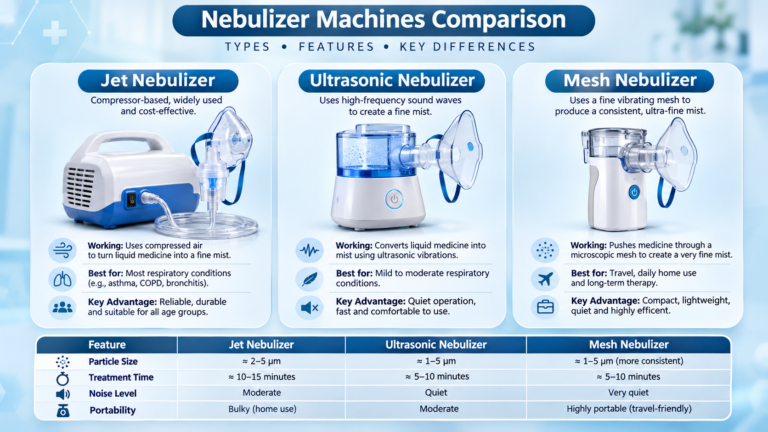
Understanding different nebulizer types helps patients learn more about nebulizer machine uses and their applications in respiratory care.
1. Jet Nebulizer
A jet nebulizer uses compressed air to convert liquid medication into a fine mist.
Key features:
- Commonly used in home and clinical settings.
- Requires a compressor and connecting tubing.
- Suitable for many prescribed nebulized medications.
- Usually larger than portable mesh devices.
2. Ultrasonic Nebulizer
An ultrasonic nebulizer uses high-frequency sound vibrations to generate an aerosol from liquid medication.
Key features:
- Uses ultrasonic technology.
- Often operates more quietly than traditional jet devices.
- Medication compatibility depends on the specific device.
- May not be suitable for every medication.
3. Mesh Nebulizer
A mesh nebulizer uses a vibrating mesh containing tiny openings to produce a fine aerosol.
Key features:
- Compact and portable designs are available.
- Often operates quietly.
- Can be convenient for home use and travel.
- Requires careful cleaning according to manufacturer instructions.
Not every medication can be used in every nebulizer. Always check device compatibility before starting treatment.
Benefits of Using a Nebulizer Machine
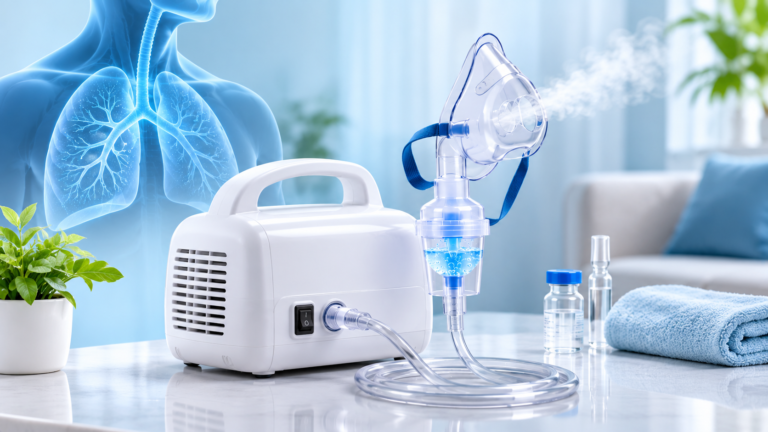
When prescribed appropriately, nebulizers can offer several practical benefits.
- Direct medication delivery: Helps deliver suitable medication to the respiratory tract.
- Easy breathing technique: Patients generally breathe normally during treatment.
- Useful for selected patients: Can help people who struggle with certain inhaler techniques.
- Different medication options: Can deliver various prescribed liquid respiratory medicines.
- Mask availability: Face masks can make treatment easier for young children and some patients.
- Home treatment options: Some models are designed for home use under medical guidance.
These benefits explain why nebulizer machine uses are commonly discussed in respiratory healthcare and patient education.
How to Use a Nebulizer Machine Correctly
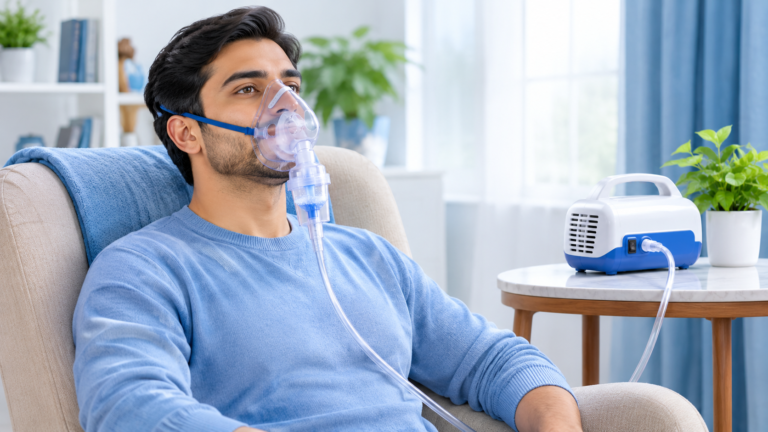
Correct usage is important for effective medication delivery and patient safety.
Follow these general steps:
- Wash your hands thoroughly before handling the equipment.
- Place the machine on a clean, stable and flat surface.
- Assemble the nebulizer according to the manufacturer’s instructions.
- Add only the prescribed medication to the medicine cup.
- Attach the mouthpiece or face mask.
- Connect the tubing and switch on the machine.
- Sit comfortably and breathe normally through the mouthpiece or mask.
- Continue until the prescribed treatment is complete.
- Switch off the machine and clean the reusable components as instructed.
The exact procedure may differ depending on the nebulizer model.
Patients using a device for the first time should ask a healthcare professional to demonstrate the correct technique. Proper usage helps ensure that nebulizer machine uses provide the intended medication delivery.
Safety Precautions While Using a Nebulizer
Although nebulizers are commonly used in respiratory care, improper use can create problems.
Keep these precautions in mind:
- Use only prescribed or specifically approved nebulizer solutions.
- Never mix different medicines without medical advice.
- Do not increase the medication dose or treatment frequency yourself.
- Clean the medicine cup, mask and mouthpiece after each use as directed.
- Allow reusable components to dry completely before storage.
- Do not share personal masks or mouthpieces.
- Replace filters and accessories according to manufacturer recommendations.
- Store medication according to its packaging instructions.
Some nebulized medicines can cause side effects such as tremors, palpitations or throat irritation. Contact a healthcare professional if you experience unexpected symptoms.
Seek urgent medical attention if you experience severe breathing difficulty, blue or grey lips, confusion or other signs of serious respiratory distress.
Understanding the precautions associated with nebulizer machine uses can help patients avoid unnecessary medication risks and maintain proper equipment hygiene.
Nebulizer Machine vs Inhaler: What Is the Difference?
Both devices can deliver medication into the respiratory system, but their methods of administration are different.
| Feature | Nebulizer | Inhaler |
|---|---|---|
| Medication form | Liquid converted into mist | Metered aerosol or dry powder |
| Administration | Mask or mouthpiece | Usually mouthpiece |
| Breathing technique | Normal breathing during treatment | Depends on inhaler type |
| Portability | Depends on device model | Generally more portable |
| Treatment duration | Usually several minutes | Generally quicker |
| Cleaning | Requires regular cleaning | Cleaning requirements vary |
Neither device is automatically better for every patient. The appropriate choice depends on the medication, respiratory condition, age and ability to use the device correctly.
Knowing the difference helps patients understand which nebulizer machine uses are relevant to their particular treatment needs.
Frequently Asked Questions (FAQs)
Can nebulizer be used for cough?
Yes, a nebulizer may be prescribed for cough when it is associated with certain respiratory conditions, such as asthma or airway narrowing. It can deliver medication that helps manage the underlying problem. However, not every cough requires nebulization. The correct treatment depends on the cause of the cough, so consult a healthcare professional before using one.
Is nebulizer good for daily use?
Daily nebulizer use may be appropriate for some patients with chronic respiratory conditions when prescribed by a healthcare professional. However, it is not necessary or beneficial for everyone. The frequency depends on the prescribed medicine, diagnosis and individual treatment plan. Unnecessary or excessive use may cause medication-related side effects.
Does nebulizer clear mucus from lungs?
A nebulizer does not physically remove mucus from the lungs. However, certain prescribed saline solutions and mucolytic medicines can help loosen or thin thick mucus, making it easier to cough out. Its effectiveness depends on the underlying condition and the solution or medicine being used.
How many minutes to use a nebulizer?
Most nebulizer treatments take around 5–20 minutes, depending on the machine, medication and prescribed dose. Treatment should continue according to the healthcare professional’s instructions and the device manufacturer’s guidance. Do not extend the session unnecessarily.
How many days can we use a nebulizer?
There is no fixed number of days for everyone. Some patients may need nebulization for a short period, while others with chronic respiratory conditions may require longer-term treatment. The duration depends on the diagnosis, prescribed medication and response to treatment. Follow your healthcare professional’s instructions rather than deciding the duration yourself.
Conclusion
Nebulizers play an important role in delivering prescribed respiratory medications to patients with selected lung and airway conditions. From asthma and COPD management to certain mucus-related treatments, they provide a useful method of inhaled medication delivery.
Understanding nebulizer machine uses helps patients and caregivers make informed decisions about respiratory care, equipment handling and treatment safety. However, a nebulizer should not be used as a routine solution for every cough or cold.
Always follow professional medical guidance, use the correct medication and maintain proper device hygiene.
At MedExplainHub, we aim to make medical knowledge, healthcare equipment and patient education easier to understand. Explore our educational resources to learn more about medical devices, respiratory health and healthcare practices.