
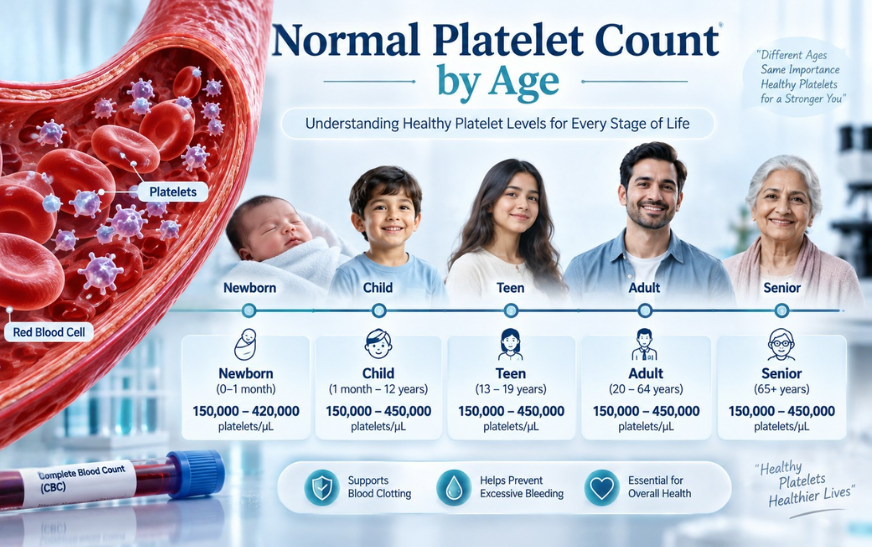
Table of Contents
TogglePlatelets are tiny blood components that play an important role in stopping bleeding and helping blood clots form after an injury. A platelet count is usually included in a complete blood count (CBC) and can help doctors evaluate bleeding, clotting, infections, and several blood-related conditions.
Understanding the normal platelet count by age can help you interpret a blood test more appropriately. However, a platelet value should not be interpreted based on age alone. The reference range printed on your laboratory report is especially important because different laboratories may use slightly different ranges and testing methods.
In general, platelet counts in children and adults are within a broadly similar range, although specific pediatric laboratory ranges may differ according to age. Some pediatric laboratories, for example, use narrower age-specific reference intervals.
This guide explains the normal platelet count by age, what low or high platelet counts may mean, symptoms to watch for, and when medical evaluation may be necessary.
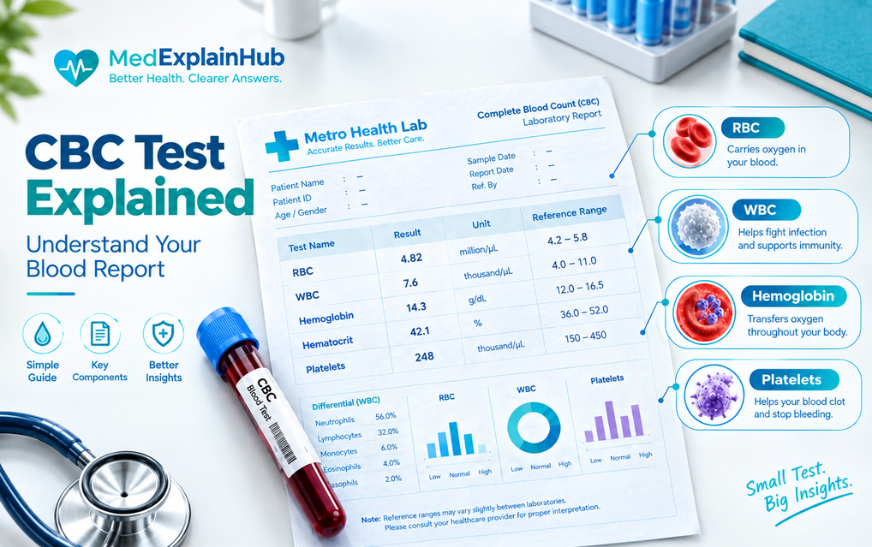
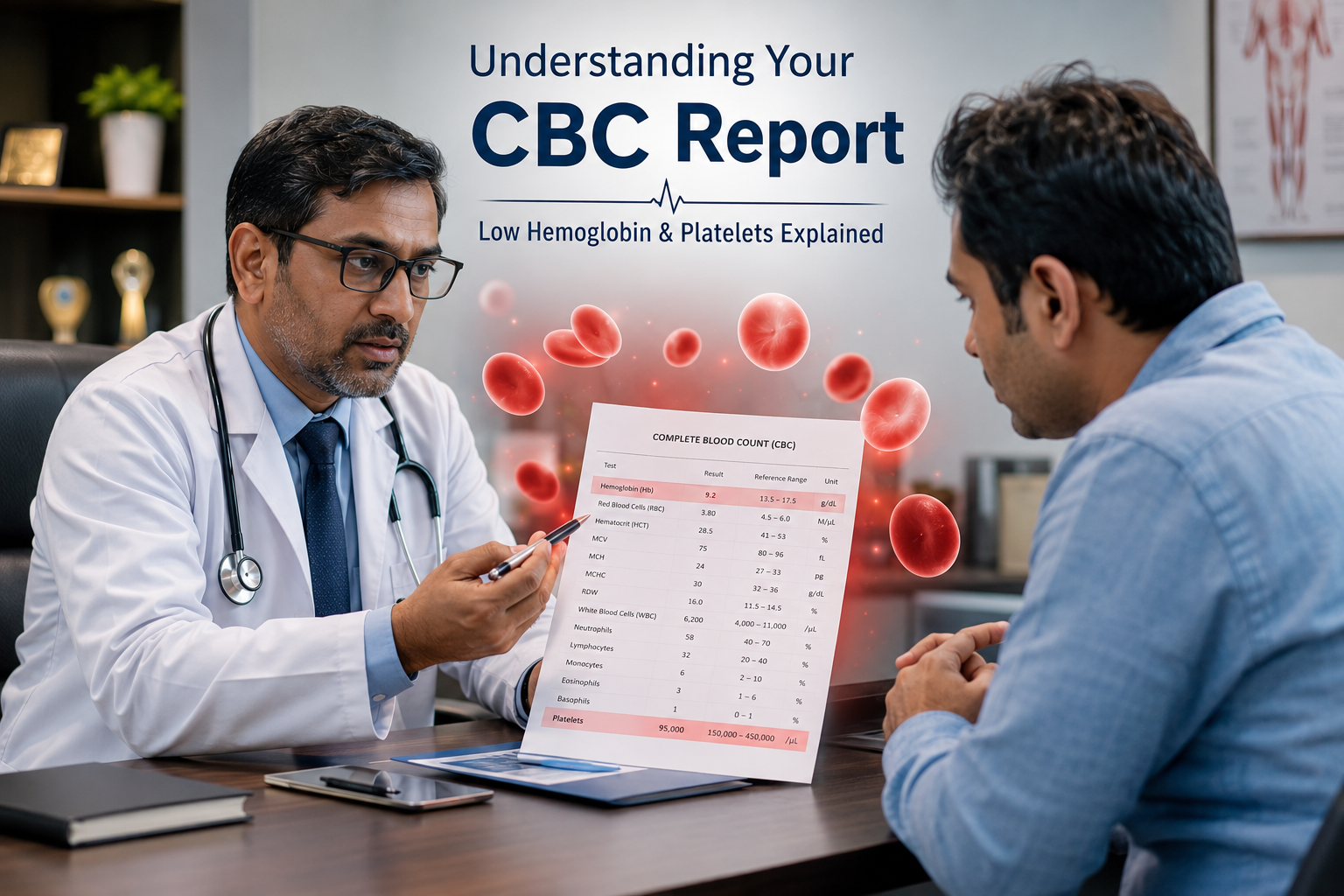
A platelet count is usually included in a CBC blood report, which provides important information about different blood cells.
What Are Platelets?
Platelets, also called thrombocytes, are small blood components produced primarily in the bone marrow. They circulate through the bloodstream and help form a temporary plug when a blood vessel is damaged.
When you have a cut or injury, platelets become activated and gather around the damaged area. They stick together and help stop bleeding.
A healthy platelet count is therefore important for normal blood clotting. Too few platelets can increase the risk of bleeding, while very high platelet levels may sometimes be associated with abnormal clot formation or other medical conditions.
Normal Platelet Count by Age
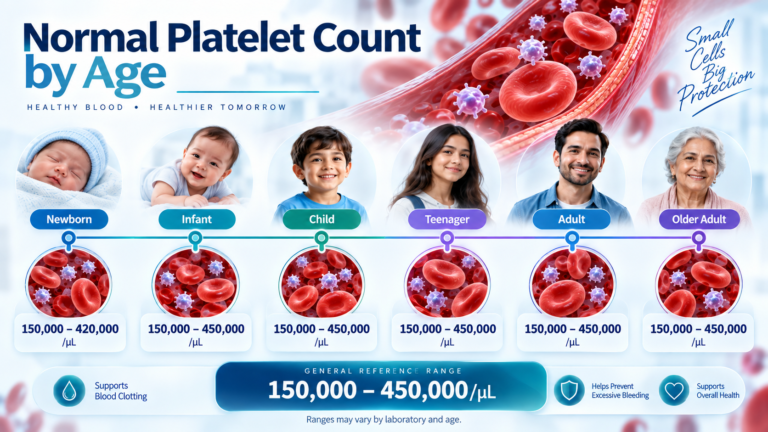
The normal platelet count by age is generally expressed as the number of platelets per microliter (µL) of blood.
A commonly used general reference range is:
| Age Group | Common Platelet Reference Range |
|---|---|
| Newborns | Approximately 150,000–450,000/µL |
| Infants | Approximately 150,000–450,000/µL |
| Children | Approximately 150,000–450,000/µL |
| Teenagers | Approximately 150,000–450,000/µL |
| Adults | Approximately 150,000–450,000/µL |
| Older adults | Approximately 150,000–450,000/µL |
These values are general reference ranges, not universal cutoffs. For example, Seattle Children’s Laboratory lists different age-specific intervals, including 250,000–450,000/µL for 0–3 days and 140,000–400,000/µL from 12 years through adulthood.
Another laboratory may use 150,000–450,000/µL across many pediatric and adult age groups.
Therefore, when checking the normal platelet count by age, always compare the result with the reference interval provided by the laboratory that performed the test.
Normal Platelet Count in Newborns
Newborn platelet counts can vary during the first days and weeks of life. Research indicates that platelet counts in newborns and infants can generally fall within a range similar to adults, although premature infants may have different patterns.
Some pediatric laboratories use age-specific ranges during the neonatal period. For example, Seattle Children’s lists:
- 0–3 days: 250,000–450,000/µL
- 3–9 days: 200,000–400,000/µL
- 9 days–1 month: 170,000–600,000/µL
These values demonstrate why the normal platelet count by age should be interpreted using the laboratory’s own reference range rather than a single number found online.
Premature babies may also have lower platelet counts than full-term newborns, depending on their clinical condition and gestational age.
Normal Platelet Count in Infants
During infancy, platelet counts can fluctuate as the body develops. A general reference range of approximately 150,000–450,000/µL is commonly cited for infants, but individual laboratory ranges may be wider.
For example, one pediatric laboratory uses a range of 190,000–660,000/µL for infants aged 1–6 months and 190,000–610,000/µL for children aged 6 months to 2 years.
This is an important reason not to label a child’s result as abnormal simply because it falls outside an adult reference range.
When evaluating the normal platelet count by age in babies, doctors may also consider birth history, gestational age, infections, medications, and other blood-test results.
Normal Platelet Count in Children
For many children, platelet counts are broadly similar to adult values. A commonly referenced range is around 150,000–450,000/µL.
However, pediatric laboratories may divide children into smaller age groups.
For example, Seattle Children’s Laboratory reports:
- 2–8 years: 160,000–500,000/µL
- 8–12 years: 155,000–430,000/µL
- 12 years to adult: 140,000–400,000/µL
This shows that the normal platelet count by age is not necessarily identical at every stage of childhood.
A slightly higher or lower platelet count does not automatically indicate disease. Doctors generally consider the child’s symptoms, medical history, other CBC results, previous platelet counts, and the laboratory’s reference interval.
Normal Platelet Count in Teenagers
During adolescence, platelet counts are generally within a range comparable to adults.
A platelet count around 150,000–450,000/µL is often considered a general reference range, although some laboratories use different limits.
Teenagers with a platelet count outside their laboratory’s reference range may need further evaluation, particularly if they have symptoms such as unexplained bruising, frequent nosebleeds, prolonged bleeding, or unusual skin spots.
Therefore, when reviewing the normal platelet count by age, the teenage years should not be interpreted independently of the laboratory reference range.
Normal Platelet Count in Adults
For adults, a commonly used platelet reference range is approximately 150,000–450,000 platelets per microliter of blood. NHLBI identifies 150,000–450,000/µL as the normal adult range, while MedlinePlus lists 150,000–400,000/µL as a normal range.
This difference demonstrates why reference ranges can vary between laboratories.
A platelet count below the laboratory’s lower limit may be described as thrombocytopenia, while an elevated platelet count may be called thrombocytosis.
Normal Platelet Count in Older Adults
There is not necessarily a separate universal platelet range exclusively for older adults. Many laboratories use adult reference ranges for older people.
The normal platelet count by age in seniors should therefore generally be interpreted using the adult reference range shown on their laboratory report.
However, age-related health conditions, medications, infections, nutritional deficiencies, liver or spleen disorders, and bone marrow conditions can influence platelet levels.
A single abnormal result does not necessarily identify the cause. Doctors may compare it with previous CBC results and investigate other blood-cell counts and symptoms.
What Does a Low Platelet Count Mean?
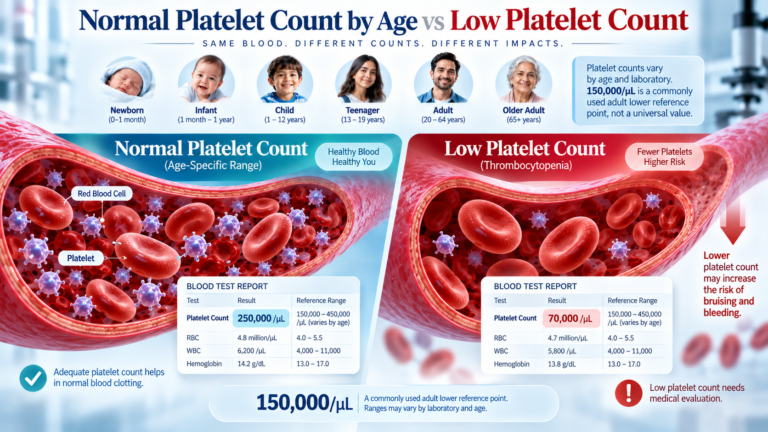
A platelet count below the laboratory’s reference range is generally considered low. This condition is known as thrombocytopenia. NHLBI defines thrombocytopenia as a platelet count below 150,000/µL in adults.
Low platelets can occur for different reasons, including:
- Reduced platelet production in the bone marrow
- Certain infections
- Some medications
- Autoimmune conditions
- Enlarged spleen
- Liver-related conditions
- Certain bone marrow disorders
- Cancer treatments
- Vitamin deficiencies in some cases
The significance of a low platelet count depends on how low it is, how quickly it changed, the underlying cause, and whether bleeding is occurring.
Because platelet results are often reviewed alongside other CBC values, understanding low PCV in blood report can also help you interpret the overall blood picture.
Is 120,000 Platelets a Low Count?
A platelet count of 120,000/µL is below the commonly used adult lower limit of 150,000/µL. It would therefore generally be described as a low platelet count in an adult.
However, a result of 120,000/µL does not automatically mean that a person has a serious disease.
Doctors may repeat the CBC, review previous results, examine other blood-cell counts, ask about medications and recent illnesses, and investigate possible causes.
The interpretation can also differ in children because pediatric laboratories may use age-specific reference ranges.
What Are the Symptoms of Low Platelets?
Mild thrombocytopenia may cause no noticeable symptoms and may be discovered during a routine blood test.
Possible symptoms include:
- Easy bruising
- Frequent nosebleeds
- Bleeding gums
- Small red or purple spots called petechiae
- Prolonged bleeding after minor injuries
- Blood in urine
- Blood in stool
- Heavy menstrual bleeding
- Unusual or persistent bleeding
The presence and severity of symptoms can be more important than the number alone.
When Should You Worry About Platelets?
A low platelet result deserves medical attention when it is persistent, falling significantly, or associated with bleeding.
The risk of bleeding generally becomes more concerning as platelet counts fall, although the exact risk depends on the individual and the underlying cause. MedlinePlus notes that bleeding risk is higher below 50,000/µL.
Seek urgent medical care for bleeding that does not stop with pressure, significant blood loss, or symptoms suggesting serious internal bleeding. NHLBI advises immediate medical attention for bleeding that does not stop when pressure is applied.
What Does a High Platelet Count Mean?
A platelet count above the laboratory’s reference range may be called thrombocytosis.
Possible causes include:
- Iron deficiency
- Recent infection
- Inflammation
- Major surgery
- Trauma
- Certain cancers
- Some medications
- Bone marrow disorders
- Removal of the spleen
A high platelet count does not always produce symptoms. The underlying cause determines whether treatment is required.
Can Platelets Increase in One Day?
Platelet counts can change over time, but whether they increase significantly within one day depends on the underlying cause and treatment.
For example, platelet transfusions can temporarily increase the platelet count in people who need them because of bleeding or a high risk of complications.
For naturally low platelets, the speed of recovery depends on why the platelet count became low in the first place.
It is therefore better not to expect a specific increase within 24 hours without knowing the cause.
Do Platelet Counts Change With Age?
The normal platelet count by age can vary slightly depending on the laboratory and age group.
Newborns can have different reference intervals during the first days and weeks of life. Infants and children may also have pediatric-specific ranges. As people reach adolescence and adulthood, many laboratories transition toward adult reference ranges.
However, age is only one factor.
Other factors that can influence platelet results include:
- Recent illness
- Infection
- Medications
- Pregnancy
- Liver or spleen conditions
- Bone marrow disorders
- Inflammation
- Nutritional status
For this reason, platelet results should be interpreted in their clinical context.
How Is Platelet Count Tested?
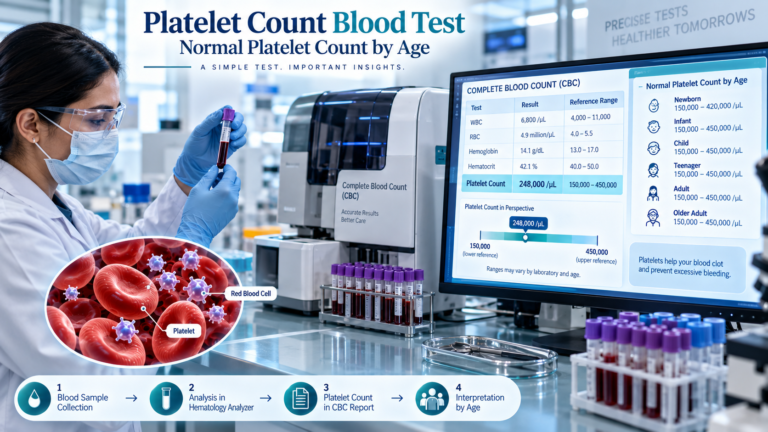
A platelet count blood test measures the number of platelets in your blood and is commonly performed as part of blood testing.
The test requires a blood sample, which is analyzed in a laboratory. The CBC can provide information about platelets as well as red and white blood cells.
If a platelet count is abnormal, a healthcare professional may recommend additional tests depending on the situation.
These can include:
- Repeat CBC
- Peripheral blood smear
- Additional blood tests
- Review of medications
- Evaluation for infection
- Assessment of liver or spleen problems
- Bone marrow testing in selected cases
Why Your Laboratory’s Reference Range Matters
When searching for the normal platelet count by age, you may find slightly different numbers online.
This does not necessarily mean one source is wrong.
Laboratories can use different testing methods and reference populations. MedlinePlus specifically advises people to compare their results with the reference range provided by the laboratory that performed the test.
For example, one source may describe a normal adult platelet count as 150,000–400,000/µL, while another uses 150,000–450,000/µL.
Therefore, the best way to understand your result is to consider:
- Your age
- Your symptoms
- Your previous platelet results
- Your laboratory’s reference range
- Other CBC values
- Your medical history
Other CBC measurements can also provide useful context; for example, a high RDW blood test may be evaluated alongside hemoglobin and other red blood cell indices.
Normal Platelet Count by Age: Quick Reference
Here is a simplified overview:
| Age | General Reference |
|---|---|
| Newborn | Often around 150,000–450,000/µL, but neonatal lab ranges can vary |
| Infant | Commonly around 150,000–450,000/µL, with some labs using wider ranges |
| Child | Commonly around 150,000–450,000/µL |
| Teenager | Generally within an adult-like range |
| Adult | Commonly 150,000–450,000/µL |
| Older adult | Generally interpreted using the adult laboratory reference range |
Specific laboratory ranges may differ considerably, particularly in newborns and young children.
Frequently Asked Questions (FAQs)
What is the normal platelet count by age?
The normal platelet count by age is generally around 150,000–450,000/µL across many age groups, but specific pediatric and adult laboratory reference ranges can differ. Always check the reference range printed on your blood-test report.
Is 120,000 a low platelet count?
Yes. In adults, 120,000/µL is below the commonly used lower reference limit of 150,000/µL. The significance depends on symptoms, medical history, previous results, and the cause.
What foods boost platelet count?
No single food can reliably correct a low platelet count. A balanced diet containing adequate protein, vitamins, minerals, fruits, vegetables, and whole grains supports overall health. If platelets are low, the underlying cause should be evaluated rather than relying only on food.
Can platelets increase in one day?
They can change rapidly in some situations, especially when a specific medical treatment such as platelet transfusion is used. Natural recovery depends on the underlying cause.
Conclusion
Understanding the normal platelet count by age can make a CBC report easier to read, but a platelet number should never be interpreted in isolation. Children, newborns, teenagers, adults, and older adults may have different laboratory reference intervals.
For many people, platelet counts fall within a broad range of approximately 150,000–450,000/µL, but some laboratories use different limits.
If your platelet count is outside the reported range, don’t panic based on the number alone. Your healthcare professional can assess the result alongside your symptoms, medical history, previous blood tests, and other CBC findings.