
A blood test can provide important information about what is happening inside your body. One of the most commonly performed blood tests is a CBC test, also known as a complete blood count. If you have recently received a blood report, understanding the numbers and abbreviations can sometimes feel confusing. This CBC Test Explained guide will help you understand what the test measures, why doctors order it, common reference ranges, and how to read the major values on your report.
A CBC checks several components of your blood, including red blood cells, white blood cells, hemoglobin, hematocrit, platelets, and certain red blood cell indices. It may be used during routine health checks or when a healthcare professional needs more information about symptoms such as tiredness, weakness, fever, bruising, or bleeding. If you want to understand platelet values in more detail, read our guide on normal platelet count by age.
What Is a CBC Test?
A CBC test is a group of blood measurements that provides information about the number and characteristics of different blood cells. CBC stands for complete blood count.
The test mainly looks at:
Table of Contents
Toggle- Red blood cells (RBCs)
- White blood cells (WBCs)
- Hemoglobin
- Hematocrit
- Platelets
- Red blood cell indices such as MCV, MCH, and MCHC
These measurements can provide clues about conditions such as anemia, infections, inflammation, blood disorders, and other health problems. However, a CBC by itself usually cannot establish a diagnosis. Healthcare professionals interpret the results together with symptoms, medical history, examination findings, and other tests.
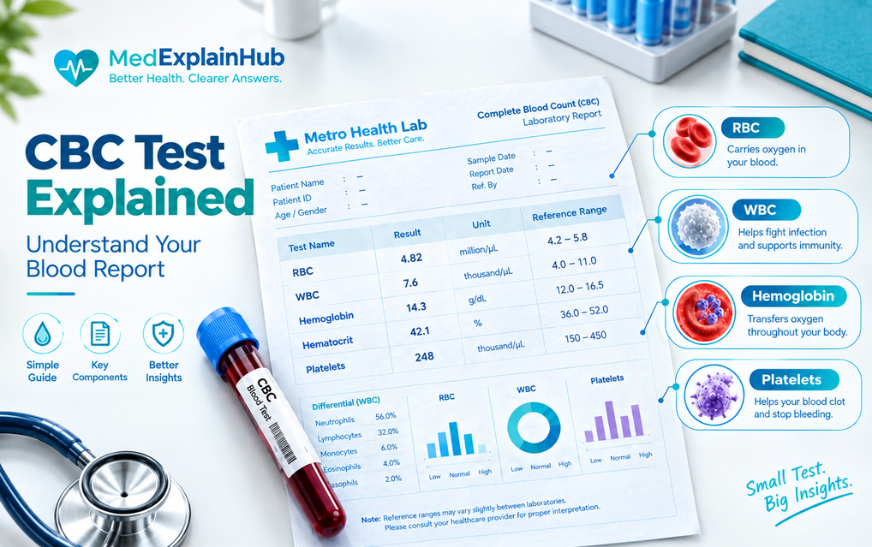
A complete blood count (CBC) measures several important components of your blood and can provide useful information about your overall health.
Why Is a CBC Test Done?
There are several reasons why a healthcare professional may recommend a CBC. In this CBC Test Explained overview, it is important to understand that the test is not only used when someone is sick.
A CBC may be performed to:
- Check general health during a routine examination
- Investigate symptoms such as fatigue, weakness, or fever
- Look for signs of anemia
- Help evaluate possible infections
- Monitor certain blood disorders
- Monitor the effects of some treatments or medicines
- Check blood cell changes over time
- Provide additional information when bruising or unusual bleeding occurs
Because CBC measurements cover several blood components, the test can give healthcare professionals a broad picture of blood-cell status.
What Does a CBC Test Measure?
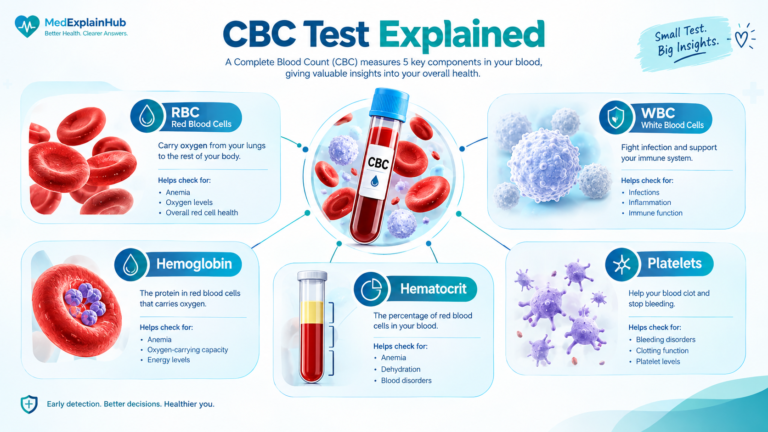
Understanding each part is one of the most useful parts of CBC Test Explained information. Your report may contain several abbreviations, and each one provides different information.
1. Red Blood Cell Count (RBC)
Red blood cells carry oxygen from the lungs to tissues throughout the body. The RBC count measures the number of red blood cells in a specific amount of blood.
A low RBC count can occur with anemia and other conditions, while a high count may have several possible causes. Dehydration, altitude, smoking, and certain medical conditions can influence red blood cell measurements.
2. Hemoglobin (Hb or Hgb)
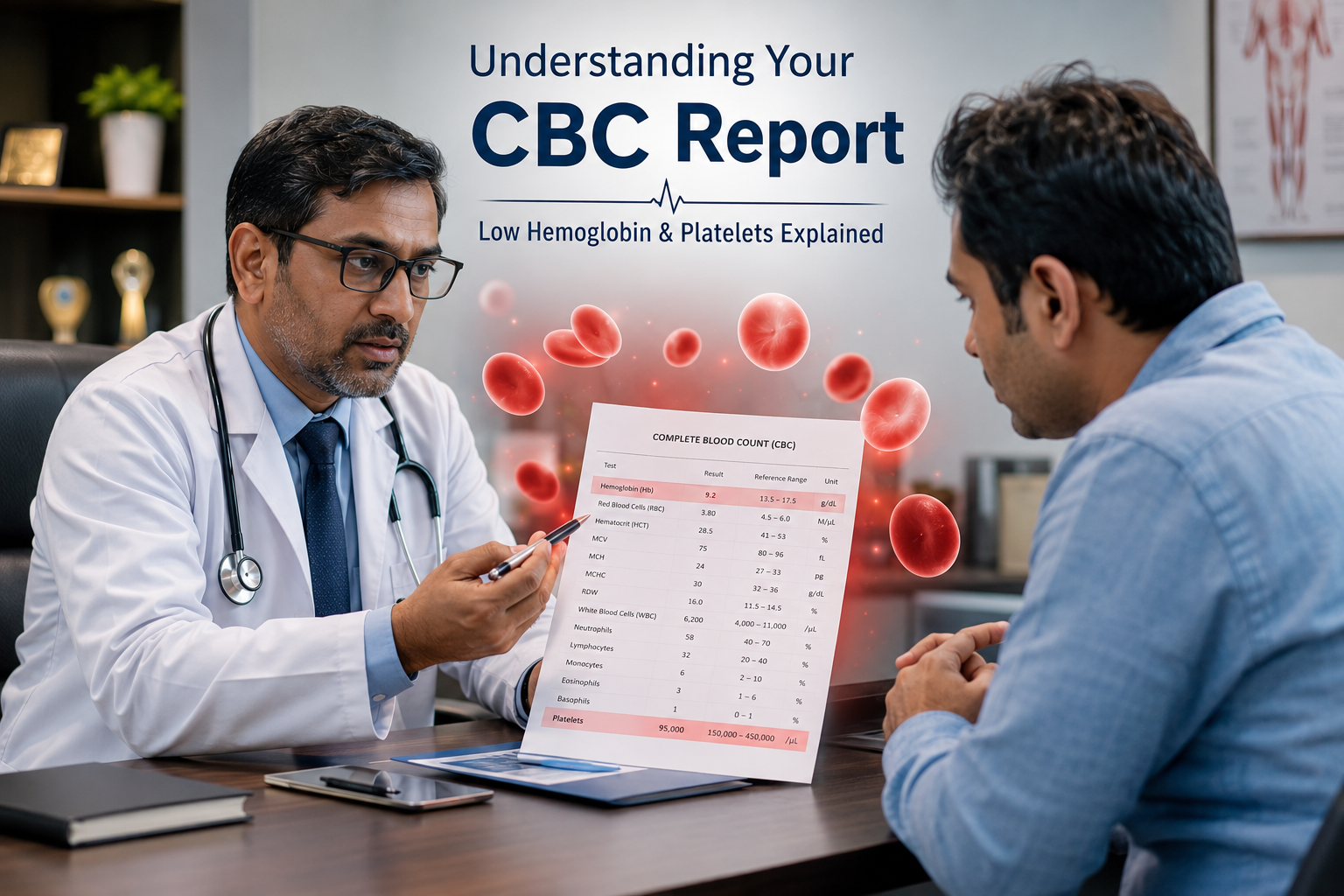
Hemoglobin is the oxygen-carrying protein found inside red blood cells. It is one of the key numbers to check when reading a CBC report.
Low hemoglobin may be associated with anemia. However, the reason for a low value can vary, so additional evaluation may be needed.
3. Hematocrit (Hct)
Hematocrit represents the proportion of your blood that consists of red blood cells. It is usually reported as a percentage.
Along with RBC count and hemoglobin, hematocrit can help healthcare professionals evaluate conditions affecting red blood cells.
A low hematocrit may require further evaluation depending on the overall CBC results. Learn more about low PCV in blood and what it can indicate.
4. White Blood Cell Count (WBC)
White blood cells play an important role in the immune system. The WBC count measures the total number of white blood cells in the blood.
A higher-than-usual WBC count can occur with infections, inflammation, certain medicines, physical stress, or other conditions. A low WBC count can have different causes, including some immune, bone marrow, or medication-related problems.
5. Platelet Count
Platelets help the blood form clots and play an important role in controlling bleeding.
A platelet count that is lower than the laboratory’s reference range is called thrombocytopenia, while a higher count is called thrombocytosis. Both high and low platelet levels can have several possible causes and may require further evaluation.
6. Mean Corpuscular Volume (MCV)
MCV describes the average size of red blood cells. It is particularly useful when healthcare professionals are evaluating different types of anemia.
A lower MCV means the red blood cells are smaller on average, while a higher MCV means they are larger on average. MCV is interpreted alongside other CBC measurements rather than by itself.
7. Mean Corpuscular Hemoglobin (MCH)
MCH indicates the average amount of hemoglobin present in a red blood cell. It is one of the red blood cell indices included in many CBC reports.
8. Mean Corpuscular Hemoglobin Concentration (MCHC)
MCHC describes the average concentration of hemoglobin within red blood cells. Like MCV and MCH, it can provide additional information when evaluating red blood cell abnormalities.
CBC Normal Range
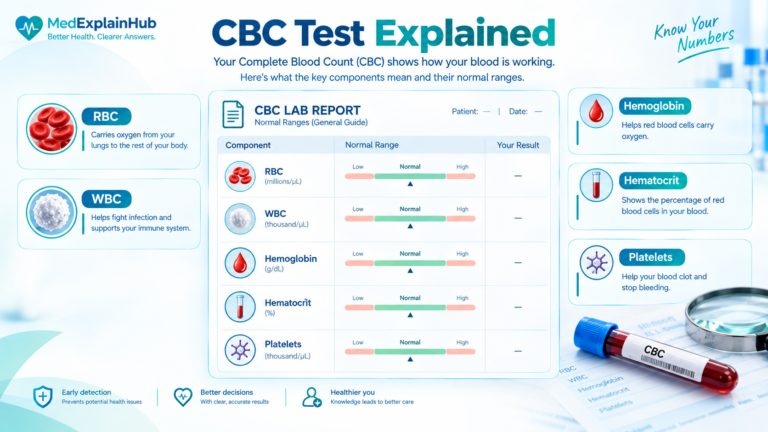
One of the most searched parts of CBC Test Explained information is the normal range. However, there is no single reference range that applies to every person and every laboratory.
Reference ranges can differ depending on the laboratory, testing method, age, sex, and other factors. Therefore, your own laboratory report should be the primary reference when determining whether a result is within its stated range.
Some commonly reported adult CBC ranges include:
| CBC Parameter | Example Adult Reference Range* |
|---|---|
| RBC | Male: 4.35–5.65 trillion/L; Female: 3.92–5.13 trillion/L |
| Hemoglobin | Male: 13.2–16.6 g/dL; Female: 11.6–15 g/dL |
| Hematocrit | Male: 38.3–48.6%; Female: 35.5–44.9% |
| WBC | 3.4–9.6 billion/L |
| Platelets | Male: 135–317 billion/L; Female: 157–371 billion/L |
These are example adult reference ranges reported by Mayo Clinic. Your laboratory may use different ranges, so always check the reference interval printed on your own report.
How to Read a CBC Report
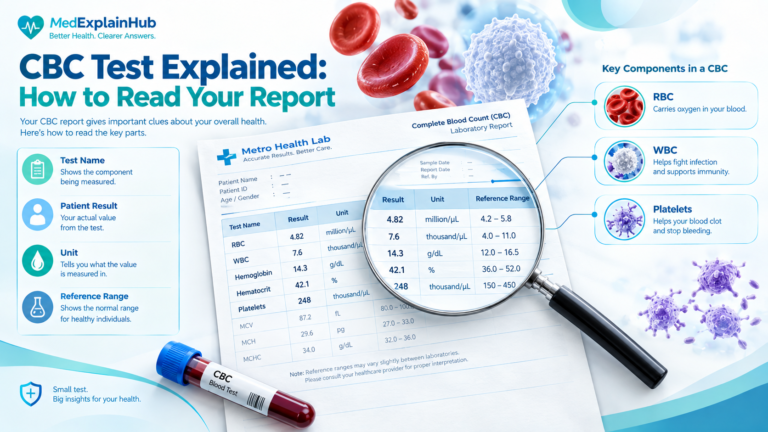
Reading a CBC report becomes easier when you understand what each abbreviation represents. When looking at your report, first identify the test name, your result, the unit, and the laboratory’s reference range.
For example, you might see:
- WBC: 7.2 × 10⁹/L
- Hemoglobin: 14.2 g/dL
- Platelets: 250 × 10⁹/L
The important point is not simply whether a number appears high or low compared with a number found online. You should compare it with the reference range provided by the laboratory that performed the test.
In this CBC Test Explained guide, remember that a result outside a reference range does not automatically mean that you have a disease. Healthy people can occasionally have results outside a laboratory’s reference interval, while some people with health problems can have results within the reference range.
What Does a High RBC Count Mean?
A high RBC count can occur for several reasons. Dehydration can make blood more concentrated, while long-term low oxygen levels, smoking, high altitude, and certain medical conditions can also affect RBC levels.
A high RBC count should not be interpreted without considering hemoglobin, hematocrit, symptoms, medical history, and other findings.
What Does a Low RBC Count Mean?
A low RBC count may be associated with anemia, blood loss, nutritional deficiencies, kidney-related problems, bone marrow disorders, or other conditions.
Because there are many possible causes, a low RBC count does not identify the cause by itself. Other measurements such as hemoglobin, hematocrit, MCV, and additional tests may be considered.
What Does a High WBC Count Mean?
A high WBC count may occur when the body is responding to an infection or inflammation. Certain medicines, physical stress, and some blood or immune-system conditions can also affect WBC levels.
A CBC report showing a high WBC count should therefore be interpreted in context rather than assuming that an infection is always present. A high WBC count can occur with infections or inflammation. Learn more about dengue and viral fever and how these conditions can affect blood test results.
What Does a Low WBC Count Mean?
A low WBC count can have several causes. These may include certain autoimmune conditions, bone marrow problems, cancer, or effects from some medicines.
If your WBC result is below the laboratory reference range, a healthcare professional can determine whether further testing is appropriate based on your symptoms and medical history.
What Do High or Low Platelets Mean?
Platelet results are another important part of CBC Test Explained information.
A low platelet count is known as thrombocytopenia. Depending on the cause and severity, it may be associated with an increased tendency to bruise or bleed.
A high platelet count is known as thrombocytosis. It can occur for different reasons, including some medical conditions or reactions to other conditions.
A platelet result outside the reference range does not automatically reveal the underlying cause. Further testing may sometimes be necessary.
Does a CBC Test Require Fasting?
Usually, a CBC does not require special preparation or fasting. However, if your healthcare professional orders other blood tests at the same time, those tests may have specific preparation requirements.
Always follow the instructions provided by your healthcare professional or laboratory before your appointment.
How Is a CBC Test Performed?
A CBC is performed using a blood sample. A healthcare professional generally collects blood from a vein in your arm using a small needle.
The sample is placed into a tube and sent to a laboratory for analysis. The blood collection itself usually takes only a few minutes, and most people can return to their normal activities afterward.
Are There Any Risks of a CBC Test?
A CBC is a routine blood test with minimal risk. You may experience a brief sting when the needle enters the skin. Some people may have mild soreness or bruising at the collection site.
These effects generally resolve quickly.
When Should You Talk to a Healthcare Professional?
You should discuss your CBC results with a healthcare professional if your report contains results outside the stated reference range or if you have symptoms that concern you.
A single abnormal value does not necessarily mean that you have a medical condition. Healthcare professionals consider the complete report along with your symptoms, medical history, medications, physical examination, and other investigations.
This is particularly important because reference ranges vary between laboratories, and results should be interpreted in their clinical context.
CBC Test Explained: Key Points to Remember
The most important things to remember from this CBC Test Explained guide are:
- CBC stands for complete blood count.
- It evaluates several types of blood cells and related measurements.
- RBC, hemoglobin, and hematocrit provide information about red blood cells.
- WBC provides information about white blood cells.
- Platelets are important for blood clotting.
- MCV, MCH, and MCHC provide additional information about red blood cells.
- Reference ranges can differ between laboratories.
- An abnormal result does not automatically mean you have a disease.
- CBC results should be interpreted along with symptoms and other medical information.
- Your healthcare professional can explain what your specific results mean.
Frequently Asked Questions (FAQs)
What does CBC stand for?
CBC stands for complete blood count. It is a blood test that measures different blood cells and related values, including RBCs, WBCs, hemoglobin, hematocrit, and platelets.
What is a CBC test used for?
A CBC test may be used for routine health checks, to investigate symptoms, help evaluate anemia or infections, monitor blood disorders, or track changes during certain treatments.
Is fasting required for a CBC test?
Usually, fasting is not required for a CBC alone. However, other blood tests performed at the same time may require fasting or other preparation.
What is a normal CBC range?
There is no single normal range for everyone. Reference intervals can vary between laboratories and according to factors such as age and sex. Your report’s own reference range should be used when interpreting the results.
What does a low hemoglobin level mean?
Low hemoglobin may be associated with anemia, but there can be several possible causes. A healthcare professional may consider other CBC values and additional tests to determine the reason.
Conclusion
A CBC test is one of the most commonly used blood tests for evaluating blood-cell health. It measures important values such as RBCs, WBCs, hemoglobin, hematocrit, platelets, and red blood cell indices.
The key to understanding a CBC report is to look at each result together with the laboratory’s reference range rather than focusing on one number alone. An unusual result may have many possible explanations and does not automatically indicate a disease.
Use this CBC Test Explained guide as a starting point for understanding your report, but discuss abnormal results or ongoing symptoms with a qualified healthcare professional for an accurate interpretation.