
Table of Contents
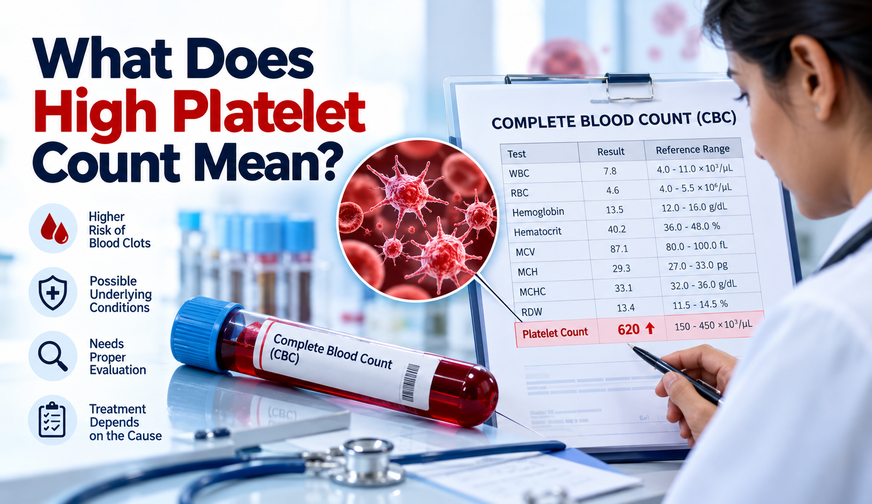
ToggleIf your blood test shows an elevated platelet count, you may immediately wonder, what does high platelet count mean and whether it indicates a serious health problem. Platelets are small blood components that help your body form clots and control bleeding. When the platelet count is higher than the expected range, doctors may refer to it as thrombocytosis.
Understanding what does high platelet count mean is important because an elevated result does not always indicate a serious disease. High platelets can develop temporarily because of infections, inflammation, iron deficiency, blood loss, surgery, or other conditions. In some cases, persistent high platelets can be associated with a bone marrow condition such as essential thrombocythemia.
If you have recently received an abnormal CBC blood test result, knowing what does high platelet count mean can make your report easier to understand. This article explains the common causes, symptoms, diagnosis, treatment options, possible complications, and when high platelet levels may require medical attention.
What Does High Platelet Count Mean?
So, what does high platelet count mean medically?
A high platelet count means that the blood contains more platelets than the expected reference range. Platelets, also called thrombocytes, are produced mainly in the bone marrow and help form blood clots when a blood vessel is damaged.
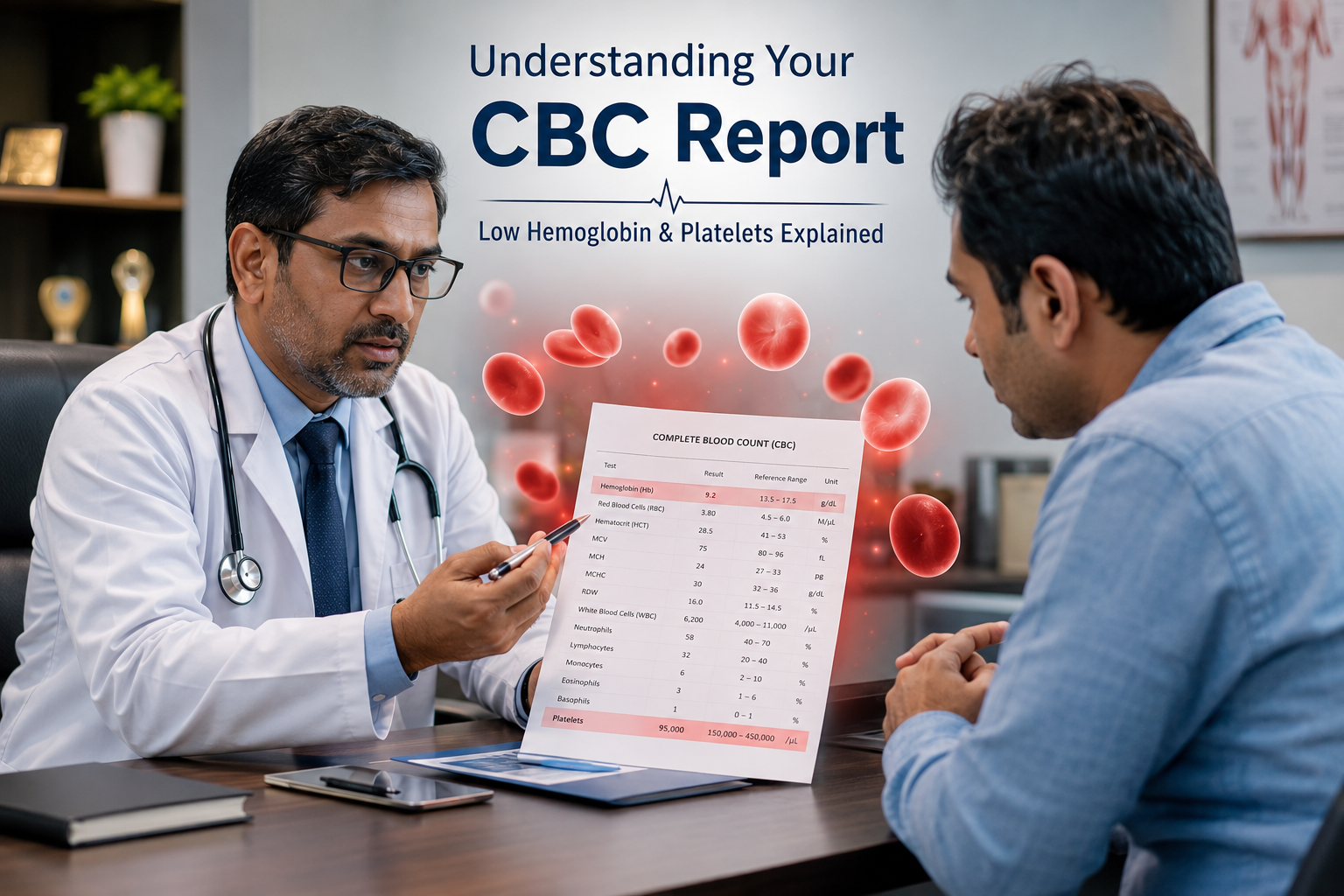
Many laboratories consider a platelet count above 450,000 platelets per microliter of blood to be thrombocytosis, although reference ranges can vary between laboratories. MedlinePlus lists a typical platelet range of approximately 150,000 to 400,000 per microliter, while Cleveland Clinic uses more than 450,000 per microliter as the threshold for thrombocytosis.
Therefore, what does high platelet count mean for one person may not be exactly the same for another. Doctors consider the actual platelet number, previous blood tests, symptoms, medical history, and possible underlying causes.
A high platelet count can generally be classified as:
Reactive thrombocytosis: High platelets caused by another condition or event.
Essential thrombocythemia: A less common disorder in which the bone marrow produces excessive platelets.
What Is Thrombocytosis?
Thrombocytosis is the medical term used when a person’s platelet count is higher than expected. Platelets normally work together to form clots and prevent excessive bleeding.
However, abnormal platelet levels can sometimes increase the risk of unwanted clotting or, particularly in certain conditions with extremely high counts, bleeding. The actual risk depends largely on the cause of thrombocytosis.
Types of Thrombocytosis
1. Reactive Thrombocytosis
Reactive thrombocytosis occurs when the body produces more platelets in response to another condition or event.
It can occur because of:
- Infection
- Inflammation
- Iron-deficiency anemia
- Blood loss
- Surgery
- Trauma
- Certain medications
- Some cancers
- Removal of the spleen
This is the more common type and is often temporary. When the underlying problem improves, platelet levels may gradually return toward the normal range.
2. Essential Thrombocythemia
Essential thrombocythemia is a chronic blood disorder in which the bone marrow produces too many platelets without a temporary external trigger.
Genetic mutations involving JAK2, CALR, or MPL are commonly associated with this condition. Some people may have no symptoms, while others can develop complications related to abnormal clotting or bleeding.
Understanding these two types helps explain what does high platelet count mean when a CBC repeatedly shows elevated platelets.
Causes of High Platelet Count
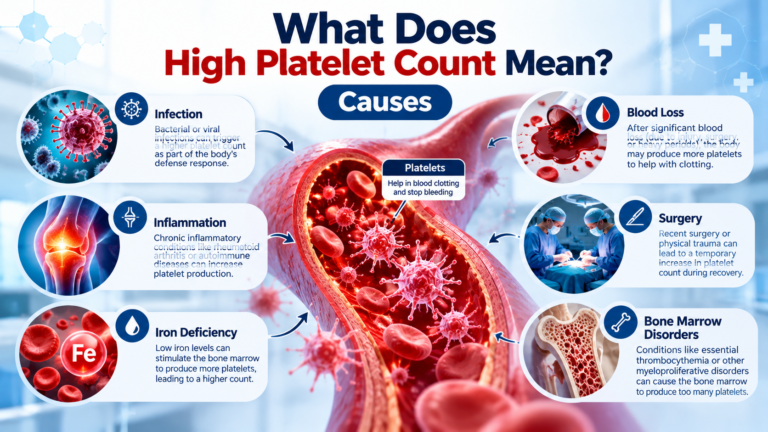
When considering what does high platelet count mean, identifying the underlying cause is one of the most important steps.
Infection
Bacterial and viral infections can temporarily stimulate platelet production. Platelet levels may return toward normal as the infection resolves.
Inflammation
Inflammatory conditions can cause reactive thrombocytosis. Chronic inflammation may keep platelet levels elevated for longer periods.
Iron Deficiency
Iron-deficiency anemia is a recognized cause of high platelets. Doctors may therefore order iron studies when investigating unexplained thrombocytosis.
Blood Loss
Significant blood loss can stimulate the body to produce more platelets as part of its response to blood loss and recovery.
Surgery or Trauma
Platelet levels can increase after surgery, injury, or physical trauma.
Cancer
Some cancers can be associated with reactive thrombocytosis. However, having high platelets alone does not mean that a person has cancer.
Spleen Removal
The spleen stores and helps regulate blood cells, including platelets. Platelet levels can increase after the spleen is surgically removed.
Bone Marrow Disorders
Less commonly, persistent high platelets can result from a bone marrow disorder such as essential thrombocythemia or another myeloproliferative neoplasm.
These causes show why what does high platelet count mean cannot be determined simply by looking at one CBC value.
Signs and Symptoms of High Platelets
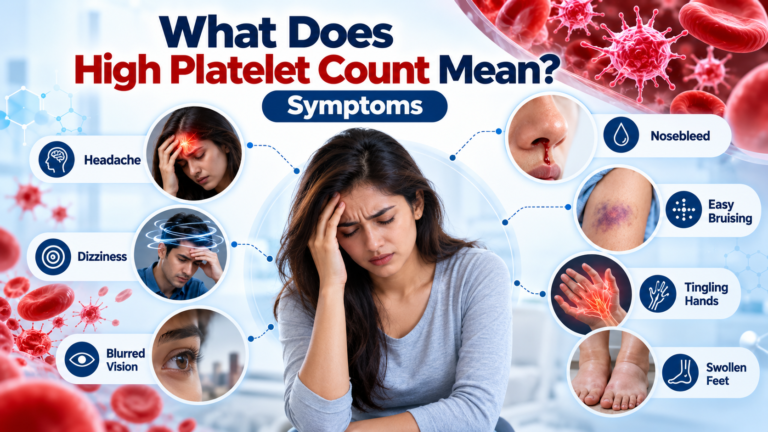
Many people with high platelets do not have any noticeable symptoms. In reactive thrombocytosis, symptoms may instead come from the underlying infection, inflammation, iron deficiency, or another condition.
When symptoms occur, they may include:
- Headache
- Dizziness or lightheadedness
- Fatigue
- Temporary vision changes
- Tingling or burning in the hands or feet
- Nosebleeds
- Easy bruising
- Bleeding from the gums
- Pain or swelling in the hands or feet
Symptoms may also develop if an abnormal blood clot forms.
This means what does high platelet count mean cannot be determined from symptoms alone. Some people have significantly elevated platelets without feeling unwell, while others may
experience symptoms related to the underlying cause or complications.
How Is a High Platelet Count Diagnosed?
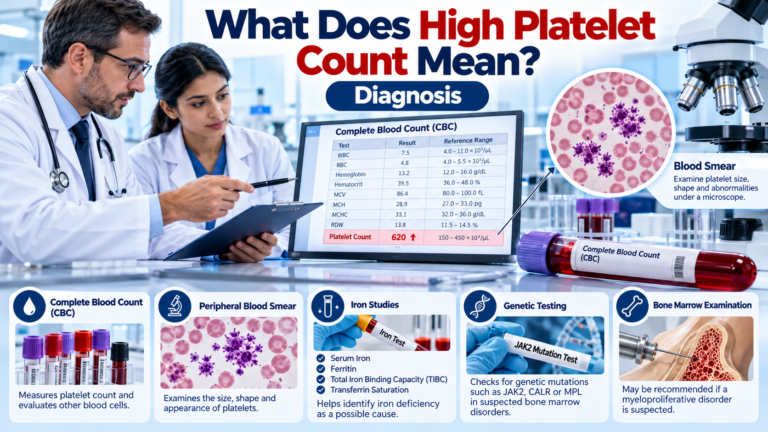
A complete blood count (CBC) is usually the first test that identifies high platelets.
If your platelet count is elevated, your doctor may review your previous blood tests and repeat the CBC after a period of time. This helps determine whether the increase is temporary or persistent.
A complete blood count (CBC) is usually the first test that identifies high platelets. If your platelet count is elevated, your doctor may review your previous blood tests and repeat the CBC after some time to determine whether the increase is temporary or persistent. You can also learn more about platelet count testing and what the results mean from MedlinePlus.
Depending on your situation, additional tests may include:
Complete Blood Count
A CBC measures platelets along with red and white blood cells. It can help doctors identify whether other blood-cell abnormalities are present.
Peripheral Blood Smear
A blood smear allows healthcare professionals to examine blood cells under a microscope and assess their appearance.
Iron Studies
Ferritin and other iron-related tests may be ordered because iron deficiency can cause reactive thrombocytosis.
Inflammation Tests
Tests may help identify an inflammatory or infectious cause.
Genetic Testing
If essential thrombocythemia is suspected, genetic testing may check for mutations such as JAK2, CALR, or MPL.
Bone Marrow Biopsy
In selected cases, a bone marrow biopsy may be performed to examine blood-forming cells and investigate a possible bone marrow disorder.
What Does High Platelet Count Mean on a CBC Report?
If your CBC report marks the platelet count as high, what does high platelet count mean depends on the actual number and the circumstances surrounding the test.
For example, a temporary increase following an infection may not have the same significance as a platelet count that remains elevated over multiple tests.
Your doctor may consider:
- Current platelet count
- Previous platelet counts
- Hemoglobin level
- White blood cell count
- Iron levels
- Signs of infection
- Inflammation
- Recent surgery or injury
- Bleeding history
- Current medications
- Family and medical history
A single abnormal result does not always reveal the cause. Repeat testing and additional evaluation may be necessary.
What Will a Doctor Do If Platelets Are High?
If you ask, what does high platelet count mean and what happens after an abnormal result, the doctor will generally investigate why the platelet count is elevated.
Your doctor may:
- Review your CBC results.
- Compare the result with previous blood tests.
- Ask about recent infections or inflammation.
- Ask about surgery, injuries, or blood loss.
- Check for iron deficiency.
- Review your medications.
- Repeat the platelet count.
- Order additional blood tests if necessary.
- Consider genetic testing if a bone marrow disorder is suspected.
- Refer you to a hematologist when specialist evaluation is appropriate.
The purpose of this evaluation is to identify the cause rather than simply focus on lowering the platelet number.
High Platelet Count Treatment
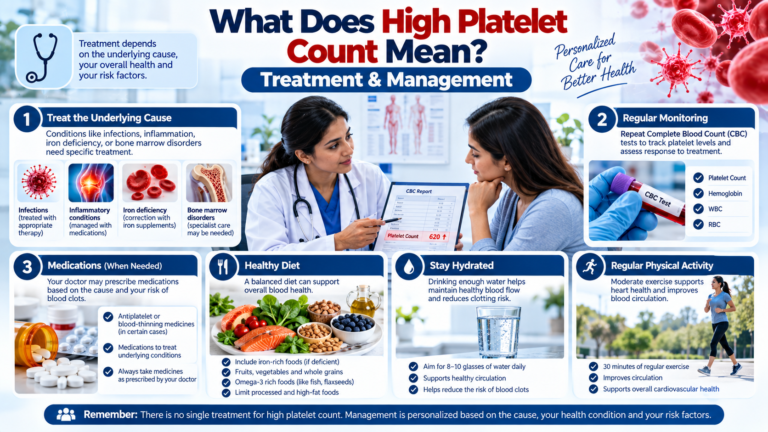
Treatment for high platelets depends on the underlying cause. This is an important part of understanding what does high platelet count mean because not every person with thrombocytosis needs medication.
Treatment for Reactive Thrombocytosis
Reactive thrombocytosis often improves when the underlying condition is treated.
For example:
- An infection may be treated when medically appropriate.
- Iron deficiency may require iron replacement.
- Inflammation may require treatment of the underlying inflammatory condition.
- Blood loss may need to be investigated and managed.
Once the underlying problem improves, platelet levels often move back toward their usual range.
Treatment for Essential Thrombocythemia
People with essential thrombocythemia may require regular monitoring or treatment depending on their individual risk factors and symptoms.
Possible treatments include:
- Low-dose aspirin in selected patients
- Hydroxyurea
- Anagrelide
- Interferon-based treatment
- Platelet-reduction procedures in rare emergency situations
Do not start aspirin on your own simply because your platelet count is high. Aspirin can increase bleeding risk, so a healthcare professional should determine whether it is appropriate for you.
Can High Platelets Cause Blood Clots?
One reason people search what does high platelet count mean is concern about blood clots.
In some forms of thrombocytosis, particularly essential thrombocythemia, abnormal platelet production can increase the risk of blood clots. Depending on where a clot develops, it can contribute to conditions such as deep vein thrombosis, pulmonary embolism, heart attack, or stroke.
However, not every person with high platelets has the same level of risk. Reactive thrombocytosis is often temporary, and the underlying cause plays an important role in determining the overall risk.
Can Very High Platelets Cause Bleeding?
High platelets are commonly associated with concerns about clotting, but very high platelet counts can sometimes be associated with bleeding, particularly in certain chronic platelet disorders.
Possible signs include:
- Frequent nosebleeds
- Bleeding gums
- Easy bruising
- Unusual bleeding
- Heavy menstrual bleeding
If unexplained bleeding occurs along with a significantly abnormal platelet count, contact a healthcare professional.
Lifestyle and Diet Tips for High Platelets
If you are researching what does high platelet count mean, you may also wonder whether diet or lifestyle can lower platelets.
There is no single food or diet that reliably treats every cause of thrombocytosis. Lifestyle measures can support overall health, but they should not replace evaluation or treatment of the underlying condition.
Eat a Balanced Diet
Include a variety of:
- Vegetables
- Fruits
- Whole grains
- Beans and lentils
- Lean protein
- Healthy sources of fats
Address Iron Deficiency
If blood tests show iron deficiency, follow your healthcare professional’s advice about treatment. Do not take high-dose iron supplements without appropriate medical guidance.
Stay Physically Active
Regular physical activity can support cardiovascular health. If you have a diagnosed blood or clotting disorder, ask your healthcare professional which activities are appropriate.
Avoid Smoking
Smoking can increase cardiovascular and blood-vessel risks. Quitting smoking can support overall cardiovascular health.
Stay Hydrated
Adequate fluid intake supports general health. People with medical conditions that require fluid restriction should follow their healthcare professional’s recommendations.
Complications of High Platelet Count
The possible complications depend on the type and cause of thrombocytosis.
Potential complications can include:
- Abnormal blood clots
- Deep vein thrombosis
- Pulmonary embolism
- Stroke
- Heart attack
- Abnormal bleeding
- Myelofibrosis in some people with essential thrombocythemia
- Rare progression to acute leukemia in certain chronic blood disorders
These complications do not occur in everyone with a high platelet count. Reactive thrombocytosis often improves when its underlying cause is addressed.
What Is the Alarming Level of Platelets?
There is no single platelet number that automatically means a person is in immediate danger.
A platelet count above 450,000 per microliter is commonly classified as thrombocytosis, but the importance of the result depends on its cause, whether it persists, the presence of symptoms, and the person’s overall health.
Extremely high platelet counts can sometimes be associated with both clotting and bleeding complications. Therefore, the number should be interpreted by a healthcare professional rather than judged in isolation.
If you have severe chest pain, sudden difficulty breathing, sudden weakness or numbness, trouble speaking, or sudden vision changes, seek emergency medical care.
Monitoring and Follow-Up Care
If platelet levels remain elevated, regular follow-up may be recommended.
| Monitoring | Purpose |
|---|---|
| CBC | Track platelet and other blood-cell counts |
| Iron studies | Check for iron deficiency |
| Inflammation tests | Look for inflammatory causes |
| Repeat platelet count | Determine whether elevation persists |
| Genetic testing | Investigate possible essential thrombocythemia |
| Bone marrow evaluation | Assess possible bone marrow disorders |
| Follow-up appointments | Review symptoms and treatment response |
The monitoring schedule depends on the cause, platelet level, symptoms, and treatment plan.
For someone asking what does high platelet count mean after multiple abnormal blood tests, persistent elevation is particularly important to discuss with a healthcare professional.
When Should You See a Doctor?
You should discuss an unexpectedly high platelet count with your healthcare professional, especially if the result remains elevated on repeat testing.
Medical evaluation is particularly important if you also experience:
- Persistent headaches
- Unexplained bleeding
- Frequent bruising
- Vision changes
- Chest discomfort
- Unusual weakness or numbness
- Pain or swelling in a leg
- Shortness of breath
Some of these symptoms can indicate serious complications and require urgent evaluation.
What Does High Platelet Count Mean for Long-Term Health?
So, what does high platelet count mean for your long-term health?
The answer depends primarily on why the platelet count is elevated. Reactive thrombocytosis often improves after the underlying infection, inflammation, iron deficiency, or other trigger is treated.
Essential thrombocythemia is different because it is a chronic blood disorder that may require long-term monitoring and, for some people, treatment to reduce the risk of complications.
Regular follow-up allows healthcare professionals to monitor platelet levels, evaluate symptoms, and adjust treatment when necessary.
Frequently Asked Questions (FAQs)
What is the most common cause of high platelet count?
Reactive thrombocytosis is the more common form of thrombocytosis. It can occur because of infections, inflammation, iron deficiency, blood loss, surgery, trauma, certain medications, and other conditions.
What will a doctor do if platelets are high?
A doctor will review your CBC, medical history, symptoms, medications, and previous platelet results. They may repeat the blood test and investigate conditions such as iron deficiency, infection, or inflammation. If the elevation persists without an obvious cause, additional tests such as genetic testing or bone marrow evaluation may be considered.
What is the alarming level of platelets?
There is no universal platelet number that is automatically considered dangerous. A count above 450,000 per microliter is commonly considered thrombocytosis, but the significance depends on the underlying cause, how persistent the elevation is, and whether symptoms or complications are present.
What happens if mean platelet count is high?
If the platelet count is high, a doctor may repeat the CBC and investigate possible causes such as infection, inflammation, iron deficiency, blood loss, medications, or a bone marrow disorder. Temporary elevations may improve when the underlying cause is treated.
Conclusion
Understanding what does high platelet count mean starts with recognizing that thrombocytosis is a laboratory finding rather than a diagnosis by itself.
High platelets can occur because of infections, inflammation, iron deficiency, blood loss, surgery, medications, or other conditions. Less commonly, persistent thrombocytosis can be associated with a bone marrow disorder such as essential thrombocythemia.
If your blood test shows elevated platelets, don’t assume that the result automatically means something serious. Your healthcare professional can determine whether the increase is temporary or persistent and investigate the underlying cause.
Ultimately, what does high platelet count mean can only be properly understood by looking at your platelet number alongside your symptoms, medical history, other blood-test results, and laboratory reference range.