
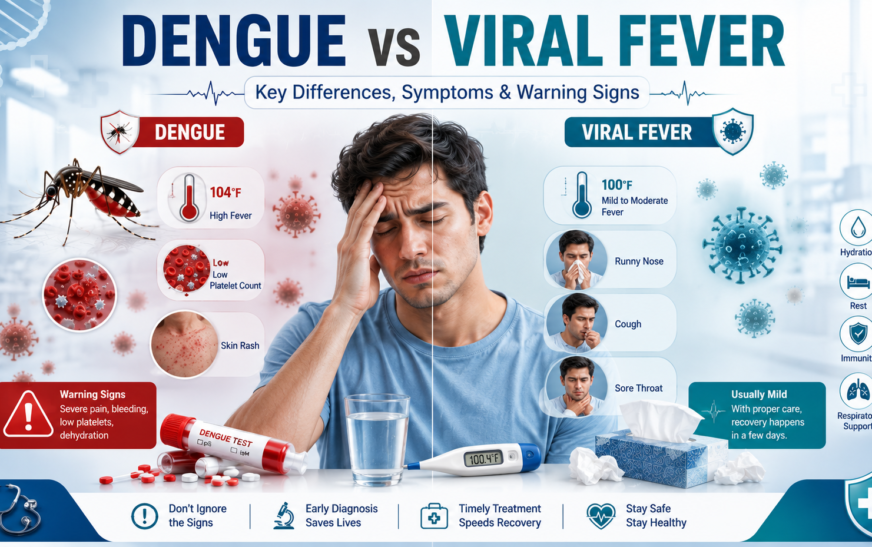
Fever is one of the most common health concerns, especially during the monsoon and post-monsoon seasons. While many fevers are caused by common viral infections, some are due to dengue, a mosquito-borne disease that requires timely diagnosis and close monitoring. Because the early symptoms often overlap, many people find it difficult to understand the difference between Dengue vs viral fever.
Both conditions can cause high fever, headache, body aches, and fatigue. However, dengue can lead to serious complications such as a rapid drop in platelet count, bleeding, and severe dehydration if left untreated. Viral fever, on the other hand, is usually self-limiting and often improves with rest, hydration, and supportive care.
Understanding Dengue vs viral fever is important because early recognition of warning signs can help prevent complications and ensure timely medical treatment. Doctors often recommend a CBC Report to check platelet count and other blood parameters when dengue is suspected, helping them distinguish it from other viral infections.
Table of Contents
ToggleIn this comprehensive guide, you’ll learn the key differences between Dengue vs viral fever, including their causes, symptoms, diagnosis, treatment, warning signs, and prevention tips. By the end of this article, you’ll know when a fever can be managed at home and when it’s essential to seek immediate medical attention.
What Is Dengue?
Dengue is a viral infection caused by the dengue virus (DENV) and is transmitted through the bite of infected Aedes aegypti and Aedes albopictus mosquitoes. These mosquitoes are most active during the daytime, especially in the early morning and late afternoon.
Dengue is common in tropical and subtropical regions, including many parts of India. Cases usually increase during the rainy season because stagnant water provides ideal breeding sites for mosquitoes.
The incubation period of dengue is generally 4 to 10 days after an infected mosquito bite. Symptoms often appear suddenly and may range from mild illness to severe dengue, a medical emergency that requires immediate treatment.
Unlike viral fever, dengue can affect blood vessels and platelets, increasing the risk of bleeding and shock if not managed promptly.
Common Causes of Dengue
- Bite of an infected Aedes mosquito
- Living in dengue-endemic regions
- Stagnant water around homes
- Poor mosquito control measures
- Seasonal outbreaks during monsoon
Risk Factors
People who may have a higher risk of severe dengue include:
- Children and older adults
- Pregnant women
- Individuals with weakened immunity
- People with previous dengue infection
- Those living in areas with frequent dengue outbreaks
What Is a Viral Fever?
Viral fever is a broad term used to describe fever caused by various viruses, such as influenza viruses, rhinoviruses, adenoviruses, respiratory syncytial virus (RSV), and several others. Unlike dengue, viral fever is not limited to one specific virus.
Most viral infections spread through:
- Respiratory droplets
- Close contact with infected individuals
- Contaminated surfaces
- Food or water in certain viral illnesses
The symptoms are usually mild to moderate and improve within 3 to 7 days with adequate rest, fluids, and supportive treatment. In most healthy individuals, viral fever does not cause severe complications.
Understanding dengue vs viral fever is important because viral fever generally does not cause significant platelet reduction or severe bleeding, whereas these are hallmark concerns in dengue.
Common Causes of Viral Fever
- Influenza viruses
- Common cold viruses
- Adenoviruses
- Enteroviruses
- Other seasonal viral infections
How Viral Fever Spreads
- Sneezing and coughing
- Direct contact
- Shared personal items
- Crowded environments
- Poor hand hygiene
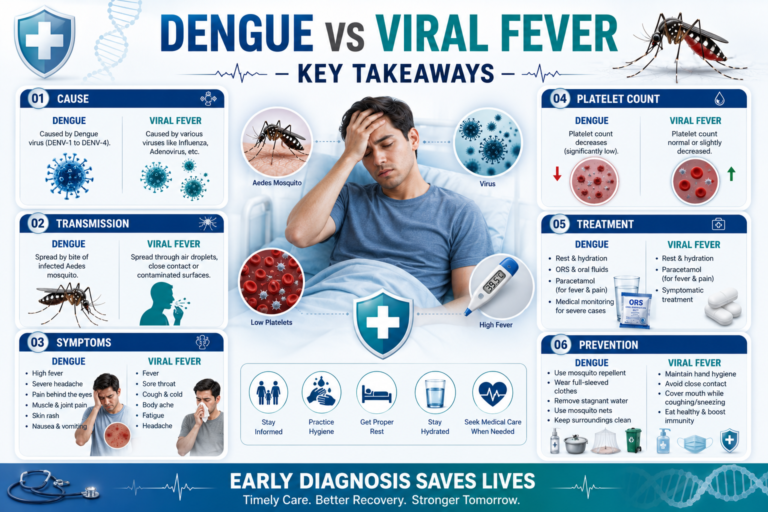
Dengue vs Viral Fever: Quick Comparison
| Feature | Dengue | Viral Fever |
|---|---|---|
| Cause | Dengue virus | Various viruses |
| Spread | Bite of infected Aedes mosquito | Respiratory droplets, contact, contaminated surfaces |
| Fever | Sudden, very high | Mild to high fever |
| Body Pain | Severe muscle and joint pain | Mild to moderate body aches |
| Headache | Severe, often behind the eyes | Mild to moderate |
| Skin Rash | Common | May occur but less common |
| Platelet Count | Can drop significantly | Usually remains normal or only slightly reduced |
| Bleeding Risk | High in severe cases | Rare |
| Recovery Time | 1–2 weeks or longer | Usually 3–7 days |
| Specific Test | NS1 Antigen, IgM/IgG, RT-PCR | Usually based on clinical assessment; tests depend on the suspected virus |
| Hospitalization | May be required | Rarely needed |
Difference Between Dengue and Viral Fever
Although dengue and viral fever often begin with similar symptoms, they are two different illnesses with distinct causes, transmission methods, complications, and recovery patterns. Understanding the difference between Dengue vs viral fever can help you seek the right medical care at the right time.
Cause
One of the biggest differences in Dengue vs viral fever is what causes the illness.
Dengue is caused by the dengue virus (DENV), which has four known serotypes: DENV-1, DENV-2, DENV-3, and DENV-4. It is a mosquito-borne viral infection that can range from mild illness to severe, life-threatening disease.
Viral fever, on the other hand, is a general term used for fever caused by many different viruses, including influenza viruses, rhinoviruses, adenoviruses, enteroviruses, and respiratory syncytial virus (RSV). Most viral fevers are mild and resolve without causing serious complications.
According to the World Health Organization (WHO), dengue is one of the fastest-growing mosquito-borne viral diseases worldwide.
Mode of Transmission
Another major point in Dengue vs viral fever is how these illnesses spread.
Dengue spreads through the bite of an infected Aedes aegypti or Aedes albopictus mosquito. It does not spread directly from one person to another through coughing, sneezing, or physical contact.
In contrast, viral fever usually spreads through:
- Respiratory droplets released during coughing or sneezing
- Direct contact with an infected person
- Touching contaminated surfaces and then touching the eyes, nose, or mouth
- Sharing personal items in certain viral infections
Preventing mosquito bites is the most effective way to reduce the risk of dengue, while maintaining good hygiene and avoiding close contact with infected individuals can help prevent viral fever.
Fever Pattern
The fever pattern is another useful clue when comparing Dengue vs viral fever.
Dengue typically begins with a sudden high-grade fever that may reach 104°F (40°C). The fever is often accompanied by chills, severe weakness, and intense body pain.
Viral fever may also cause high fever, but it generally develops more gradually and usually improves within a few days with rest, hydration, and supportive care.
Body Pain
Body pain is usually much more severe in dengue than in viral fever.
People with dengue often experience intense muscle and joint pain, earning it the nickname “breakbone fever.” Pain behind the eyes is another characteristic symptom that is commonly associated with dengue.
In viral fever, body aches are generally mild to moderate and tend to improve as the infection resolves.
Platelet Count
A significant difference in Dengue vs viral fever is the effect on platelet count.
Dengue can cause a noticeable drop in platelet levels, increasing the risk of bleeding and other complications. Doctors often monitor platelet counts regularly to assess the severity of the infection.
Viral fever usually does not cause a significant decrease in platelet count, although mild reductions may occur in some viral infections.
If your doctor recommends blood investigations, understanding a Normal Creatinine Levels report along with other routine blood tests can provide a broader picture of your overall health during illness.
Skin Rash
A skin rash is more commonly seen in dengue than in viral fever.
The rash usually appears a few days after the fever begins and may look red, blotchy, or slightly itchy. It often spreads across the chest, arms, and legs.
Some viral infections can also cause rashes, but they are generally less common and vary depending on the virus responsible.
Bleeding Risk
Bleeding is one of the most important factors that distinguishes Dengue vs viral fever.
People with severe dengue may develop symptoms such as:
- Bleeding gums
- Nosebleeds
- Blood in vomit
- Blood in stool
- Easy bruising
These warning signs require immediate medical attention and should never be ignored.
Bleeding complications are uncommon in uncomplicated viral fever.
Recovery Time
Recovery time also differs between the two conditions.
Most people with viral fever recover completely within 3–7 days with adequate rest, fluids, and supportive care.
Recovery from dengue usually takes 7–14 days, although weakness and fatigue may persist for several weeks after the fever subsides. Patients with severe dengue may require
hospitalization and close medical monitoring before making a full recovery.
Symptoms of Dengue
Recognizing the symptoms early is essential when comparing Dengue vs viral fever. While both illnesses may begin with fever and body aches, dengue often causes more intense symptoms and may lead to serious complications if not treated promptly.
Symptoms usually appear 4 to 10 days after the bite of an infected Aedes mosquito and can last for about a week. In some cases, the illness may progress to severe dengue, making early diagnosis extremely important.
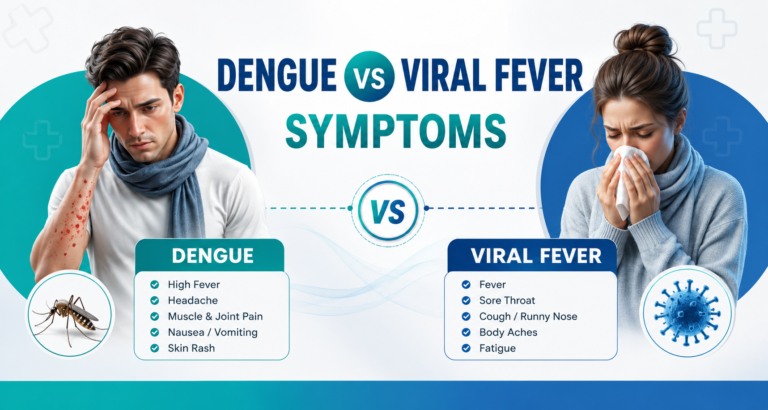
Common Symptoms of Dengue
- Sudden high fever (up to 104°F or 40°C)
- Severe headache
- Pain behind the eyes
- Intense muscle and joint pain
- Extreme fatigue and weakness
- Nausea and vomiting
- Loss of appetite
- Skin rash appearing a few days after fever
- Mild bleeding from the gums or nose
- Easy bruising
- Low platelet count
The severity of symptoms varies from person to person. While many patients recover with proper hydration and medical care, some may develop severe dengue, which requires immediate hospitalization.
For a detailed overview of dengue symptoms and prevention, you can refer to the Centers for Disease Control and Prevention (CDC).
Symptoms of Viral Fever
Viral fever is a broad term that refers to fever caused by different viral infections. Most cases are mild and improve within a few days with adequate rest, hydration, and supportive treatment.
Unlike dengue, viral fever usually affects the respiratory system and rarely causes a significant drop in platelet count or bleeding complications.
Common Symptoms of Viral Fever
- Mild to high fever
- Chills
- Headache
- Body aches
- Fatigue
- Sore throat
- Runny or blocked nose
- Cough
- Sneezing
- Loss of appetite
- Mild nausea in some cases
The symptoms generally improve within 3 to 7 days, although recovery may take longer depending on the type of virus and the individual’s immune system.
Dengue Warning Signs You Should Never Ignore
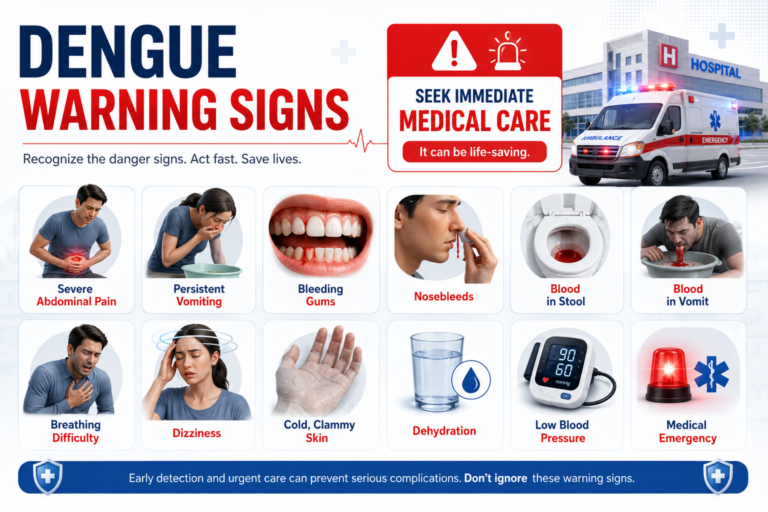
One of the most important aspects of understanding Dengue vs viral fever is recognizing the warning signs of severe dengue. These symptoms usually appear after the fever begins to settle, which can sometimes create a false sense of recovery.
If any of the following warning signs develop, seek immediate medical attention without delay.
Warning Signs of Severe Dengue
- Severe abdominal pain or tenderness
- Persistent vomiting
- Bleeding from the gums or nose
- Blood in vomit or stool
- Difficulty breathing
- Rapid breathing
- Extreme weakness or drowsiness
- Restlessness or irritability
- Cold or clammy skin
- Sudden drop in blood pressure
- Reduced urine output
- Severe dehydration
These symptoms may indicate severe dengue (dengue hemorrhagic fever or dengue shock syndrome), which can become life-threatening if not treated promptly.
When Should You Suspect Dengue Instead of Viral Fever?
Although the early symptoms of Dengue vs viral fever may appear similar, certain signs make dengue more likely and should prompt immediate medical evaluation.
You should suspect dengue if you have:
- A sudden high fever after being in a mosquito-prone area
- Severe muscle and joint pain
- Pain behind the eyes
- A skin rash developing a few days after the fever starts
- Persistent nausea or vomiting
- A noticeable drop in platelet count
- Mild bleeding from the gums or nose
- Symptoms that worsen after the fever begins to decrease
If these symptoms are present, doctors may recommend blood tests such as a CBC Report to check platelet count and other blood parameters, along with dengue-specific tests for confirmation.
Diagnosis: How Doctors Differentiate Dengue from Viral Fever
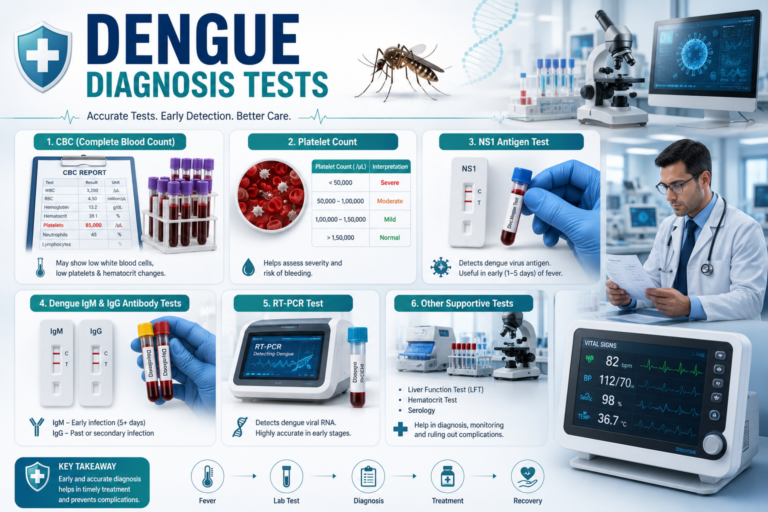
Since the early symptoms of Dengue vs viral fever can be very similar, doctors rely on your medical history, physical examination, and laboratory tests to make an accurate diagnosis. Early detection is important because dengue requires close monitoring to prevent serious complications.
Medical History
Your doctor will first ask questions about your symptoms and recent activities, such as:
- When did the fever start?
- How high is your fever?
- Have you experienced severe body or joint pain?
- Do you have a skin rash or bleeding?
- Have you recently traveled to a dengue-prone area?
- Have you noticed mosquito bites recently?
- Has anyone around you been diagnosed with a viral infection?
These details help narrow down the possible cause of your illness.
Physical Examination
During the examination, the doctor may check for:
- Body temperature
- Blood pressure
- Signs of dehydration
- Skin rash
- Bleeding gums or nose
- Swollen lymph nodes
- Abdominal tenderness
- Liver enlargement in severe cases
These findings provide valuable clues but are usually not enough to confirm dengue without laboratory testing.
Blood Tests Used to Diagnose Dengue
Blood tests play a crucial role in distinguishing Dengue vs viral fever.
Complete Blood Count (CBC)
A CBC Report is usually the first investigation recommended when dengue is suspected. It helps evaluate:
- Platelet count
- White blood cell count
- Hemoglobin level
- Hematocrit
A falling platelet count and rising hematocrit may indicate dengue and help doctors monitor disease progression.
NS1 Antigen Test
The NS1 Antigen Test is commonly performed during the first 1–5 days of illness. It can detect the dengue virus early, even before antibodies develop, making it one of the most useful early diagnostic tests.
Dengue IgM and IgG Antibody Tests
If the illness has been present for several days, doctors may recommend antibody tests.
- IgM antibodies usually become detectable after the fifth day of infection.
- IgG antibodies help identify previous or secondary dengue infections.
These tests assist in confirming the diagnosis and determining the stage of infection.
RT-PCR Test
Reverse Transcription Polymerase Chain Reaction (RT-PCR) detects the genetic material of the dengue virus. Although highly accurate, it is generally reserved for selected cases or specialized laboratories.
Can Viral Fever Be Diagnosed with Blood Tests?
Most uncomplicated viral fevers are diagnosed based on symptoms and physical examination. However, depending on the suspected infection, doctors may order additional investigations such as:
- CBC
- Influenza test
- COVID-19 test
- Respiratory virus panel
- Liver function tests
- Kidney function tests
These tests help rule out other illnesses and guide appropriate treatment.
Treatment for Dengue
There is currently no specific antiviral medicine that cures dengue. Treatment mainly focuses on relieving symptoms, preventing dehydration, and closely monitoring for complications.
Treatment Includes
- Drinking plenty of fluids
- Oral Rehydration Solution (ORS)
- Coconut water and electrolyte-rich drinks
- Adequate bed rest
- Paracetamol for fever and pain (only as advised by a doctor)
- Regular monitoring of platelet count and hematocrit
- Intravenous (IV) fluids if dehydration becomes severe
Patients with warning signs or severe dengue may require hospitalization for continuous monitoring and supportive care.
Medicines to Avoid
If dengue is suspected or confirmed, avoid taking:
- Aspirin
- Ibuprofen
- Diclofenac
- Naproxen
These medicines can increase the risk of bleeding.
Treatment for Viral Fever
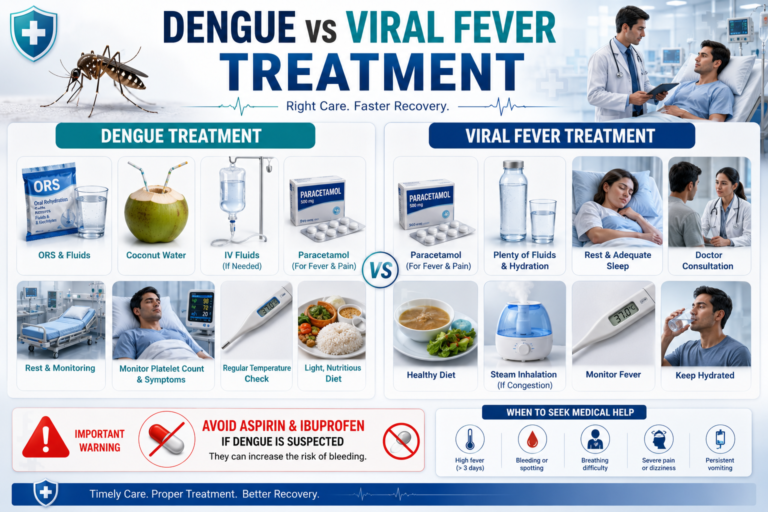
Unlike dengue, viral fever usually improves on its own within a few days. Treatment is mainly supportive and focuses on reducing discomfort while the body’s immune system fights the infection.
Common Treatment Measures
- Get adequate rest.
- Drink plenty of water and other fluids.
- Eat light, nutritious meals.
- Take fever-reducing medicines only as prescribed by a healthcare professional.
- Avoid strenuous physical activity until you recover.
Most people recover completely within 3 to 7 days, although some viral infections may take longer depending on the virus involved and the individual’s overall health.
Can Viral Fever Turn Into Dengue?
This is a common misconception.
No, viral fever cannot turn into dengue.
Dengue and viral fever are caused by different viruses. However, early dengue symptoms often resemble those of viral fever, which is why many people initially mistake one for the other.
If your fever persists, your symptoms worsen, or your platelet count begins to fall, consult a healthcare professional immediately for further evaluation and appropriate testing.
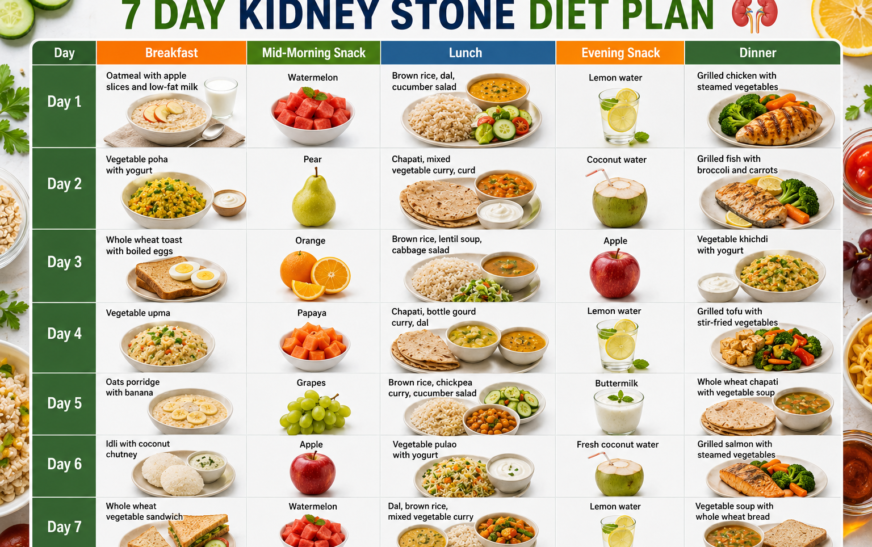
Foods to Eat During Dengue and Viral Fever Recovery
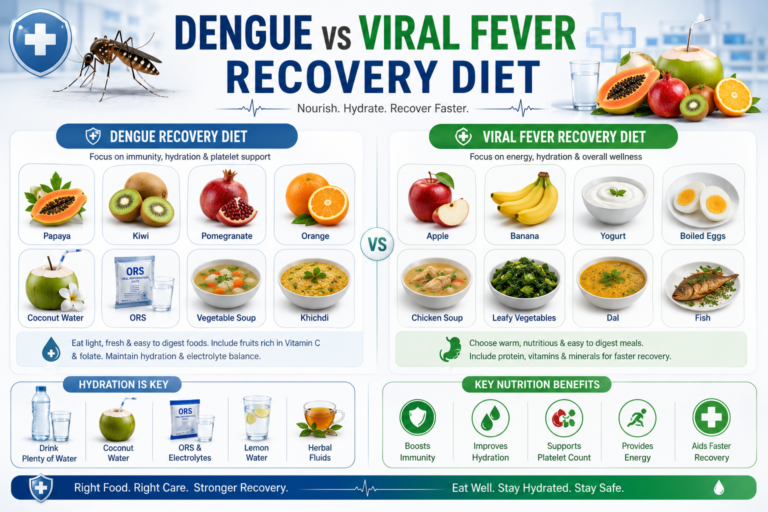
A balanced diet and proper hydration play an important role in recovery from both dengue and viral fever. While no specific food can cure these illnesses, eating nutritious foods can support the immune system, prevent dehydration, and help the body recover faster.
If you’re recovering from Dengue vs viral fever, choose foods that are easy to digest and rich in vitamins, minerals, and protein.
Recommended Foods
- Fresh fruits such as oranges, papaya, pomegranate, apples, and kiwi
- Coconut water
- Oral Rehydration Solution (ORS)
- Fresh fruit juices (without added sugar)
- Vegetable and chicken soup
- Khichdi
- Oatmeal or porridge
- Boiled rice with dal
- Eggs (if tolerated)
- Lean chicken or fish
- Yogurt or curd
- Green leafy vegetables
- Plenty of plain water
These foods help maintain hydration, provide essential nutrients, and support the body’s recovery process.
Foods to Avoid
Certain foods may worsen dehydration or make recovery more difficult. During recovery from Dengue vs viral fever, it is advisable to avoid:
- Oily and fried foods
- Spicy meals
- Processed and junk food
- Sugary soft drinks
- Alcohol
- Excess tea and coffee
- Packaged snacks high in salt
- Heavy meals that are difficult to digest
Instead, choose light, freshly prepared meals until your appetite and energy levels improve.
How to Prevent Dengue
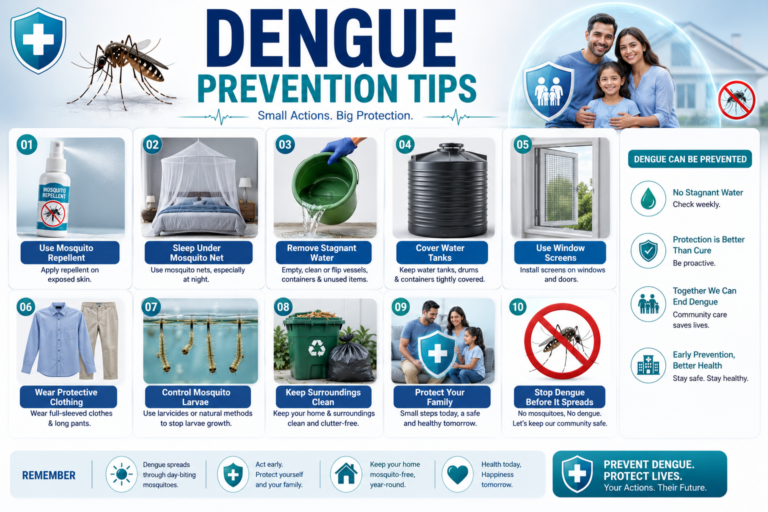
Preventing mosquito bites is the most effective way to reduce the risk of dengue. Since there is no specific cure for dengue, prevention remains the best protection.
Prevention Tips
- Remove stagnant water from coolers, flower pots, buckets, and containers.
- Use mosquito repellents when outdoors.
- Wear full-sleeved clothing and long pants.
- Sleep under mosquito nets if needed.
- Install window and door screens.
- Keep your surroundings clean.
- Empty and clean water storage containers regularly.
- Use mosquito coils or vaporisers where appropriate.
Following these precautions can greatly reduce your chances of getting dengue.
When Should You See a Doctor?
Many cases of viral fever improve with rest and hydration. However, some symptoms should never be ignored because they may indicate dengue or another serious illness.
Seek medical attention immediately if you experience:
- Fever lasting more than 2–3 days
- Sudden high fever with severe body pain
- Persistent vomiting
- Severe abdominal pain
- Bleeding from the gums or nose
- Blood in vomit or stool
- Difficulty breathing
- Extreme weakness or dizziness
- A rapid fall in platelet count
- Reduced urine output
- Signs of dehydration
If your doctor recommends additional blood investigations, understanding your Anaemia report and other blood test results may also help identify underlying conditions that can affect your overall health.
Frequently Asked Questions (FAQs)
What is the main difference between Dengue vs viral fever?
The main difference is that dengue is caused by the dengue virus and spreads through the bite of infected Aedes mosquitoes, while viral fever can be caused by many different viruses and usually spreads through respiratory droplets or direct contact. Dengue also carries a higher risk of complications, including low platelet count and bleeding.
How can I identify dengue at home?
Although dengue cannot be confirmed at home, warning signs include sudden high fever, severe muscle and joint pain, pain behind the eyes, skin rash, nausea, and unusual bleeding. A blood test is required for confirmation.
Does viral fever reduce platelet count?
Most cases of viral fever do not cause a significant drop in platelet count. However, some viral infections may cause a mild decrease. A marked fall in platelets is more commonly associated with dengue.
Which blood test confirms dengue?
Doctors may recommend the NS1 Antigen Test during the early stage of illness. Later, Dengue IgM and IgG antibody tests or RT-PCR may be used to confirm the infection.
Is dengue more dangerous than viral fever?
Yes. Dengue can progress to severe dengue, which may cause internal bleeding, shock, and organ damage if not treated promptly. Most viral fevers resolve without serious complications.
Can dengue be treated at home?
People with mild dengue may recover at home under medical supervision by staying hydrated, getting adequate rest, and monitoring symptoms. However, anyone with warning signs or severe dengue should seek immediate hospital care.
Can I take antibiotics for dengue or viral fever?
No. Antibiotics do not work against viral infections, including dengue and most viral fevers. They should only be used if a doctor diagnoses a bacterial infection.
How long does recovery take?
Most viral fevers improve within 3–7 days, while recovery from dengue usually takes 1–2 weeks. Fatigue may continue for several weeks after dengue in some individuals.
Conclusion
Understanding the difference between Dengue vs viral fever is essential because both conditions may begin with similar symptoms but require different levels of medical attention. While viral fever is usually mild and resolves with supportive care, dengue can lead to serious complications such as low platelet count, bleeding, and severe dehydration if not recognized early.
Pay close attention to warning signs such as persistent vomiting, severe abdominal pain, unusual bleeding, difficulty breathing, or worsening weakness. Seeking timely medical advice, getting the appropriate blood tests, and following your healthcare provider’s recommendations can significantly improve outcomes.
With proper hydration, nutritious food, adequate rest, and preventive measures against mosquito bites, most people recover well. However, if symptoms worsen or warning signs develop, do not delay seeking medical care.