
Table of Contents
ToggleA bitter taste in your mouth can appear suddenly or develop gradually. Sometimes it happens after eating certain foods, while at other times you may notice an unpleasant taste even when you have not eaten anything. If you are also trying to understand how medicines can affect your health, read our guide on side effects of common medicines. In many cases, the problem is temporary and can be linked to dry mouth, dehydration, oral hygiene, acid reflux, medicines, or a recent infection. However, a persistent change in taste can sometimes point to an underlying health or dental problem.
Understanding the possible bitter taste in mouth causes can help you decide whether simple home care is enough or whether you should speak with a doctor or dentist. This guide explains the most common reasons, related symptoms, treatment options, and warning signs that should not be ignored.
What Does a Bitter Taste in the Mouth Mean?
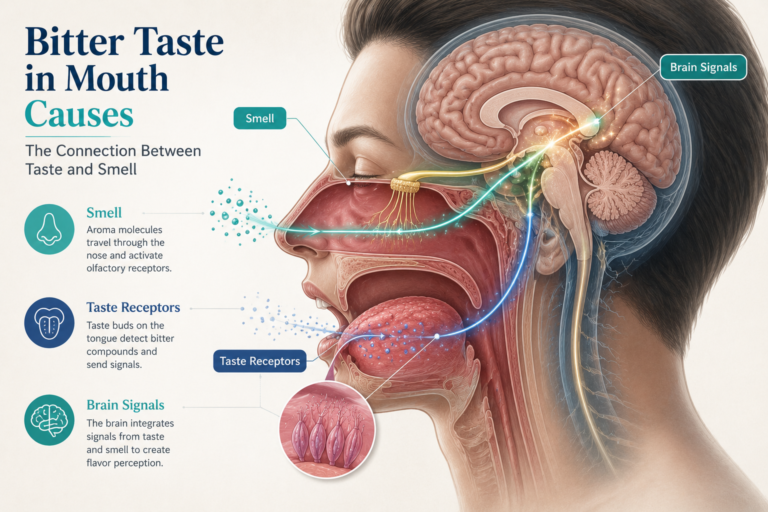
Taste and smell work closely together. Your tongue detects basic tastes such as sweet, sour, salty, bitter, and umami, while your sense of smell contributes greatly to the overall flavor of food. A blocked nose during a cold or flu can therefore make food taste different even when your taste buds are functioning normally. The National Institute on Deafness and Other Communication Disorders (NIDCD) explains that many people who believe they have a taste problem actually have a smell-related problem.
A persistent or distorted taste may be called dysgeusia. People with dysgeusia can describe food as bitter, metallic, sour, rancid, or generally unpleasant. It may also feel as though there is a bad taste in the mouth when nothing has been eaten.
The National Institute on Deafness and Other Communication Disorders (NIDCD) explains that taste and smell work closely together, and many people who think they have a taste problem may actually have a smell disorder. NIDCD – Taste Disorders
Bitter Taste in Mouth Causes at a Glance
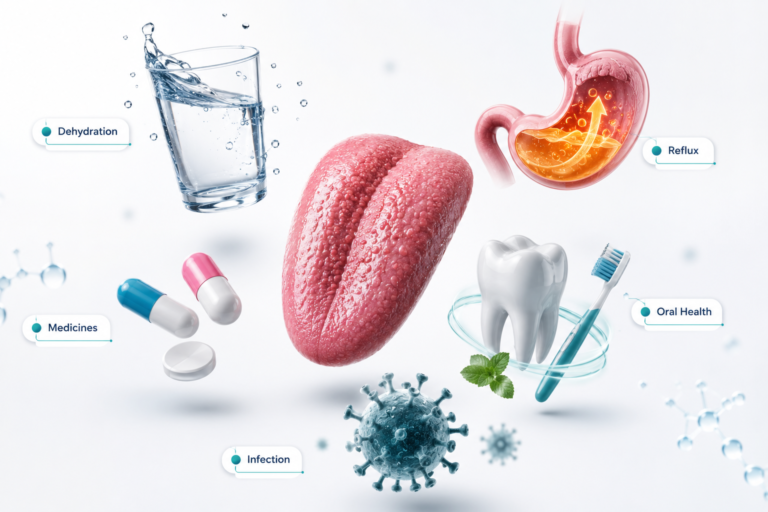
Knowing the common bitter taste in mouth causes can make the symptom easier to understand.
| Possible Cause | Common Signs | What May Help |
|---|---|---|
| Dehydration | Thirst, dry mouth, sticky saliva | Drink enough fluids |
| Poor oral hygiene | Bad breath, plaque, gum irritation | Brush, floss, clean tongue and visit a dentist |
| Acid reflux | Heartburn, sour or bitter taste, burping | Reflux-friendly habits and medical advice |
| Dry mouth | Reduced saliva, mouth dryness | Hydration and treatment of the underlying cause |
| Medicines | Taste change after starting a medicine | Discuss it with a doctor or pharmacist |
| Cold, flu or sinus congestion | Blocked nose, reduced smell, altered taste | Manage congestion and allow recovery |
| Smoking or tobacco | Bad breath, altered taste, gum problems | Stop tobacco use |
| Pregnancy | Bitter or metallic taste, nausea | Hydration and prenatal medical guidance |
| Nutrient deficiency | Taste changes with other deficiency symptoms | Medical evaluation before supplements |
| Medical conditions | Persistent taste changes with other symptoms | Professional evaluation |
The table provides a quick overview, but the same symptom can have different explanations in different people. The timing, associated symptoms, medications, oral health, and recent illnesses are important when identifying the cause.
Common Bitter Taste in Mouth Causes
1. Dehydration
Dehydration is among the simplest bitter taste in mouth causes to address.
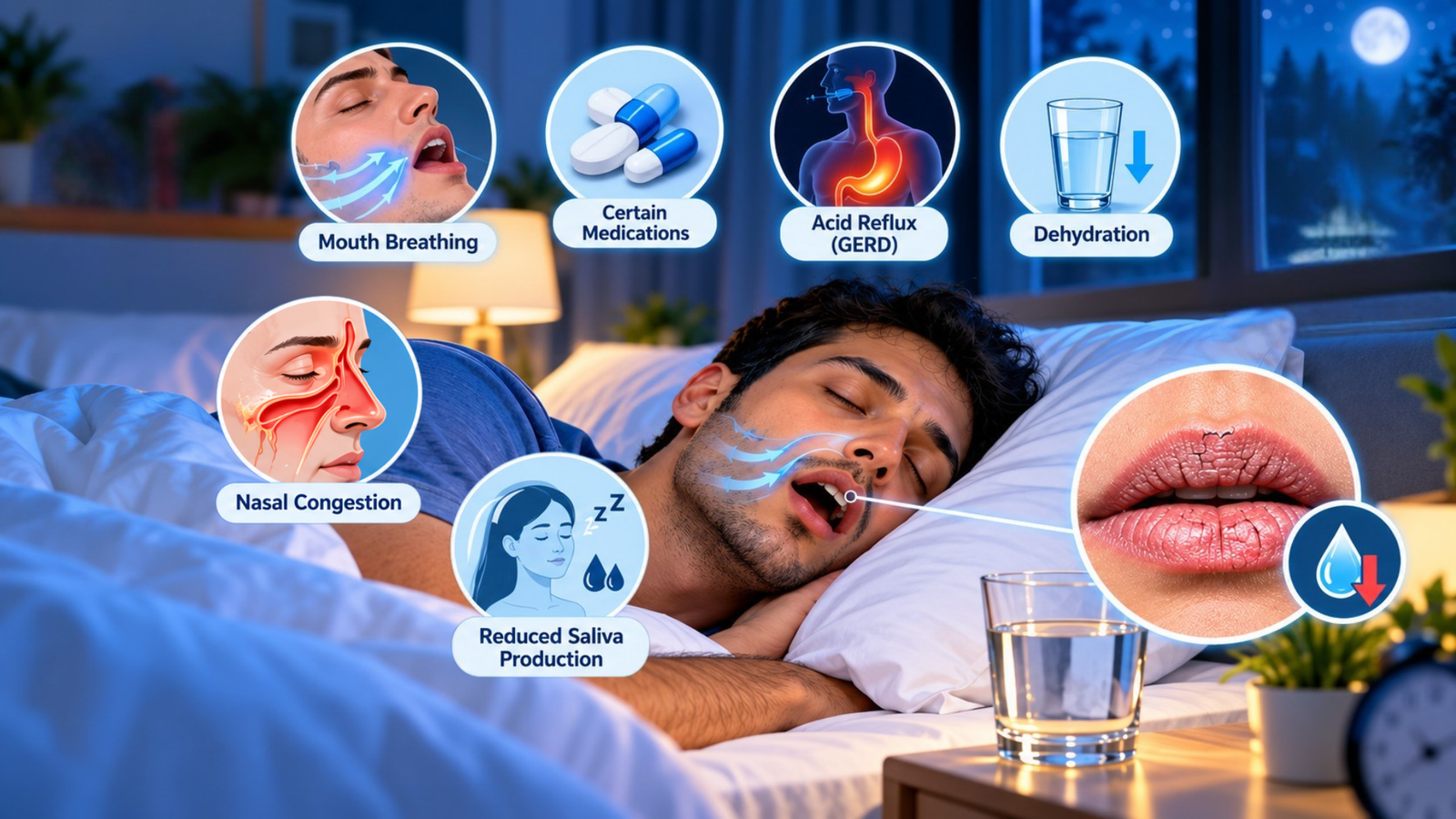
Not drinking enough fluids can reduce saliva production and make the mouth feel dry or sticky. Saliva helps wash away food particles and microorganisms, so reduced saliva can contribute to an unpleasant taste.
Dehydration can occur after exercise, during hot weather, with fever, vomiting, diarrhea, or simply from not drinking enough water. If the bitter taste improves after you rehydrate, dehydration or dry mouth may have contributed to it.
If you have severe dehydration symptoms such as very little urine, confusion, extreme weakness, or inability to keep fluids down, seek medical care rather than relying on home remedies.
2. Poor Oral Hygiene and Dental Problems
Dental issues are important bitter taste in mouth causes, especially when bad breath or pain is present.
Plaque and bacteria can build up when brushing and flossing are inadequate. Gum disease, tooth decay, oral infections, and dental abscesses can also cause an unpleasant taste or persistent bad breath.
Brush your teeth twice a day with fluoride toothpaste and clean between your teeth regularly. Gently cleaning the tongue may also help remove buildup. If you have tooth pain, bleeding gums, swelling, pus, or persistent bad breath, arrange a dental examination.
NIDCD lists poor oral hygiene and dental problems among causes of taste disorders.
3. Acid Reflux or GERD
Reflux is another common bitter taste in mouth causes that may become worse after meals.
Acid reflux occurs when stomach contents move back toward the esophagus. The material can sometimes reach the throat or mouth and create an unpleasant sour or bitter sensation. Acid reflux may also cause heartburn, burping, throat irritation, cough, hoarseness, or a feeling of food coming back up.
The NHS notes that an unpleasant sour taste in the mouth can occur with acid reflux and that symptoms are often worse after eating, lying down, or bending over.
If reflux happens regularly, speak with a healthcare professional. Lifestyle changes may help, but persistent symptoms should not simply be ignored.
4. Dry Mouth
Persistent dryness can contribute to bitter taste in mouth causes through reduced saliva.
Dry mouth, or xerostomia, may occur because of dehydration, certain medicines, mouth breathing, anxiety, or reduced saliva production.
When there is not enough saliva, the mouth can feel sticky and food may not taste normal. Drinking water regularly and using sugar-free gum or lozenges to stimulate saliva may help some people.
Persistent dry mouth should be discussed with a healthcare professional because treating the underlying reason is more useful than simply masking the symptom.
5. Medicines and Supplements
Medication-related changes are recognized as bitter taste in mouth causes and should be reviewed professionally.
Some prescription medicines, over-the-counter medicines, vitamins, and supplements can change the way foods taste. Antibiotics, antihistamines, antidepressants, and some cancer treatments are examples of treatments that may affect taste.
If you notice the bitter taste after starting a new medicine, check with your doctor or pharmacist. Do not stop a prescribed medicine without professional advice. In some cases, adjusting treatment may improve the taste disturbance.
6. Cold, Flu, Allergies, or Sinus Congestion
Respiratory illnesses can create bitter taste in mouth causes through changes in smell and taste.
A blocked nose can affect the way food and drinks taste because smell is an important part of flavor perception. Colds, flu, allergies, sinus problems, and some viral infections can temporarily change taste or smell.
If the bitter taste started during an illness and gradually improves as congestion clears, the infection or nasal blockage may be contributing. NIDCD explains that respiratory infections and allergies can affect taste and smell.
If taste or smell changes continue long after the infection has resolved, consider discussing them with a healthcare professional.
7. Smoking and Tobacco Use
Tobacco use can contribute to bitter taste in mouth causes as well as oral health problems.
Smoking and tobacco use can alter taste and smell and may also contribute to gum disease and other mouth problems. Tobacco use is associated with changes in taste perception, while smoking can increase the risk of oral health problems.
Stopping tobacco can benefit your oral health and may help taste recover. If you are finding it difficult to quit, a healthcare professional can help you explore evidence-based cessation options.
8. Pregnancy and Hormonal Changes
Hormonal changes are possible bitter taste in mouth causes during pregnancy.
Some pregnant people notice a bitter or metallic taste, particularly during early pregnancy. This can occur along with nausea or increased sensitivity to smells.
Pregnancy-related taste changes are usually temporary. However, severe vomiting, inability to keep fluids down, or signs of dehydration require medical advice.
9. Vitamin or Mineral Deficiency
Nutritional deficiencies are less common bitter taste in mouth causes but may need testing.
Certain vitamin or mineral deficiencies may be associated with altered taste. Zinc and some B-vitamin deficiencies have been linked with dysgeusia.
However, a bitter taste does not automatically mean that you have a nutritional deficiency. Taking high-dose supplements without testing or medical guidance is not recommended.
If you have persistent taste changes together with fatigue, weakness, poor appetite, or other symptoms, ask a healthcare professional whether blood tests are appropriate.
10. Underlying Medical Conditions
Some medical disorders are less common than bitter taste in mouth causes and usually have additional symptoms.
Certain medical conditions can affect taste perception. Diabetes, hypothyroidism, kidney disease, liver disease, neurological disorders, and other metabolic conditions have been associated with dysgeusia.
This does not mean that a bitter taste by itself indicates one of these conditions. Most cases have more common explanations, and diagnosis depends on the complete symptom pattern, medical history, examination, and sometimes testing.
Can Liver Problems Cause a Bitter Taste in the Mouth?
Liver disease can be associated with altered taste, but bitter taste alone is not a reliable way to diagnose a liver problem. NIDCD lists hepatitis among conditions that can be associated with taste disorders, while Cleveland Clinic notes that liver disease is among several medical conditions that may cause dysgeusia.
If you are concerned about your liver, pay attention to other symptoms such as yellowing of the skin or eyes, dark urine, pale stools, abdominal swelling, persistent nausea, or unusual fatigue. These symptoms need medical evaluation.
It is important not to assume that a bitter taste automatically means there is a liver problem. Many more common factors, including oral health, medicines, dry mouth, reflux, and infections, can change taste.
Why Do I Suddenly Feel Bitter Taste in My Mouth?
Sudden bitter taste in mouth causes can be simple and temporary. You may be dehydrated, have a dry mouth after sleeping, have nasal congestion, experience acid reflux, or have recently started a medicine. Certain foods and drinks can also leave a lingering aftertaste.
A sudden change in taste can also occur during or after an infection. Think about what changed shortly before the symptom started. Ask yourself whether you began a new medication, became ill, changed your diet, developed heartburn, started smoking more, or noticed dental symptoms.
If the change lasts or repeatedly returns without an obvious explanation, professional evaluation can help identify the cause.
What Other Symptoms Can Occur With a Bitter Taste?
The symptoms that appear alongside the taste change can provide useful clues. Dryness and thirst may suggest dehydration or reduced saliva. Heartburn and regurgitation can occur with acid reflux. Tooth pain, swollen gums, bleeding, or persistent bad breath may suggest an oral health problem.
A blocked nose, sneezing, cough, or reduced sense of smell may occur with respiratory infections or allergies.
If the taste change occurs with unexplained weight loss, persistent vomiting, yellow skin or eyes, severe weakness, or neurological symptoms, medical assessment is important.
These symptoms cannot diagnose a condition by themselves, but telling your healthcare professional when the taste began and what other symptoms you have can make the evaluation more useful.
If a bitter taste occurs alongside diabetes-related symptoms or slow-healing wounds, learning about diabetic wound care may also be useful.
How Do I Get Rid of a Bitter Taste in My Mouth?
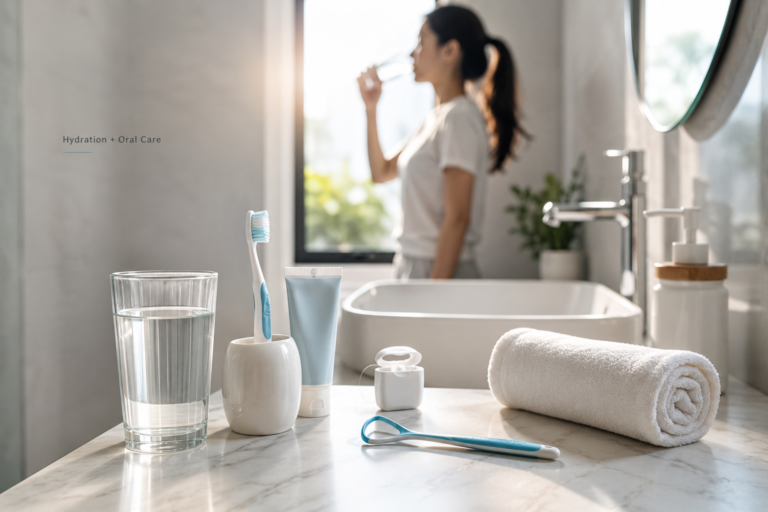
The best way to get rid of a bitter taste is to address its underlying cause. General measures that may help include:
- Drink enough water and avoid becoming dehydrated.
- Brush your teeth twice daily with fluoride toothpaste.
- Clean between your teeth regularly.
- Gently clean your tongue.
- Avoid tobacco products.
- Pay attention to foods, drinks, medicines, or situations that trigger the taste.
- If you have dry mouth, ask a healthcare professional about suitable saliva-supporting products.
- If you have recurring reflux, discuss symptoms and treatment options with a healthcare professional.
- Maintain regular dental checkups.
Cleveland Clinic recommends good oral hygiene, adequate hydration, avoiding smoking, and addressing the underlying cause of dysgeusia.
Do not stop prescribed medication simply because you suspect it is causing the taste. Your doctor or pharmacist can determine whether an alternative is appropriate.
When Should I Worry About Bitter Taste in My Mouth?

An occasional bitter taste is usually not an emergency, especially if it disappears after eating, drinking water, brushing your teeth, or recovering from a minor illness. However, persistent or recurrent symptoms deserve attention.
You should arrange a medical or dental evaluation if the taste continues for several weeks, keeps returning, affects your appetite, or has no obvious explanation.
Seek urgent medical help if the taste change occurs with difficulty breathing or swallowing, significant facial or mouth swelling, severe dental pain, high fever, repeated vomiting with dehydration, or sudden neurological symptoms such as weakness, confusion, trouble speaking, or severe dizziness.
How Is a Persistent Taste Change Evaluated?
A healthcare professional may ask when the taste change started, whether it is constant, what foods trigger it, and whether you have recently had an infection or started a new medication.
Your oral health, dental history, tobacco use, and other medical conditions may also be reviewed. Depending on the situation, examination of the mouth, nose, throat, and teeth may be needed.
Taste or smell testing may be performed, and blood tests or other investigations may be considered when symptoms suggest an underlying medical problem. NIDCD explains that evaluation can include medical history, dental assessment, examination of the ears, nose and throat, and taste testing.
Which Doctor Should You See for a Bitter Taste?
If you have tooth pain, gum swelling, bleeding, or other mouth-related symptoms, a dentist is a good starting point.
If the problem appears related to reflux, medication, an infection, or another general health issue, speak with your primary healthcare professional.
An ENT specialist may evaluate persistent taste or smell disorders, particularly when there is no obvious dental or digestive explanation. The appropriate specialist depends on your symptoms and medical history.
Can Bitter Taste in the Mouth Be Prevented?
Not every taste disturbance can be prevented, but several habits can support normal taste and oral health.
Drink enough fluids, maintain good dental hygiene, avoid tobacco, and attend regular dental checkups. It is also useful to notice changes in your medications, recent illnesses, diet, and oral health.
Keeping a simple symptom record can help identify patterns if the problem returns.
Frequently Ask Questions (FAQS)
When should I worry about bitter taste in my mouth?
You should consider seeing a doctor or dentist when the taste persists for several weeks, repeatedly returns, affects eating or appetite, or occurs with symptoms such as severe pain, swelling, fever, repeated vomiting, difficulty swallowing, or neurological changes.
Can liver problems cause a bitter taste in the mouth?
Liver disease can be associated with altered taste, but a bitter taste alone does not mean you have a liver problem. Other symptoms, medical history, and appropriate tests are needed to determine the cause.
Why do I suddenly feel bitter taste in my mouth?
A sudden taste change can occur because of dehydration, dry mouth, acid reflux, nasal congestion, an infection, a new medicine, smoking, or certain foods. If it persists or comes with other symptoms, seek professional advice.
How do I get rid of a bitter taste in my mouth?
Drink enough water, maintain good oral hygiene, clean your tongue gently, avoid tobacco, and address possible reflux or congestion. If the problem continues, see a dentist or doctor to identify the underlying cause.
Conclusion
A bitter taste can be uncomfortable, but there are many possible explanations, and most are manageable once the underlying cause is identified. Paying attention to hydration, oral hygiene, medications, reflux symptoms, infections, and other changes in your health can provide useful clues.
If the taste is persistent, recurrent, or accompanied by concerning symptoms, professional evaluation is the safest approach. Treating the cause rather than simply masking the taste can provide longer-lasting relief and help protect your overall oral and general health.