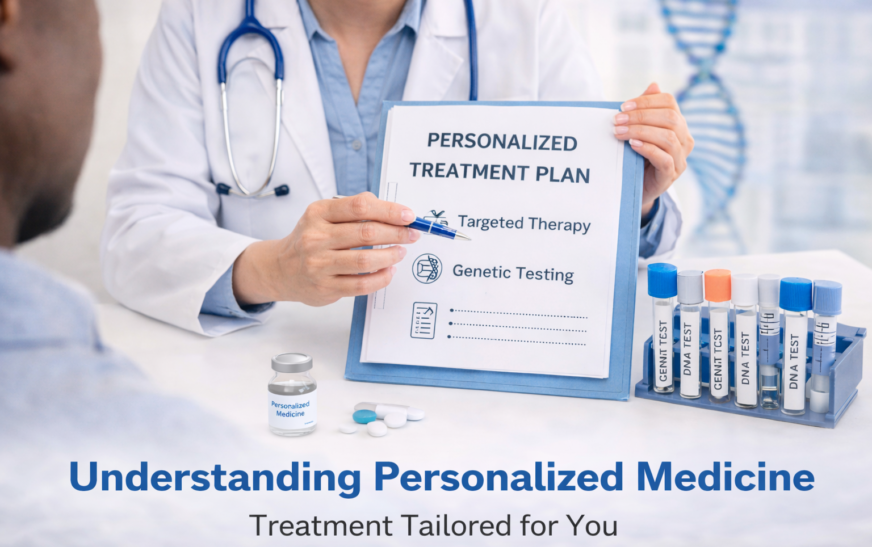
Medicine is no longer “one size which fits all.” Every person is unique, and their body , lifestyle, and response to treatment also . This idea forms the foundation of personalised medicine which is an approach to healthcare where medical treatment is given specifically to an individual. Instead of giving the same medicine or treatment to everyone with the same condition, personalised medicine considers a person’s genes, environment, and lifestyle to choose the most effective and safest treatment for them .This approach is transforming the modern healthcare and improving the outcomes of patients.
What Is Personalized Medicine?
Personalized medicine, also known as giving medication to an individual according to their body medicine which is a medical approach that customizes healthcare decisions and treatments for each individual patient. It uses information about a person’s genetic background , medical history, lifestyle, and environmental factors to guide prevention, diagnosis, and treatment.
In simple terms, personalized medicine means the right treatment for the right individual at the right time. It helps the doctors to predict which treatments will work best and which may cause side effects to an individual. Personalized medicine also supports early diagnosis, similar to approaches used in preventive healthcare.
According to the World Health Organization (WHO), personalized medicine improves treatment outcomes.
https://www.who.int
Why Is Personalized Medicine Important?
Traditional medicine usually follows a standard treatment which is planned for all the patients with the same disease. However, people respond differently to medicines because every individual has their genetic differences and different lifestyle factors . What works well for one individual may not work for another.
Personalized medicine is important because it: Improves treatment effectiveness
- Reduces trial-and-error prescribing of medicines
- Minimizes the side effects
- Helps in early disease detection
- Supports preventive healthcare
How Personalized Medicine Works
Role of Genetics in Personalized Medicine
Genes play a major role in how an individual’s bodies function and respond to medications. Genetic testing helps to identify variations in genes that influence disease risk and drug response for an individual.
For example, some people take certain medicines quickly, while others do so slowly. Personalized medicine uses this genetic information to adjust the drug type and dosage also .
Use of Biomarkers
Biomarkers are measurable indicators which are found in blood, tissues, or cells that provide information about health or disease. They help the doctors to easily understand how a disease is expanding and how well a treatment is working.
Examples of biomarkers include:
- Blood and sugar levels
- Cholesterol levels of an individual
- Tumor markers
- Hormone levels
Data and Technology in Personalized Medicine
Advanced technologies such as artificial intelligence, big data, and digital health records play a vital role in making of personalized medicine for an individual These tools estimate large amounts of patient data to identify the patterns and guide treatment decisions to patients
Personalized Medicine in Disease Treatment
Personalized Medicine in Cancer Treatment
Cancer treatment has greatly helped personalized medicine. Instead of treating cancer based only on its location, doctors now study the basic genetic makeup of tumors of the patients to select targeted therapies.
Benefits include:
- More effective treatments for individuals
- Fewer side effects
- Better survival rates
Personalized Medicine in Heart Disease
In heart disease, personalized medicine helps identify individuals at higher risk and guides lifestyle changes and medication choices. Genetic testing can help predict responses to blood pressure or cholesterol medications.
Personalized Medicine in Diabetes Care
Diabetes management is becoming more personalized by considering factors like insulin sensitivity, lifestyle, diet, and genetics. This allows for better blood sugar control and fewer complications.
Personalized Medicine in Mental Health
Mental health treatment often involves trial and error. Personalized medicine helps identify which medications are more likely to work based on genetic factors, improving treatment success.
Personalized Medicine in Prevention and Diagnosis
Predictive Medicine
Personalized medicine can predict disease risk symptoms. Genetic testing can identify inherited conditions and allow early preventive measures.
Early and Accurate Diagnosis
By using genetic and molecular data, doctors can diagnose diseases earlier and more accurately, leading to timely treatment.
Benefits of Personalized Medicine
Better Treatment Outcomes
Treatments designed for an individual’s unique profile are more effective and result in better recovery.
Reduced Side Effects
Personalized medicine avoids unnecessary medications and reduces harmful side effects.
Cost-Effective Healthcare
Although initial testing may be expensive, personalized medicine reduces long-term costs by avoiding ineffective treatments and hospitalizations.
Improved Patient Experience
Patients feel more involved and confident in their care when treatments are tailored to them.
Challenges of Personalized Medicine
High Cost of Testing
Genetic and molecular tests can be expensive and not always covered by insurance.
Data Privacy Concerns
Handling genetic data raises privacy and ethical concerns that need strong safeguards.
Limited Access
Personalized medicine is not equally available in all regions, especially in low-resource settings.
Role of Patients in Personalized Medicine
Patients play crucial ole in personalized medicine by:
- Sharing their complete medical history
- Following treatment plans
- Adopting healthy lifestyle changes for their better
- Participating in genetic testing when advised
Future of Personalized Medicine
Personalized medicine is fastly evolving with the advancements in genetics, artificial intelligence, and biotechnology. In the future, treatments will become even more precise, predictive, and preventive, leading to more healthier lives.
Ethical and Social
Ethical issues such as genetic discrimination, informed consent, and data protection must be addressed to ensure safe and fair use of personalized medicine.
Conclusion
Personalized medicine represents a major shift from healthcare by focusing on the individual rather than the disease only. By seeing treatments based on genetic, lifestyle, and environmental factors of an individual, personalized medicine offers more efficient care, less side effects, and better health outcomes. As technology advances, personalized medicine will continue to shape the future of healthcare departments bringing truly patient- friendly care to the patients