Kidney stones are really very common and painful problem of the urinary system that affects many people around the world. If you or someone in your family has ever felt sudden, severe pain in the lower back or side of the body, kidney stones could be the main cause.
This article explains what kidney stones are, how and why they form, the different types of kidney stones, along with their causes and risk factors—all explained in easy and understandable language
What Are Kidney Stones?
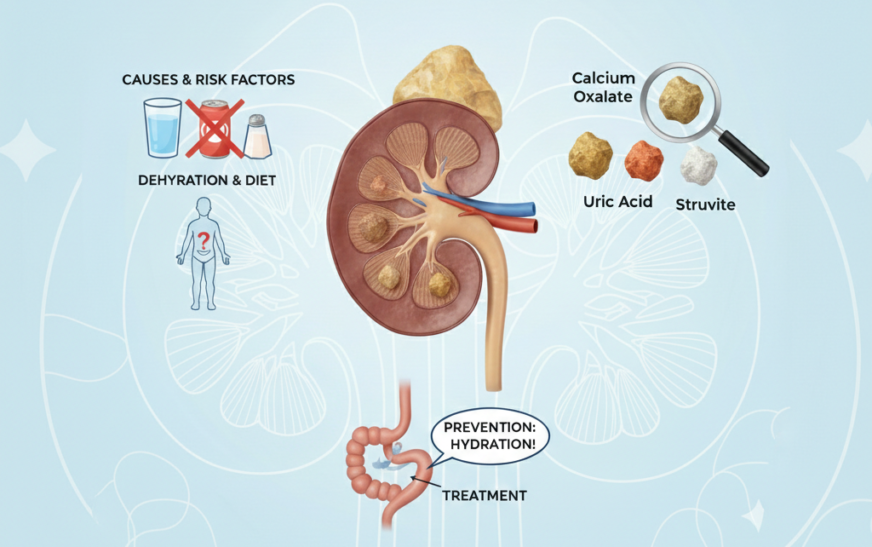
Kidney stones are really hard kind of substance, kidney stones are crystal like structure when certain substances in urine become too concentrated. Substances such as calcium, oxalate, uric acid, or cystine slowly grows into stones.
Kidney stones can be:
- Small as sand stones
- Big as marbles
Small stones pass through the urine, but the larger stones blocks the urine flow and it causes really much pain to an individual.
Where Do Kidney Stones Form?
Kidney stones usually form in:
- Kidneys – where urine is filtered
- Ureters – tubes connecting kidneys to the bladder
- Bladder – in rare cases
The pain often starts in the lower back or side and may move toward the abdomen or groin as the stone travels.
How Common Are Kidney Stones?
The problem of Kidney stones are very common than people think:
- About 1 in 10 people will develop a kidney stone at some point
- More common in men, but cases in women are increasing
- Most common between ages 30–60
Once you have had one kidney stone, your risk of recurrence is high if preventive steps are not taken.
Types of Kidney Stones (Explained Simply)
There are four main types of kidney stones, each with different causes.
1. Calcium Stones (Most Common)
Calcium stones account for nearly 70–80% of all kidney stones.
They are usually made of:
- Oxalate stones
- phosphate stones
Common causes:
- Low water intake
- High salt diet
- Excess oxalate-rich foods
- Certain metabolic conditions
Important: These stones are not caused by eating too much calcium alone. In fact, low dietary calcium can increase stone risk.
2. Uric Acid Stones
Uric acid stones only form when urine becomes very much acidic.
Common causes:
- High intake of red meat or organ meat
- Gout
- Obesity
- Dehydration
These stones are more common in people with:
Diabetes
3. Struvite Stones (Infection Stones)
Struvite stones forms due to the urinary infections (UTIs) caused by many bacterias.
Key features:
- Grow very fast
- Can become very large
- More common in women
These stones often require medical or surgical treatment rather than passing naturally.
4. Cystine Stones (Rare)
Cystine stones occur due to a genetic disorder called cystinuria, where excess cystine leaks into urine.
Characteristics:
- Rare
- Often start at a young age
- Tend to recur frequently
What Causes Kidney Stones?
Kidney stones form when the urine contains many stone-forming substances than fluid can dilute.
Main Causes Explained Simply
- Dehydration
- Not drinking large amount of water
And Concentrated urine allows crystals to form
- High Salt
- Excess salt increases calcium in urine
Dietary Factors includes
- High oxalate foods such as (spinach, nuts, chocolate)
- Excess animal protein
- Sugary drinks
- Medical Conditions
- Diabetes
- Gout
- Hyperparathyroidism
- Digestive disorders (Crohn’s disease)
Certain Medications
- Calcium supplements (without medical guidance)
- Vitamin C supplements
- Some diuretics
Risk Factors for Kidney Stones
Some individuals are more likely to develop kidney stones than others.
Common Risk Factors includes
- Low water intake
- Family history of kidney stones
- Obesity
- Sedentary lifestyle
- High-protein diets
- Excess salt consumption
- Hot climate or excessive sweating
- Recurrent urinary infections
Living in hot regions or having jobs that cause dehydration increases risk significantly.
Symptoms of Kidney Stones
Symptoms depends upon the size and location of the stone.
Common Symptoms Includes :
- Severe pain in lower back
- Pain that spreads from one area to groin
- Burning sensations when an individual urinates
- Blood in urine (pink, red, or brown)
- Feeling Nausea and vomiting
- Frequent pressure of urine
- Fever along with shivering (if infection is present)
Emergency signs such as :Fever, severe pain, vomiting, or inability to urinate require immediate medical care.
How Are Kidney Stones Diagnosed?
Doctors may use:
- Urine tests – check for blood, crystals, infection
- Blood tests – check calcium, uric acid levels
- Ultrasound – safe and commonly used
- CT scan – most accurate for stone detection
Can Kidney Stones Be Prevented?
Yes, most kidney stones can be prevented with lifestyle changes.
Simple Prevention Tips
- Drink 2.5–3 liters of water daily
- Reduce salt intake
- Eat balanced calcium-rich foods
- Limit red meat and processed foods
- Avoid excess sugary drinks
- Maintain healthy body weight
When Should You See a Doctor?
You should consult a doctor if:
- Pain is severe or persistent
- You have blood in urine
- Fever or chills are present
- You have repeated kidney stones
- You are pregnant or have diabetes
Early treatment prevents kidney damage and complications.
Frequently Asked Questions (FAQs)
Are kidney stones dangerous?
Small stones may pass naturally, but large stones can cause severe pain, infection, or kidney damage if untreated.
Can kidney stones go away on their own?
Yes, small stones (<5 mm) often pass naturally with fluids and pain management.
Do kidney stones always cause pain?
Not always. Some stones remain silent until they move or block urine flow.
Can kidney stones come back?
Yes. Once you have a kidney stone, your risk of recurrence is up to 50% within 5 years without prevention.
Is surgery always needed?
No. Many stones pass naturally or dissolve with medication. Surgery is needed only for large or complicated stones.
Key Takeaway
Kidney stones are common but preventable. Understanding their types, causes, and risk factors helps you take early action. Staying hydrated, eating a balanced diet, and addressing medical conditions can significantly reduce your risk.