
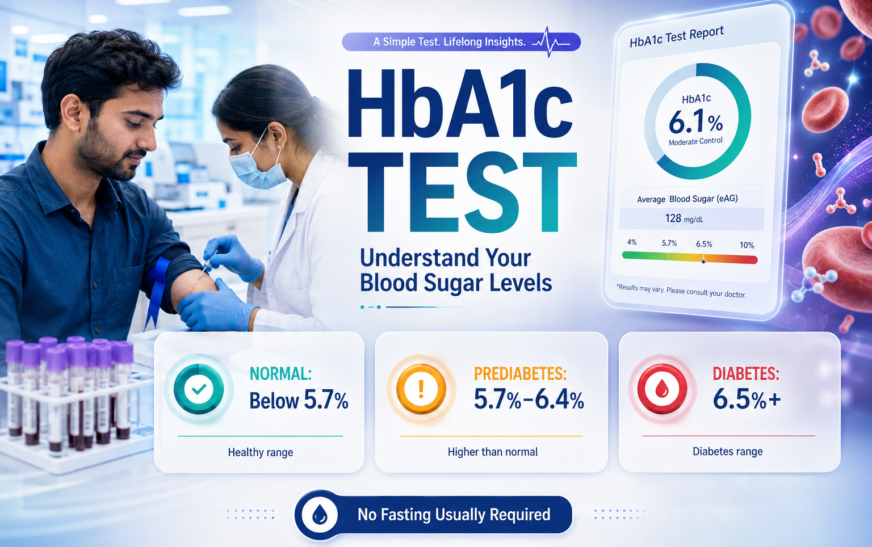
The HbA1c test is one of the most commonly used blood tests for understanding a person’s average blood sugar levels over the previous two to three months. Unlike a regular blood sugar test, which shows glucose levels at a particular moment, an HbA1c test provides a longer-term picture of blood glucose control.
Doctors commonly use the test to screen for prediabetes and type 2 diabetes and to monitor blood sugar control in people who already have diabetes. Another advantage is that an HbA1c test usually does not require fasting, making it convenient for many patients.
Table of Contents
ToggleIf you want to understand your result, it is important to know what different HbA1c levels mean, when the test is recommended, whether fasting is necessary, and when a result may require further testing.
What Is an HbA1c Test?
An HbA1c test, also called a hemoglobin A1c or glycated hemoglobin test, measures the percentage of hemoglobin in red blood cells that has glucose attached to it.
When glucose circulates in the blood, some of it attaches to hemoglobin. Because red blood cells generally remain in circulation for several weeks, the amount of glucose attached to hemoglobin provides an indication of average blood sugar levels over roughly the past three months.
The higher the blood glucose level has been over time, the higher the HbA1c percentage is likely to be. The result is reported as a percentage.
An HbA1c test can be useful because blood sugar naturally changes throughout the day. A person may have a normal glucose reading at one particular moment while still having elevated average blood glucose over a longer period.
For more detailed information about how the HbA1c test works, its normal range, diabetes diagnosis, and whether fasting is required, you can also refer to the National Institute of Diabetes and Digestive and Kidney Diseases (NIDDK) guide to the A1C test
Why Is the HbA1c Test Important?
The HbA1c test can help doctors identify blood sugar levels that are higher than normal before diabetes develops. It is also commonly used to monitor people who have already been diagnosed with diabetes.
Depending on the result, an HbA1c test may help identify:
- Normal blood sugar levels
- Prediabetes
- Diabetes
- How well diabetes treatment is controlling blood glucose
The test can also help healthcare professionals decide whether lifestyle changes or treatment adjustments may be needed.
However, an HbA1c result should always be interpreted in context. A single result does not tell the complete story about a person’s health, and diabetes diagnosis may require confirmation with another test or repeat testing.
HbA1c Normal Range
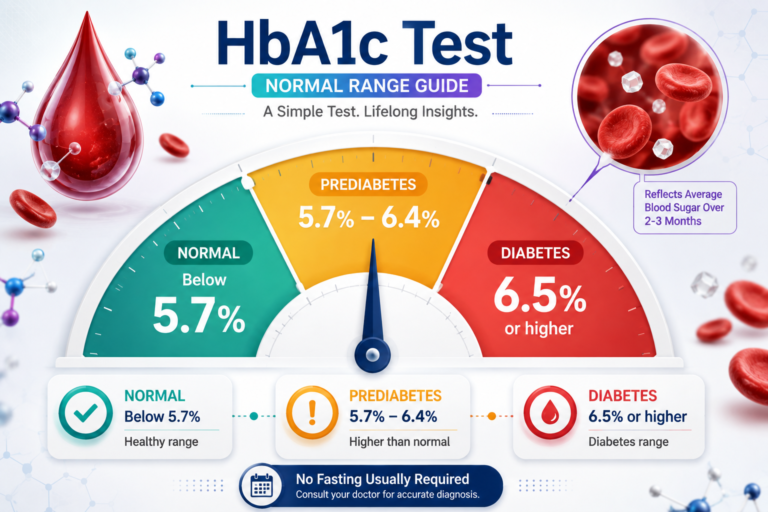
For nonpregnant adults, the commonly used diagnostic ranges are:
- Below 5.7%: Normal
- 5.7% to 6.4%: Prediabetes
- 6.5% or higher: Diabetes
These ranges are used to help identify prediabetes and type 2 diabetes. If a person does not have obvious symptoms but receives an HbA1c result in the diabetes range, healthcare professionals generally confirm the result with repeat testing or another appropriate diabetes test.
A normal HbA1c level does not necessarily mean that a person can never develop diabetes. Blood glucose can change over time, particularly when risk factors such as excess weight, physical inactivity, family history, or certain medical conditions are present.
What Is a Normal HbA1c Level?
A normal HbA1c level is below 5.7% for the general diagnostic range used in nonpregnant adults.
For example, an HbA1c result of 5.4% falls within the normal range. A result of 5.9% falls within the prediabetes range, while a result of 6.5% or higher reaches the diabetes diagnostic threshold.
It is important not to interpret the number in isolation. Your doctor may consider your symptoms, medical history, other blood glucose tests, medications, and other health conditions before deciding what the result means for you.
HbA1c Levels for Prediabetes
An HbA1c level between 5.7% and 6.4% is considered the prediabetes range.
Prediabetes means blood glucose levels are higher than normal but not yet high enough to meet the diagnostic threshold for diabetes. It does not mean that a person will definitely develop type 2 diabetes.
However, prediabetes indicates an increased risk of developing type 2 diabetes. Early lifestyle changes, including regular physical activity, a balanced diet, maintaining a healthy weight, and following medical advice, may help reduce this risk.
If your HbA1c falls in this range, your healthcare professional may recommend monitoring your blood sugar and repeating testing at an appropriate interval.
Being in the prediabetes range does not necessarily mean that you will develop type 2 diabetes. Making healthy changes early can help support better blood sugar control and overall health. Regular physical activity, a balanced diet, maintaining a healthy weight, and routine health checks are important parts of prevention. You can also learn more about practical preventive healthcare and small lifestyle changes that can support long-term health.
What HbA1c Level Indicates Diabetes?
An HbA1c result of 6.5% or higher is within the diabetes diagnostic range.
However, a diagnosis is not normally made based only on one abnormal result when a person has no clear symptoms. Healthcare professionals may repeat the HbA1c test or use another diagnostic test to confirm the result.
For example, doctors may use a fasting plasma glucose test, oral glucose tolerance test, or another appropriate blood glucose test depending on the individual’s situation.
If you receive an HbA1c result of 6.5% or above, it is important to discuss the result with a healthcare professional rather than trying to diagnose yourself.
Does an HbA1c Test Need Fasting?
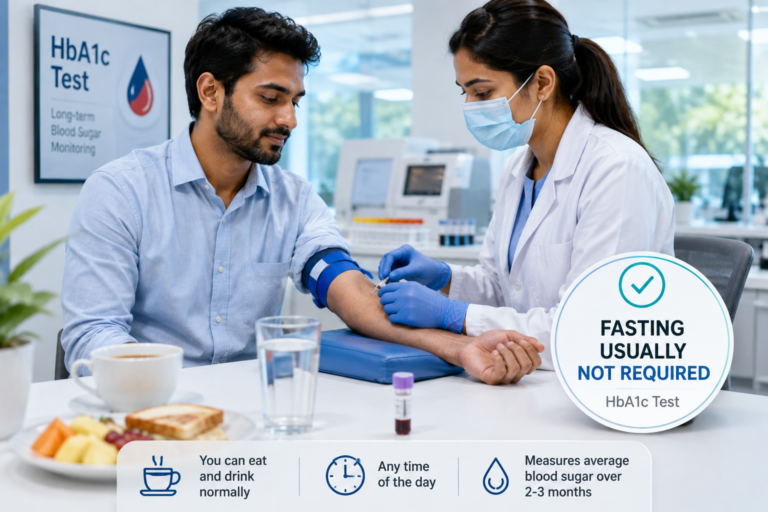
No, an HbA1c test generally does not require fasting.
You can usually eat and drink normally before an HbA1c blood test because recent food intake does not significantly affect the measurement in the same way it affects a fasting blood glucose test. The blood sample can generally be collected at any time of the day.
This is one of the main differences between the HbA1c test and a fasting plasma glucose test.
A fasting blood glucose test generally requires at least eight hours without food or drinks other than water. An HbA1c test does not usually have this requirement.
However, if your doctor has ordered other blood tests at the same time, you may still be asked to fast. Always follow the specific instructions provided by your healthcare professional or laboratory.
HbA1c Test vs Blood Sugar Test
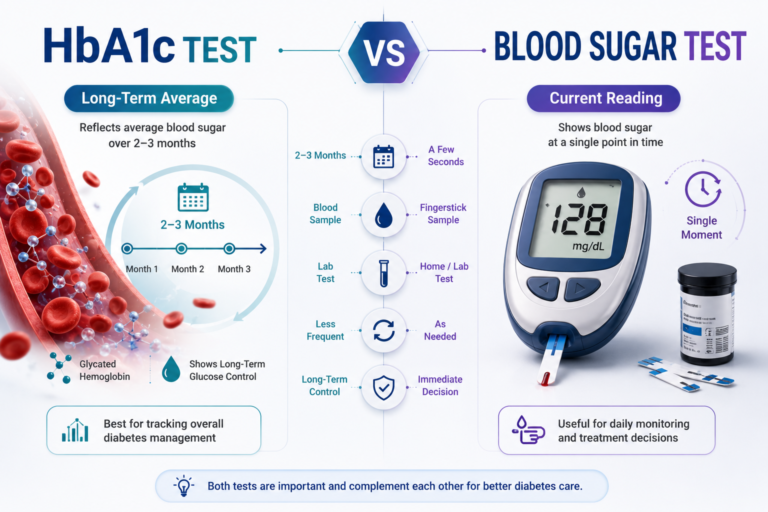
An HbA1c test and a blood sugar test provide different types of information.
A standard blood glucose test measures the amount of glucose in your blood at a particular point in time. For example, a fasting blood glucose test measures glucose after a period without eating.
The HbA1c test, on the other hand, reflects average blood glucose levels over approximately the previous two to three months.
This difference can be useful when evaluating diabetes:
Blood sugar test:
- Shows glucose at a specific time
- May be affected by recent food, exercise, illness, or stress
- Some types require fasting
HbA1c test:
- Reflects longer-term average glucose
- Usually does not require fasting
- Is commonly used for diabetes monitoring
- Can be used to screen for prediabetes and type 2 diabetes
Doctors may use more than one test because different tests can sometimes produce different results.
How Is the HbA1c Test Done?
An HbA1c test is a simple blood test.
A healthcare professional collects a blood sample, usually from a vein in the arm when the test is performed in a laboratory. The sample is then analyzed to determine the percentage of hemoglobin that has glucose attached to it.
The result is reported as an HbA1c percentage.
The test itself generally takes only a short time, although the availability of results depends on the laboratory performing the test.
Unlike some glucose tests, you generally do not need to schedule the HbA1c test around a fasting period.
What Can Affect HbA1c Results?
Although the HbA1c test is useful, it may not give an accurate picture in every situation.
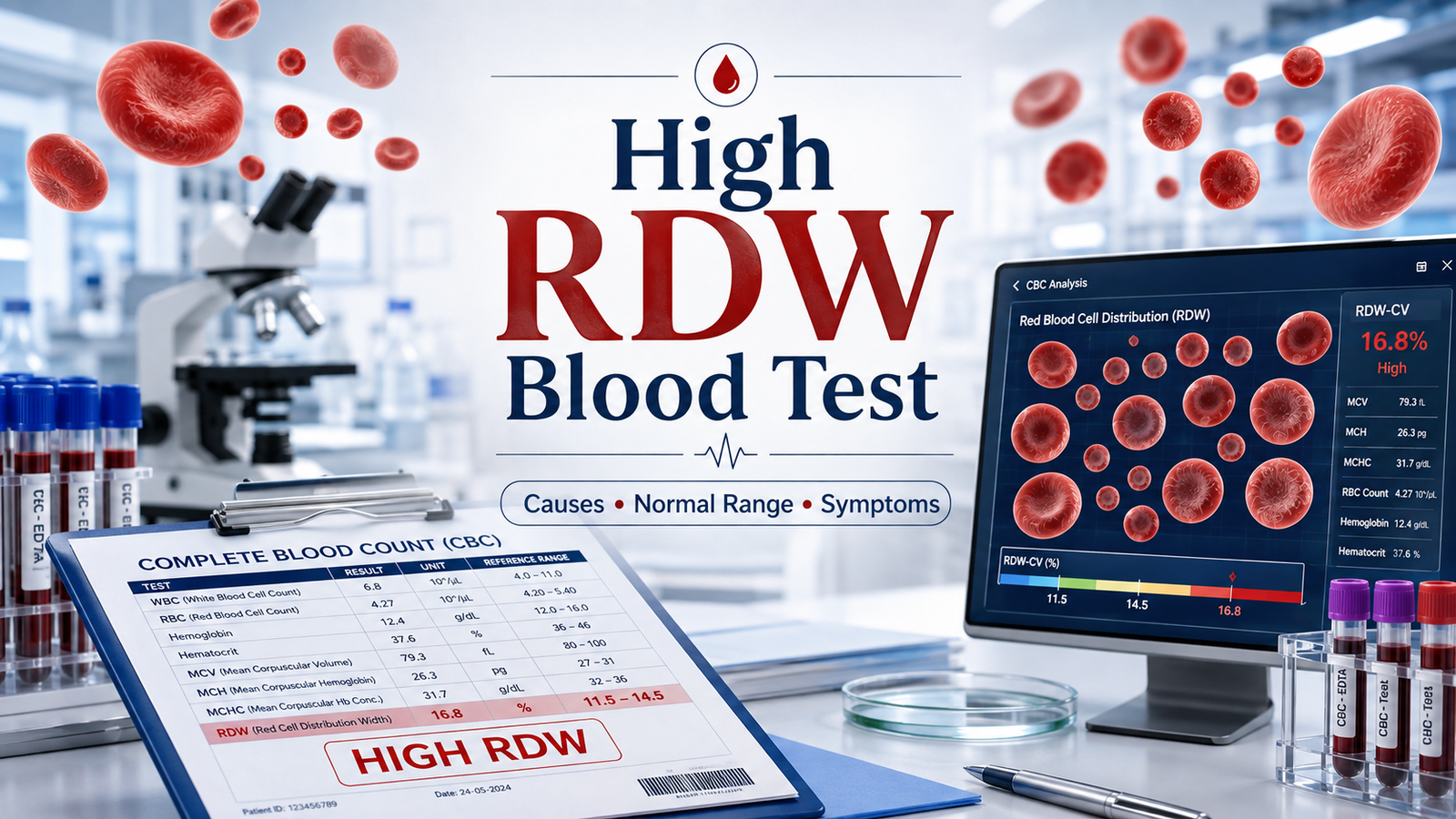
Conditions that affect red blood cells or hemoglobin can sometimes influence the result. These may include certain types of anemia, recent blood loss, blood transfusion, kidney disease, liver disease, and some hemoglobin variants.
For example, changes in how long red blood cells survive can affect how much glucose becomes attached to hemoglobin.
If your HbA1c result does not seem to match your home glucose readings or other blood glucose tests, tell your healthcare professional. They may consider whether another test is more appropriate.
Certain hemoglobin variants can also interfere with some HbA1c testing methods. Your doctor can decide whether additional testing is necessary based on your medical history and results.
What Is a Good HbA1c Level for Someone With Diabetes?
There is no single HbA1c target that is appropriate for every person with diabetes.
For many nonpregnant adults with diabetes, an HbA1c target below 7% is commonly recommended, but individual targets can be different. Age, duration of diabetes, risk of low blood sugar, other medical conditions, complications, and overall health can all affect the appropriate target.
For this reason, someone with diabetes should not change medication simply because an HbA1c result is higher or lower than expected.
Your healthcare professional can help determine your personal HbA1c goal and whether your current treatment plan needs adjustment.
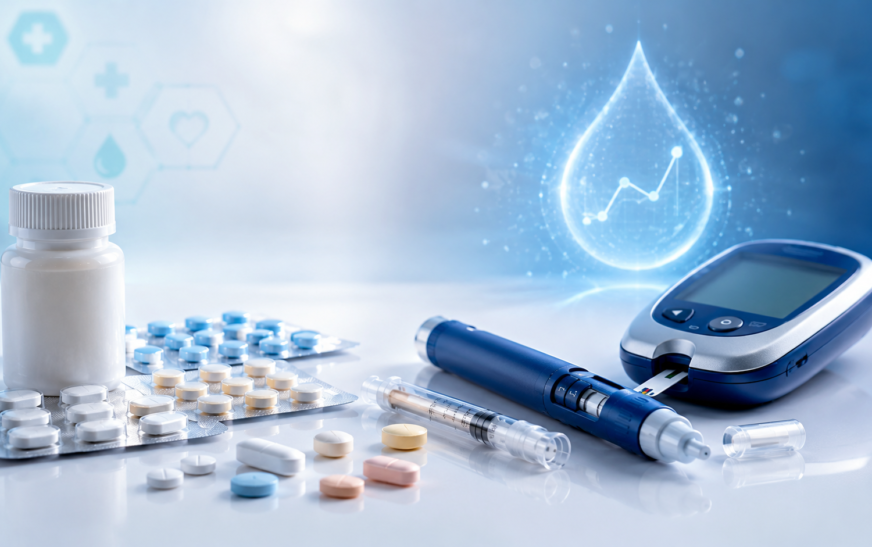
When lifestyle changes alone are not enough to maintain blood glucose within the desired range, a healthcare professional may recommend diabetes medication. The choice of medicine depends on the type of diabetes, blood glucose levels, other health conditions, and individual treatment needs. Learn more about diabetes medicines and how they may be used as part of diabetes management.
How Often Should HbA1c Be Checked?
The frequency of HbA1c testing depends on a person’s health and diabetes management.
People who have diabetes may have an HbA1c test at least twice a year, while more frequent testing may be recommended when treatment has changed or blood glucose levels are not meeting the individual’s target.
People with prediabetes may also need periodic testing to monitor whether their blood glucose levels are changing over time.
Your healthcare professional can recommend an appropriate testing schedule based on your individual risk and health history.
Can HbA1c Predict Diabetes Risk?
An HbA1c result can help identify an increased risk of developing type 2 diabetes.
People with an HbA1c between 5.7% and 6.4% are considered to have prediabetes. The higher the HbA1c within this range, the greater the risk of progressing to diabetes.
However, the result is not a guarantee that diabetes will develop. Lifestyle changes and appropriate medical follow-up can play an important role in reducing future risk.
Regular physical activity, a nutritious diet, adequate sleep, weight management when appropriate, and following medical recommendations can support healthy blood glucose levels.
HbA1c and Estimated Average Glucose
Some laboratory reports may also provide an estimated average glucose (eAG) alongside the HbA1c result.
The eAG converts the HbA1c percentage into an estimated average blood glucose value expressed in units such as mg/dL. This can make the result easier to compare with the numbers seen on a home glucose meter.
However, eAG is an estimate of long-term average glucose and will not necessarily match every individual glucose reading taken during the day.
What Should You Do If Your HbA1c Is High?
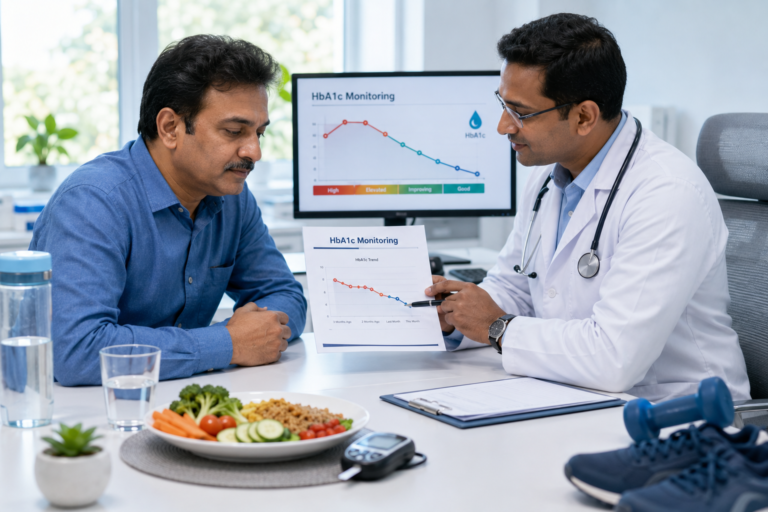
If your HbA1c result is higher than the normal range, do not panic. The next step depends on how high the result is and whether you have already been diagnosed with diabetes.
If the result is in the prediabetes range, your healthcare professional may recommend lifestyle changes and follow-up testing.
If the result is in the diabetes range, further testing may be required to confirm the diagnosis, particularly if you do not have typical symptoms.
If you already have diabetes, a high HbA1c may indicate that your current blood glucose management needs review. Your doctor may assess your diet, physical activity, medications, glucose monitoring, and other factors.
Do not stop, start, or change diabetes medication without medical advice.
When Should You Talk to a Doctor?
You should discuss your HbA1c result with a healthcare professional if:
- Your result is 5.7% or higher.
- Your result reaches 6.5% or above.
- Your HbA1c has increased significantly compared with previous results.
- Your glucose readings and HbA1c result do not seem to match.
- You have symptoms such as excessive thirst, frequent urination, unexplained weight loss, or unusual tiredness.
- You have a condition that may affect red blood cells or hemoglobin.
- You are already being treated for diabetes and are not reaching your individual target.
A doctor can interpret the result alongside your symptoms, medical history and other laboratory findings.
Frequently Asked Questions (FAQs)
What is a normal HbA1c level?
A normal HbA1c level is below 5.7% for the commonly used diagnostic range in nonpregnant adults. An HbA1c of 5.7% to 6.4% falls in the prediabetes range, while 6.5% or higher is within the diabetes diagnostic range.
What is the difference between a sugar test and HbA1c?
A blood sugar test usually measures glucose at a particular point in time, while the HbA1c test reflects average blood glucose over approximately the previous two to three months. A blood glucose test may require fasting depending on the type, whereas HbA1c usually does not.
What is the danger zone for HbA1c?
There is no single HbA1c percentage that can be called a universal “danger zone.” An HbA1c of 6.5% or higher is within the diagnostic range for diabetes, but the meaning of a high result depends on whether the person has diabetes, symptoms, other health conditions, and their individual treatment target. Very high or rapidly increasing results should be discussed promptly with a healthcare professional.
Is the HbA1c test need fasting?
No. The HbA1c test generally does not require fasting. You can usually eat and drink normally before the test. However, if your doctor has ordered additional blood tests that require fasting, you may need to follow different preparation instructions.
Conclusion
The HbA1c test is a useful way to understand average blood glucose levels over the previous two to three months. A result below 5.7% is generally considered normal, 5.7% to 6.4% indicates prediabetes, and 6.5% or higher falls within the diagnostic range for diabetes.
One of the biggest advantages of the test is that fasting is generally not required. It can therefore be a convenient option for screening and monitoring blood glucose.
Still, an HbA1c result should not be interpreted on its own. Certain health conditions can affect the accuracy of the test, and an abnormal result may need confirmation with repeat testing or another glucose test.
If your HbA1c result is outside the normal range, speak with a qualified healthcare professional to understand what it means for your individual health and whether further testing or treatment is needed.