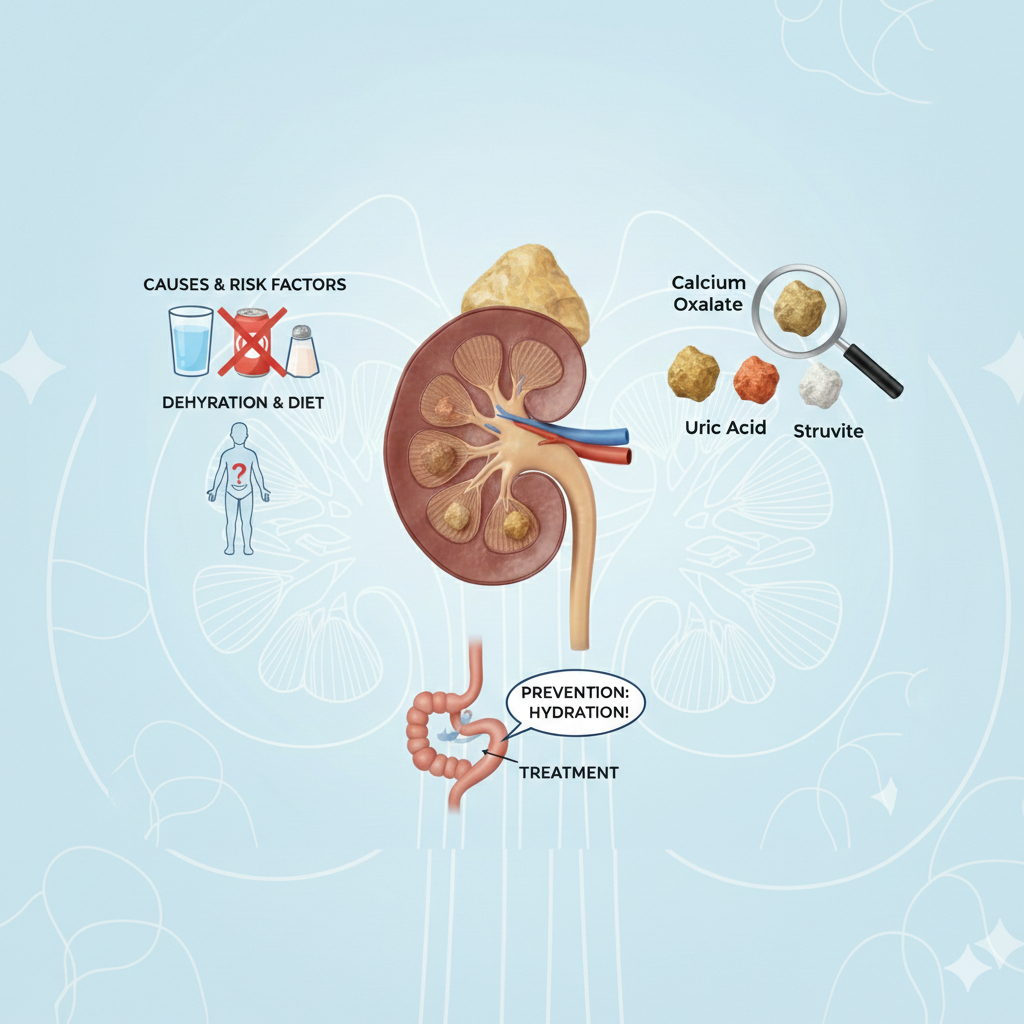
If you’ve had kidney stones before, or if your doctor thinks that you might be at risk, they may suggest a 24-hour urine test. This test is really very important because it helps doctors to understand why kidney stones are forming and what can be done to stop them from coming back.
In this article, it is explained what the 24-hour urine test is, why it is needed for a person, what normal results look like, and what abnormal results look like. It is explained in simple, patient-friendly language that’s easy to follow.
What Is a 24-Hour Urine Test for Kidney Stones?
A 24-hour urine test measures the amount of some substances which are released in your urine over a full day (24 hours). Unlike a single urine sample, this test gives a complete picture of how your kidneys function throughout the day.
For kidney stones, it helps identify:
- Excess stone-forming substances
- Low protective substances
- Drying out or concentrated urine
In simple terms:
This test helps the doctors to understand why kidney stones formed in an individual and how to stop them from coming back
Why Is the 24-Hour Urine Test Done?
Doctors usually recommend this test if you:
- Have had recurrent kidney stones
- Passed a stone recently
- Have a family history of kidney stones
- Developed stones at a young age
- Have stones without an obvious cause
Main Purposes of the Test
- Identify type of kidney stone
- Detect the metabolic abnormalities
- Guide dietary and lifestyle changes
- Decide whether the long-term medicines are needed
- Prevent future stone formation
How Does the 24-Hour Urine Test Work?
The test involves the collecting all urine passed over for 24 hours in a special container provided by the lab.
Step-by-Step Process (Simple Explanation)
1.One should Wake up in the morning and discard the first urine
2.Note the time (this starts the test)
3.Collect every urine sample for the next 24 hours
4.Store the urine container in a cool place or refrigerator
5.Include the first urine of the next morning
6.Submit the sample to the lab
Missing even one sample can affect accuracy.
What Does the 24-Hour Urine Test Measure?
The test checks multiple substances related to kidney stone formation.
Key Parameters Measured
- Urine volume
- Calcium
- Oxalate
- Uric acid
- Citrate
- Sodium
- Creatinine
- pH (acidity of urine)
Each value helps identify specific stone risks.
Normal Values in 24-Hour Urine Test (Kidney Stones)
Normal ranges may vary slightly by laboratory.
Common Reference Ranges
|
Parameter
|
Normal Range
|
Why It Matters
|
|
Urine Volume
|
> 2–2.5 liters/day
|
Low volume = high stone risk
|
|
Calcium
|
< 200 mg/day (women)
< 250 mg/day (men)
|
High levels cause calcium stones
|
|
Oxalate
|
< 40 mg/day
|
Excess leads to calcium oxalate stones
|
|
Uric Acid
|
< 750 mg/day (women)
< 800 mg/day (men)
|
High levels cause uric acid stones
|
|
Citrate
|
> 320 mg/day
|
Protects against stone formation
|
|
Sodium
|
< 100–150 mEq/day
|
High salt increases calcium loss
|
|
Urine pH
|
5.5 – 6.5
|
Acidic urine promotes uric acid stones
|
Meaning of Abnormal Test Results (Explained Simply)
Let’s understand what high or low values mean.
Low Urine Volume
What it means:
You’re not drinking enough fluids.
Why it matters:
Concentrated urine allows crystals to form easily.
Solution:
Increase water intake to produce at least 2.5 liters of urine daily.
High Calcium in Urine (Hypercalciuria)
What it means:
Too much calcium is being lost in urine.
Common causes:
- High salt intake
- Hormonal imbalance
- Genetic tendency
Important: This is not always due to high calcium intake.
High Oxalate Levels
What it means:
Excess oxalate is combining with calcium to form stones.
Common dietary sources:
- Spinach
- Nuts
- Chocolate
- Beets
Management:
Reduce high-oxalate foods and pair calcium with meals.
High Uric Acid Levels
What it means:
You’re at risk of uric acid stones.
Associated with:
- High red meat intake
- Gout
- Obesity
- Diabetes
Management:
Diet changes and medications may be advised.
Low Citrate Levels (Hypocitraturia)
What it means:
Your urine lacks a natural stone inhibitor.
Why citrate is important:
Citrate prevents calcium crystals from sticking together.
Improvement tips:
- Citrus fruits (lemon, orange)
- Potassium citrate (if prescribed)
Abnormal Urine pH
- Low pH (acidic urine): Uric acid stones
- High pH (alkaline urine): Calcium phosphate or infection stones
Balancing urine pH is key to prevention.
How the Test Helps Prevent Kidney Stones
Based on your results, doctors can recommend:
- Personalized diet plan
- Fluid goals
- Salt and protein restriction
- Targeted medications
- Long-term monitoring
This makes the test a cornerstone of kidney stone prevention.
Do You Need to Stop Medicines Before the Test?
Sometimes, doctors may advise stopping:
- Calcium supplements
- Vitamin C supplements
- Certain diuretics
Never stop medications without medical advice.
Is the 24-Hour Urine Test Safe?
Yes. The test is:
- Non-invasive
- Painless
- Safe for all age groups
The only challenge is proper collection compliance.
Frequently Asked Questions (FAQs)
Is a 24-hour urine test necessary for everyone with kidney stones?
No. It’s usually recommended for people with recurrent or unexplained stones.
Can I eat normally during the test?
Yes, unless your doctor gives special instructions.
What if I miss one urine sample?
The test may be inaccurate and might need to be repeated.
How often should this test be done?
Typically once after a stone episode and repeated if stones recur.
Can this test diagnose kidney stones?
No. It identifies risk factors, not existing stones.
Key Takeaway
The 24-hour urine test is one of the most important investigations for kidney stone patients. It helps identify why stones form, guides personalized prevention, and significantly reduces the chance of recurrence when followed correctly.
If you’ve had kidney stones more than once, this test can help protect your kidneys in the long term.